Abhishek Kumar
Director of Engineering, Instagram, Meta
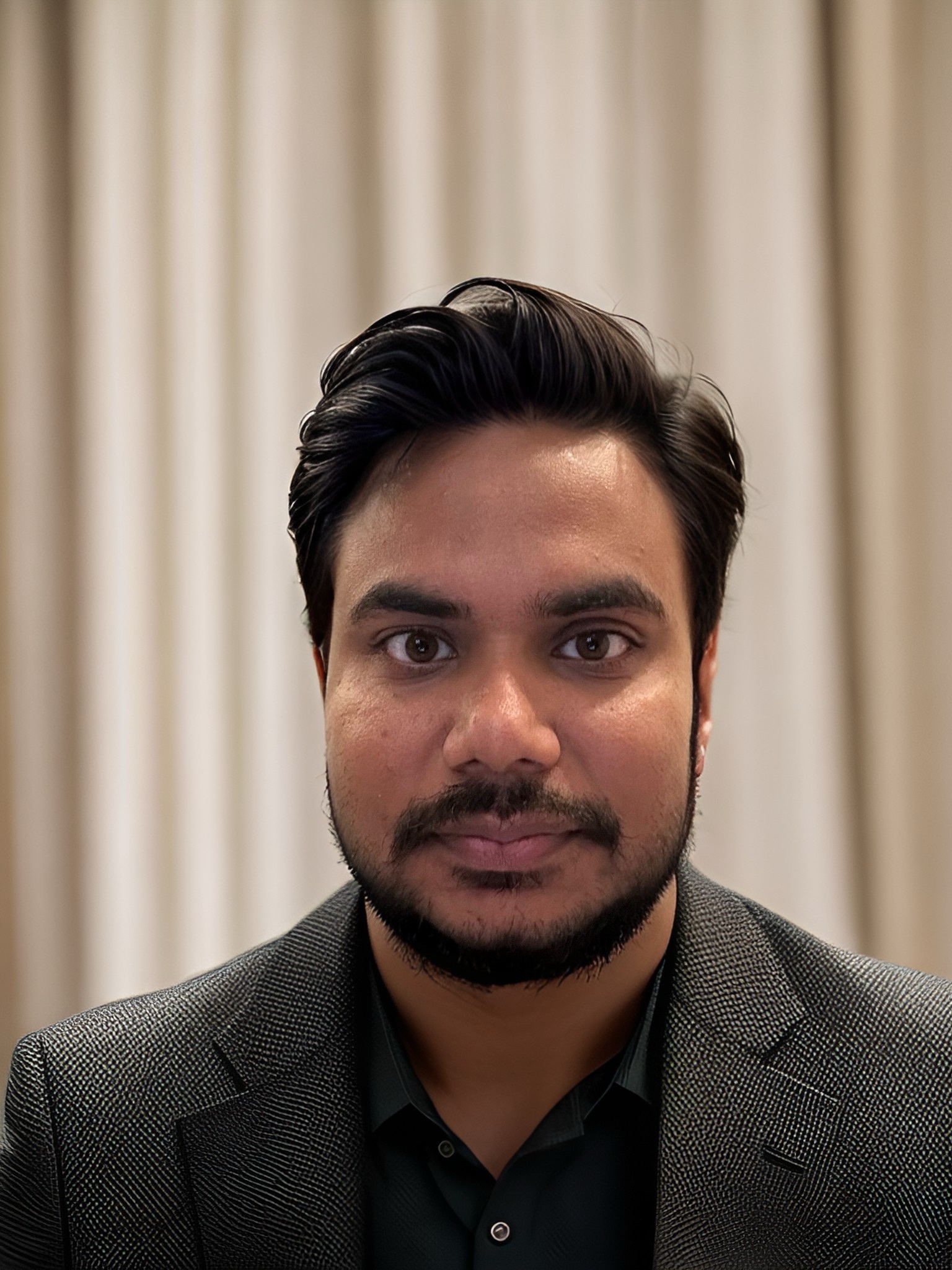
FELLOW MEMBER
Abhishek Kumar has built a 12-year career at the center of one of the most demanding disciplines in applied machine learning: ranking and recommendation systems operating at global social-platform scale. Across Instagram, Facebook, and Meta Search, Kumar has led high-stakes relevance initiatives that combine algorithmic innovation with organizational building—often taking on problems at the 0–1 stage where success requires not only model breakthroughs but also the creation of teams, infrastructure, and long-term strategy capable of sustaining rapid growth. His portfolio reflects a consistent pattern: he takes emerging or underperforming product surfaces, builds the ML and experimentation foundations behind them, and scales them into durable engagement engines serving billions of users.
A defining chapter of Kumar’s career is Instagram Reels Relevance, where he joined near inception with a mandate that extended beyond model iteration into platform transformation. At the time, Reels was not yet a clear growth engine and, by his account, was negatively impacting engagement. Kumar’s objective was to turn Reels into a core driver of time spent and retention by owning both the machine-learning relevance systems and the supporting infrastructure required for production at scale. Under his leadership, Reels grew from under 5% of Instagram time spent to becoming the majority contributor to year-over-year engagement and retention. He also scaled the organization behind Reels relevance from roughly 25 to more than 150 people—an indicator that his leadership was not confined to research direction, but extended into building operating structures, ML standards, and cross-functional alignment across product, engineering, and infrastructure teams.
Kumar is also credited with building Instagram Feed Recommendations from scratch—creating an entirely new recommendation surface within the Feed. This was a “zero-to-one” initiative in the clearest sense: he grew a zero-person effort into a fully operating organization of approximately 30 engineers and managers while simultaneously building the ML frameworks, experimentation strategy, and system design required for the surface to become meaningful at scale. Within roughly 18 months, the system’s impression footprint reportedly grew from 0% to 30%+, and it became the majority contributor to Feed’s year-over-year engagement growth—suggesting a platform-level intervention that shifted the fundamental engagement mechanics of one of the world’s largest social feeds.
One of the most technically and organizationally complex initiatives in Kumar’s portfolio is his leadership of a major relevance-system unification: merging Instagram Feed Recommendations with Instagram Feed Connected Ranking into a single cohesive architecture. The objective was to improve maintainability and reduce duplication—goals that are often resisted in relevance systems due to performance risk and the difficulty of migrating production traffic without regressions. Kumar’s effort reportedly completed 30% ahead of schedule with no engagement regression, despite a planned regression budget. He also led the organizational merger of the two groups into an approximately 80-person unified relevance team, consolidating execution models in a way that improves long-term velocity and reduces the structural friction that often accumulates as ranking stacks evolve.
Kumar’s work is not limited to operating mature systems; he has also built the incubation machinery that allows innovation to continue. He founded and led Instagram Labs Relevance to drive 0–1 product and ML bets—creating a dedicated environment for experimental features grounded in personalization and content understanding. Under this charter, he led delivery of multiple new product experiences, including Reposts, AI translations/dubbing, Friendly Feed, and Photos & Carousels with Music in the Reels tab, all described as producing measurable engagement gains. He scaled the organization from 0 to roughly 40 specialists, providing Meta a repeatable mechanism to test new ML-powered experiences and scale winners.
A further layer of his impact sits at the foundations of modeling and delivery. Kumar founded and led Core ML Modeling and Delivery teams for Instagram, focusing on next-generation architectures such as foundational models (including LLMs), transformer-based sequence modeling, within-session personalization, and content exploration frameworks. This work is best understood as advancing the “platform beneath the platform”—improving the modeling depth and delivery standards that multiple ranking surfaces rely on. By driving state-of-the-art initiatives and establishing organizational practices for model development and deployment, he helped set new standards for how ML systems are built and operationalized at scale.
Before Instagram, Kumar demonstrated similar 0–1 leadership at Facebook, where he initiated and led the creation of the Stories Ranking system. His objective was to build a differentiated ranking vertical capable of driving long-term engagement and competitive advantage. Stories Ranking reportedly became the largest contributor to Stories’ year-over-year growth, and Kumar built the team from 0 to approximately 20—again illustrating the combination of system creation and organizational scaling.
Earlier in his career, Kumar led several search relevance initiatives across Facebook Marketplace Search, Trending, and Whole Page Ranking. These programs focused on building new search capabilities, improving ranking quality, and introducing new ML architectures. His work is described as having unblocked Marketplace launch, improved Trending engagement by 40% in five months, and established Whole Page Ranking as a unified search framework—evidence of breadth across both feed-style recommendations and query-driven search relevance.
Across these roles, Kumar’s signature contribution is not limited to individual model improvements. He builds the full relevance ecosystem: teams, infrastructure, experimentation discipline, unified architectures, and next-generation modeling foundations. In platforms serving billions, this combination—technical innovation plus organizational leadership plus safe production migration—is what turns ML into durable product advantage.