Amit Kumar Garg
Associate Director at Wayfair
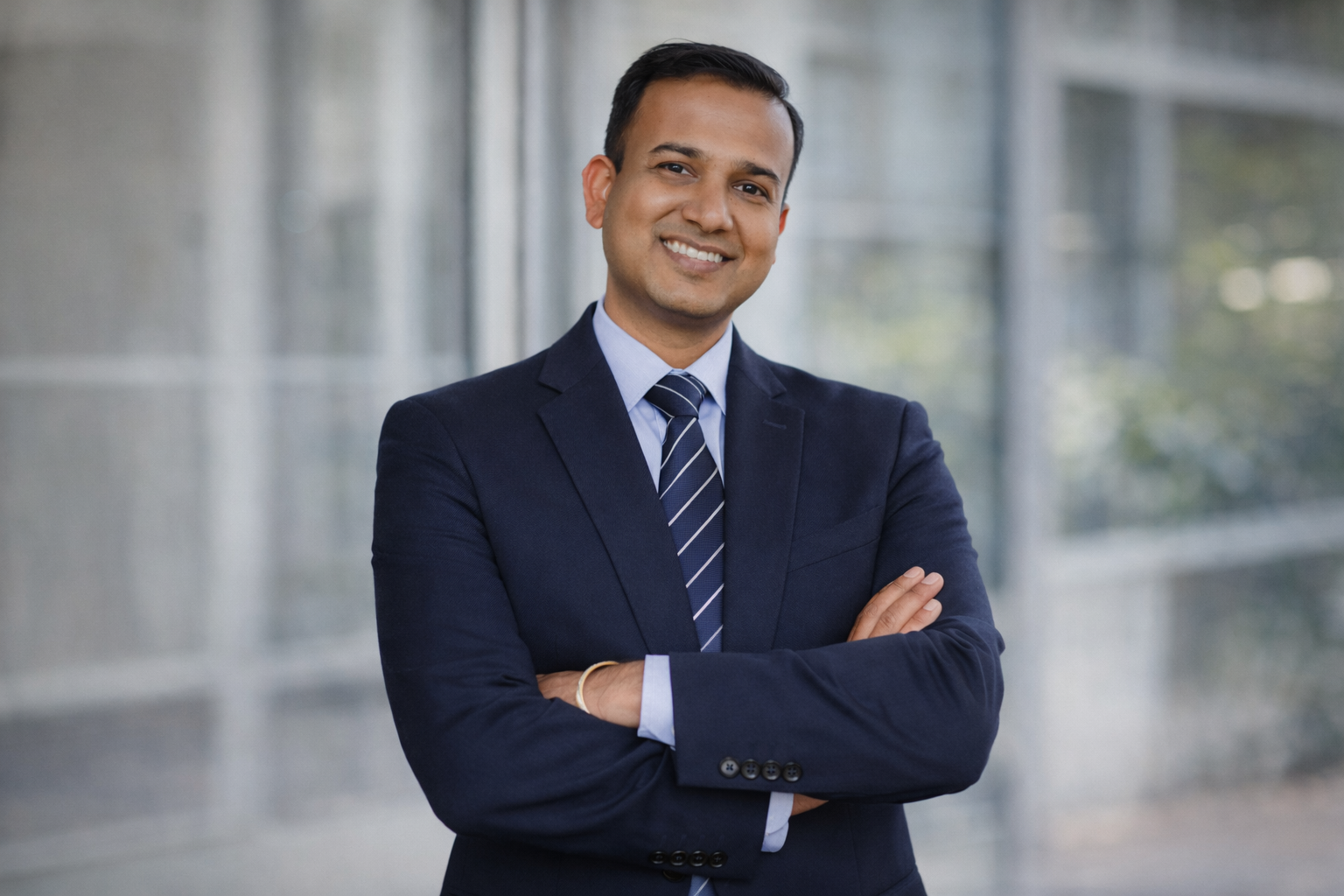
FELLOW MEMBER
Amit Kumar Garg has built a career around a rare combination: deep platform engineering credibility and the operating discipline required to turn large, complex organizations toward measurable outcomes. His trajectory—from foundational engineering work at Microsoft and Amazon to senior technical leadership at Wayfair, alongside entrepreneurial experience building operational software in a low-tech environment—reflects a consistent pattern of taking messy, high-stakes systems and making them more efficient, governable, and predictable at scale.
At Wayfair, Garg’s work sat at the intersection of cloud economics, data governance, and enterprise modernization—domains where architecture decisions directly translate into multi-million-dollar consequences. Leading initiatives tied to Google Cloud Platform partnership execution and Microsoft SQL Server optimization, he restructured storage, access patterns, and governance mechanisms across business-critical e-commerce systems. The outcomes were quantifiable: a roughly 20% reduction in data footprint, approximately $8 million in annualized cloud cost savings, and an additional $4 million saved through SQL Server license count reduction. He also authored a three-year roadmap to migrate legacy MSSQL workloads toward cloud-native architectures while deprecating monolithic PHP patterns—work that influenced executive investment decisions by translating technical realities into a credible modernization path.
Garg’s impact at Wayfair extended beyond engineering output into the operating model of the technology organization itself. He initiated a company-wide data governance program aimed at correcting systemic issues—uncontrolled data growth, unclear ownership, and inefficient storage practices—by establishing accountability and decision frameworks rather than relying on ad hoc cleanups. In parallel, he exercised executive authority over third-party vendor strategy, evaluating more than 30 vendors across engineering, data, and cloud domains. By creating a preferred vendor program and standardized engagement models, he compressed contracting cycles from 4–6 months to under two weeks—an operational change that removed a chronic bottleneck to execution.
When execution stalled, Garg’s work emphasized recovery as a technical and organizational discipline. One high-visibility example was a large appliance launch that had been stuck for nearly twelve months. By redefining scope, sequencing milestones, and rebuilding accountability across engineering, product, operations, and external partners, he helped deliver the launch in under four months—earning direct recognition from the CEO. He also designed and deployed a Jira-based planning framework that aligned strategy, dependencies, and execution across six-month horizons without adding bureaucratic overhead—supporting portfolio-level predictability in a fast-moving environment.
Earlier in his career at Amazon Lab126, Garg operated in a different kind of complexity: hardware-software delivery at global device scale. His responsibilities encompassed end-to-end software and firmware delivery for Echo Auto, Fire TV, and Dash product families, coordinating across firmware engineering, hardware design, thermal systems, chipset vendors, manufacturing partners, and external certification bodies, including Apple’s MFi program. This work tied engineering quality directly to customer outcomes: systematic closure of firmware gaps—driven by customer feedback and telemetry—improved Echo Auto ratings from roughly 3.6 to above 4.0 stars. He also established repeatable engagement models for MFi certification, enabling reuse across multiple Amazon device lines.
At Amazon A9, Garg’s impact moved into experimentation-driven product economics. He designed and executed UI optimization and live-traffic experimentation initiatives on sponsored advertising platforms that drove approximately $14 million in annualized revenue impact. The work demanded statistical rigor, rapid iteration discipline, and engineering safeguards to protect customer experience during continuous experimentation.
Garg’s early foundation at Microsoft included Bing Search, Local SMS Search, and enterprise monitoring platforms. His work on Microsoft Operations Manager produced a C# Management Pack Modification Framework that replaced hard-coded parameters, enforced XML schema/format standards, and shipped reusable tooling with logging and error reporting—reducing repetitive engineering effort and increasing consistency across deployments. On Windows System Resource Management Service, he independently designed, implemented, and tested automated resource allocation features—an early marker of end-to-end ownership across architecture, coding, and operations.
Across roles, Garg has also demonstrated original, forward-looking contributions. At Wayfair, he pioneered applying generative AI to program management workflows, reducing manual reporting effort by about 50% while improving information quality for senior leadership—an example of using emerging technology to raise organizational throughput, not just build prototypes. He authored technically rigorous proposals that secured over $11 million in direct Google investment funding aligned to long-term platform modernization goals. And as Co-Founder and Technical Lead of Autoways Workshop, he built proprietary systems for inventory, billing, time tracking, and service history—engineering that enabled operational scaling in an environment where software adoption was minimal, shaping a practical, outcomes-first approach that carried into later enterprise modernization efforts.
Garg’s influence has consistently extended to capability-building. At Wayfair, he helped define the Technical Program Management operating model—role charters, leveling standards, interview frameworks, and execution expectations—then built and led a TPM leadership team driving multi-quarter programs across infrastructure, data, and application platforms. He instituted monthly executive program reviews that improved transparency and early risk detection across the portfolio. Externally, he represented Wayfair’s cloud transformation work at Google NEXT 2025, sharing real-world modernization learnings with industry peers. At Amazon, selection as a Bar Raiser signaled organizational trust in his judgment to uphold hiring standards—a form of peer-recognized responsibility that shapes long-term engineering quality.
Mentorship has been a recurring throughline. Garg founded and led a mentoring program for A9 Search and Ads teams across the U.S. and India, later adopted more broadly. He designed technical upskilling programs that exceeded participation targets by sixfold, mentored TPMs and engineering managers (L4–L6), and led onboarding for security and execution practices—ensuring that scale improvements were embedded in people and process, not just systems.