ANIL MANKALI MASAKAL
Senior Engineering Manager at Dropbox Inc
FELLOW MEMBER
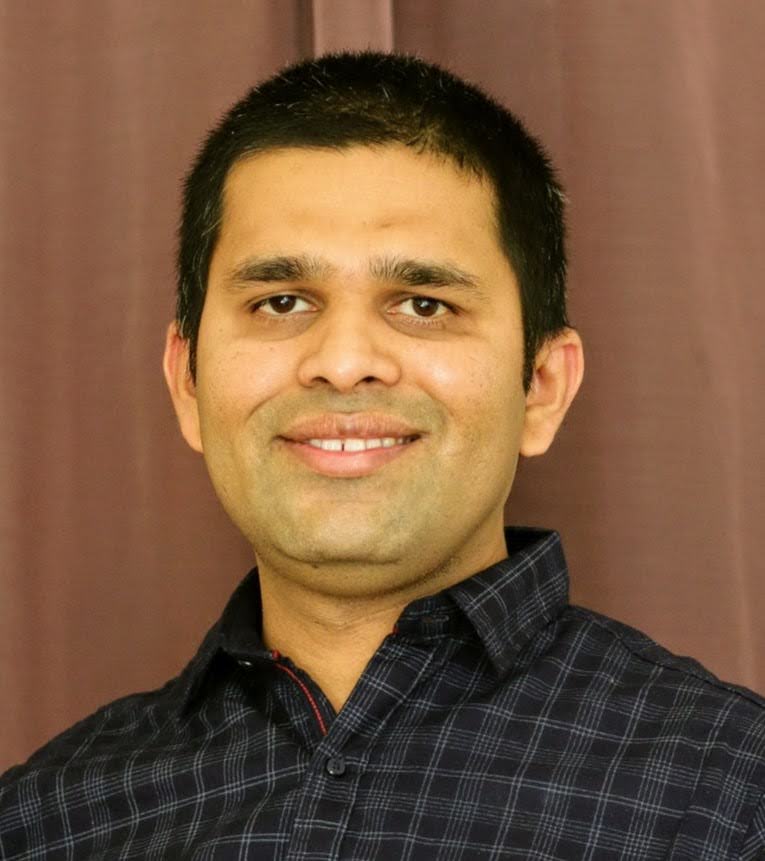
Anil Mankali Masakal is a platform engineering leader whose 22-year career has repeatedly positioned him at the point where “new capability” becomes “industry-scale infrastructure.” Across AI search, observability, smart-home standards, payments, catalog automation, and industrial IoT protocols, Masakal has built and governed systems that shape how enterprises discover information, monitor production platforms, integrate devices, and automate large operational workflows. His work spans Dropbox, Adobe, and Amazon, with earlier foundational contributions at Honeywell—an arc that demonstrates both breadth across domains and a consistent pattern of impact: define the abstraction, build the platform, then scale it into a durable standard used by many teams and organizations.
At Dropbox, Masakal established the semantic search and retrieval foundation powering Dash—an AI assistant that scaled to over one million users. The challenge here was not merely indexing content, but enabling secure, enterprise-grade knowledge discovery where AI can retrieve and synthesize information without violating access controls. Masakal’s architectural leadership built the core of this capability: dual-mode retrieval that combines lexical search with vector search, knowledge extraction and ingestion pipelines, multi-stage ranking systems, and large language model integration to produce personalized query experiences. In practical terms, his platform work addressed a central enterprise AI problem: making organization-wide knowledge searchable and usable by AI while remaining permission-aware and scalable.
At Adobe, Masakal led teams that built unified observability systems for the Adobe Experience Platform—creating the monitoring and alerting backbone required for large-scale cloud operations. This platform processes roughly 10,000 requests per second, delivering p95 latency insights within one minute. It serves over 100 internal engineering teams and over 100 enterprise customers, reflecting both deep internal adoption and external product-grade trust. His architecture combined metric instrumentation SDKs with client-side pre-aggregation, Kafka-based ingestion pipelines, tenant-aware time-series storage using OpenTSDB on HBase, and real-time alerting that supports developers and customers. This is platform engineering with direct reliability impact: giving organizations the ability to detect failures quickly, manage SLOs, and operate complex systems with consistent visibility.
Masakal’s influence extends beyond internal platforms into industry-wide standardization. As a founding engineering manager in Amazon’s Alexa Smart Home organization, he helped define the Smart Home Skill API specification—an interface taxonomy that now supports over 400 million connected devices and over 100,000 smart home products globally, processing hundreds of millions of commands per week. This work illustrates Masakal’s ability to translate complex device capabilities into standardized interfaces that allow thousands of manufacturers to integrate at scale. When done well, standards are invisible; their value is measured in ecosystems created and sustained. His work helped create that ecosystem.
At Amazon’s payments platform, Masakal led the Shop with Points integration with Hilton Honors, establishing Amazon’s first non-credit-card loyalty payment method. This required rethinking checkout, authorization, settlement, and reconciliation processes—core financial flows where correctness is mandatory. He also designed the OAuth-based account linking mechanism, Amazon’s first OAuth-based external loyalty integration, and authored technical specifications that reduced partner onboarding from 9–12 months to under three months. These are the kinds of changes that reshape how platforms expand: shifting from bespoke, prolonged integrations to repeatable, faster partner onboarding.
He also delivered large operational automation in Amazon Retail Business Services through the Auto ASIN Creation platform—transforming manual catalog onboarding into an automated system achieving around 80% automation coverage. The outcome was a material productivity shift: over 500 associates saved thousands of hours of manual processing while improving catalog quality and consistency. His earlier scholarly contribution in this space—machine learning research on ASIN title quality improvement—was selected for presentation at the Amazon Machine Learning Conference (May 2013), proposing n-gram classification models that achieved 0.95 precision and 0.91 recall, and earning VP-level recognition for technical innovation tied to business value.
Masakal’s foundational work at Honeywell further underscores his long-term impact on industrial standards and large-scale device management. Representing Honeywell at the HART Communication Foundation, he participated in defining Electronic Device Description Language specifications that shaped how hundreds of device manufacturers implement smart instrument software. Over 7.5 years on Field Device Manager, he designed real-time DDL-to-XML conversion systems, device communication protocol modeling, and high-performance distributed C++ architectures supporting up to 64,000 devices simultaneously—contributing to an ecosystem with over 40 million HART devices globally.
Across organizations, Masakal’s leadership has included building and scaling engineering teams across the U.S., India, and Romania—growing the Dropbox search infrastructure organization from zero to 20+ engineers/managers, scaling Adobe teams to 18 engineers/managers across four distributed teams and establishing an engineering presence in Romania, and expanding Honeywell teams across Bangalore and Hyderabad while transitioning full product ownership. His platform work consistently integrates governance, auditability, and responsible automation—whether in enterprise-safe AI retrieval, observability systems, or automated catalog workflows.
Taken together, Anil Mankali Masakal’s career reflects sustained, unusually high-impact platform engineering: building global-scale systems, defining standards adopted by vast ecosystems, and creating durable infrastructure that multiple organizations and industries rely upon.