BHARGAVI KALICHETI
LEAD AI/ML ENGINEER at Optum Services Inc.
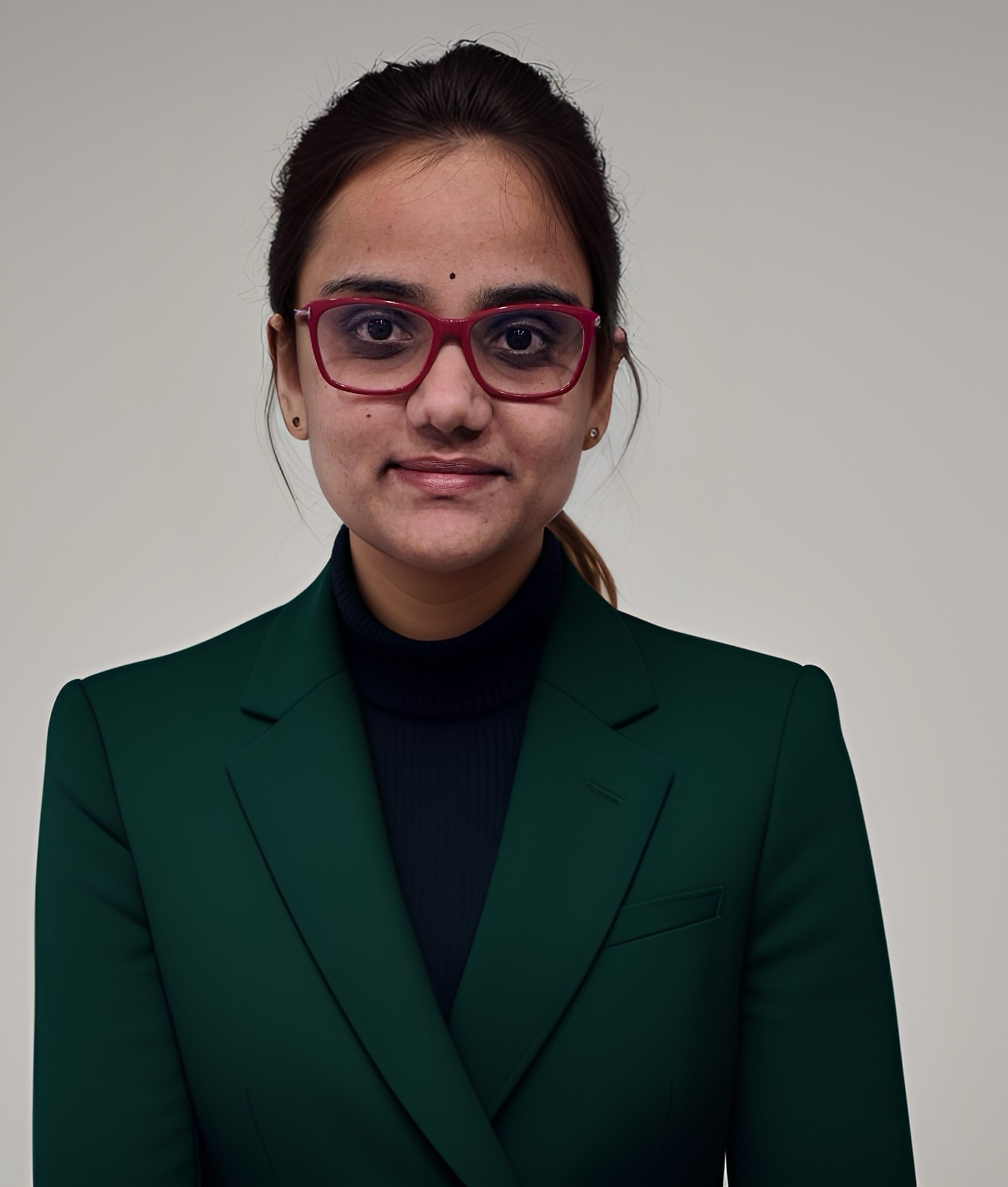
FELLOW MEMBER
Bhargavi Kalicheti has built a career at the forefront of conversational Voice AI, healthcare telephony intelligence, cloud platforms, and generative AI transformation, with fifteen years of professional experience focused on one of the most regulated and high-impact sectors in technology: healthcare. Her work spans the full arc from legacy IVR modernization to the production deployment of LLM-powered conversational voice systems, serving tens of millions of callers across provider, member, and pharmacy domains for organizations including UnitedHealthcare and Optum. Her profile reflects a sustained pattern of turning voice infrastructure from static, menu-driven systems into intelligent, adaptive, and enterprise-scaled healthcare platforms.
A major current example of that work is her leadership on the UnitedHealthcare Provider Generative Voice Intelligence System, where, as Lead AI/ML Engineer, she helped replace deterministic IVR systems serving approximately 39 million callers with an LLM-powered conversational platform across Employer & Individual, Medicare & Retirement, and Community & State lines of business. Her responsibilities included end-to-end AI architecture, prompt engineering, evaluation framework design, and responsible deployment using Google Gemini models integrated with Google Dialogflow CX. The platform achieved 90% intelligent intent recognition, a 27% call-obviation rate, and a 10% increase in provider engagement, while delivering approximately $736,000 in annual cost savings. The system also earned a Gold Stevie Award for Best Use of OmniChannel in Customer Service, underscoring both its technical value and external recognition.
Her work at Optum Health further demonstrates the breadth of her impact in applied healthcare AI. There, she designed and deployed two distinct LLM-based voice programs: the HouseCalls Intelligent After-Hours Scheduling Program and the Rally Health One Pass Conversational Wellness Access Program, together serving about 2 million callers. For HouseCalls, she engineered LLM-based complex identifier detection to interpret spoken alphanumeric member IDs and support conversational scheduling flows constrained by clinical eligibility requirements. For One Pass, she focused on NLU-based intent classification and entity extraction for wellness benefit inquiries, helping achieve roughly 18% self-service containment for gym access codes and resolving approximately 33% of program inquiries without live-agent transfer. These contributions show her ability to apply conversational AI to practical healthcare access problems that traditional IVR systems were not equipped to handle.
Another significant initiative in her portfolio is the Infusion Pharmacy LLM-Based Voice Routing and Orchestration Engine, where she designed an intent-driven orchestration layer combining generative reasoning with structured clinical workflows for approximately 2 million callers, including providers, care coordinators, and patients. Her work included LLM-driven caller-type identification, extension-based intelligent routing, and continuous prompt tuning for non-standard clinical terminology. The platform achieved a 94% intelligent intent recognition rate, automated authentication for approximately 80% of callers, increased virtual assistant engagement by about 50%, and delivered around $750,000 in annual savings through improved resolution and reduced agent transfers. This work stands out because it brought generative reasoning into a domain where prior systems were largely unable to distinguish complex clinical requests and defaulted most interactions to live agents.
At OptumRx, as Senior AI/ML Engineer, Kalicheti re-architected a legacy IVR environment into an intent-driven conversational voice platform for pharmacy benefits management, using Microsoft Azure advanced speech recognition and domain-specific machine learning models. She designed and trained custom drug-recognition models using phonetic lexicons and data augmentation, reaching a 96% prescription name recognition rate. Under her leadership, the platform scaled from approximately 12,000 to more than 575,000 monthly calls within a year, achieved around 50% automated containment, and generated approximately $2.5 million in annual operational savings. Her co-authorship of an invention disclosure related to GPT-4-based NLU innovation adds another layer of originality to her technical record.
Earlier, in the Optum Insight AARP Member Conversational Voice Platform, she helped deliver an AI-powered solution for AARP Medicare members spanning Parts A, B, C, D, and supplemental plans. Serving approximately 180,000 callers, the platform exceeded projected business benefits by 122%, achieved around 50% call containment for in-scope procedures, delivered more than 2,000 gym membership confirmation codes through self-service, and earned a Gold Stevie Award in 2023. Notably, this work included a structured migration path from static Q&A knowledge bases to RAG-based LLM-grounded responses on Google Cloud Platform, reflecting her ability to guide enterprise voice systems through meaningful architectural evolution rather than one-off feature enhancements.
Her earlier engineering contributions also laid the technical groundwork for later generative AI adoption. In the OptumRx Enterprise IVR Modernization and Voice Platform Transformation, she led migration from Avaya to Genesys Voice Platform across more than 900 toll-free numbers supporting millions of pharmacy interactions. The resulting system handled peaks of about 2.6 million calls per month, resolved 2.3 million calls annually within IVR, and generated approximately $18 million in annual operational savings. In the preceding OptumRx Specialty and Member Services IVR Consolidation, she improved specialty patient authentication from about 60% to 83%, introduced behavioral analysis and call recording, and helped achieve roughly 2.3 million resolved IVR calls annually, alongside an estimated 310 FTE workload reduction. These projects show that her strength is not limited to modern AI layers; it is rooted in deep understanding of telephony infrastructure, workflow design, and enterprise-scale service reliability.
Taken together, Bhargavi Kalicheti’s career reflects a rare combination of legacy modernization, LLM deployment, speech and language model tuning, prompt engineering, responsible AI governance, and measurable business impact in healthcare environments where correctness, compliance, and service quality are critical. Her work has repeatedly improved how millions of people access healthcare-related information and services, while also demonstrating strong technical originality and externally recognized excellence. On that basis, she presents as a highly credible fellowship-level candidate in the field of applied AI and enterprise healthcare systems.