Bhavika Reddy Jalli
Senior Data Scientist at Ericsson Inc
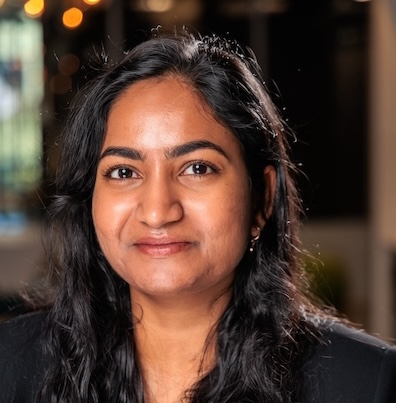
FELLOW MEMBER
Inside Ericsson’s R&D corridors, where telecommunications problems are measured in milliseconds and outages ripple across entire regions, Bhavika Reddy Jalli has built a career around a hard constraint: intelligence is only valuable in critical infrastructure if it is trustworthy. Over the past seven years, her work has concentrated on the operational reality of modern radio access networks—highly complex systems where AI can improve performance, but opaque “black-box” automation can also create new risks unless interpretability, security, and governance are engineered in from the start.
Colleagues describe her as the kind of applied scientist who is comfortable at both ends of the spectrum: training and fine-tuning deep learning models, and then carrying those systems all the way to the practical realities of deployment, integration, and lifecycle management. Her portfolio spans deep learning and computer vision for telecom field intelligence, NLP and LLM-based troubleshooting, and more recently, agentic AI patterns that combine retrieval, triage, and action planning into end-to-end operational assistants. In each area, her emphasis remains consistent—automation must be auditable, privacy-safe, and aligned with the operational safety expectations of carrier-grade environments.
A notable thread through her work is the systematic conversion of “tribal knowledge” into scalable intelligence. In telecom troubleshooting, that means transforming scattered logs, network KPIs, incident histories, and engineering runbooks into machine-consumable context—then designing workflows that can recommend or execute resolution steps with clear traceability. Her recent research work reflects that direction: she is a listed author on an arXiv publication describing a multi-agent approach to troubleshooting, positioning LLMs not as a single monolithic chatbot, but as coordinated agents that retrieve evidence, evaluate hypotheses, and sequence remediation steps.
Her record also shows impact in the more classical engineering domain of radio optimization and performance prediction. She is listed as an inventor on a granted U.S. patent relating to adaptive communication based on predictions of uplink performance across multiple antenna ports—work that sits squarely in the domain of radio performance intelligence and the engineering of more resilient, higher-throughput connectivity. A separate published patent application tied to her inventor record addresses controlling uplink power levels of radio cells—another core lever in balancing coverage, capacity, and interference in live networks.
Across these initiatives, her fellowship narrative centers on measurable operational outcomes: reducing troubleshooting time through automated retrieval and planning, lowering model-training cost through GPU efficiency improvements, and using computer vision to reduce inspection overhead in infrastructure-intensive workflows. Just as importantly, she frames success not only in accuracy metrics, but in deployability—how models behave under real-world drift, how decisions can be explained to operators, and how governance can be embedded so AI improves reliability rather than introducing fragility.