Gautham Paspala
Staff Software Engineer at Servicenow
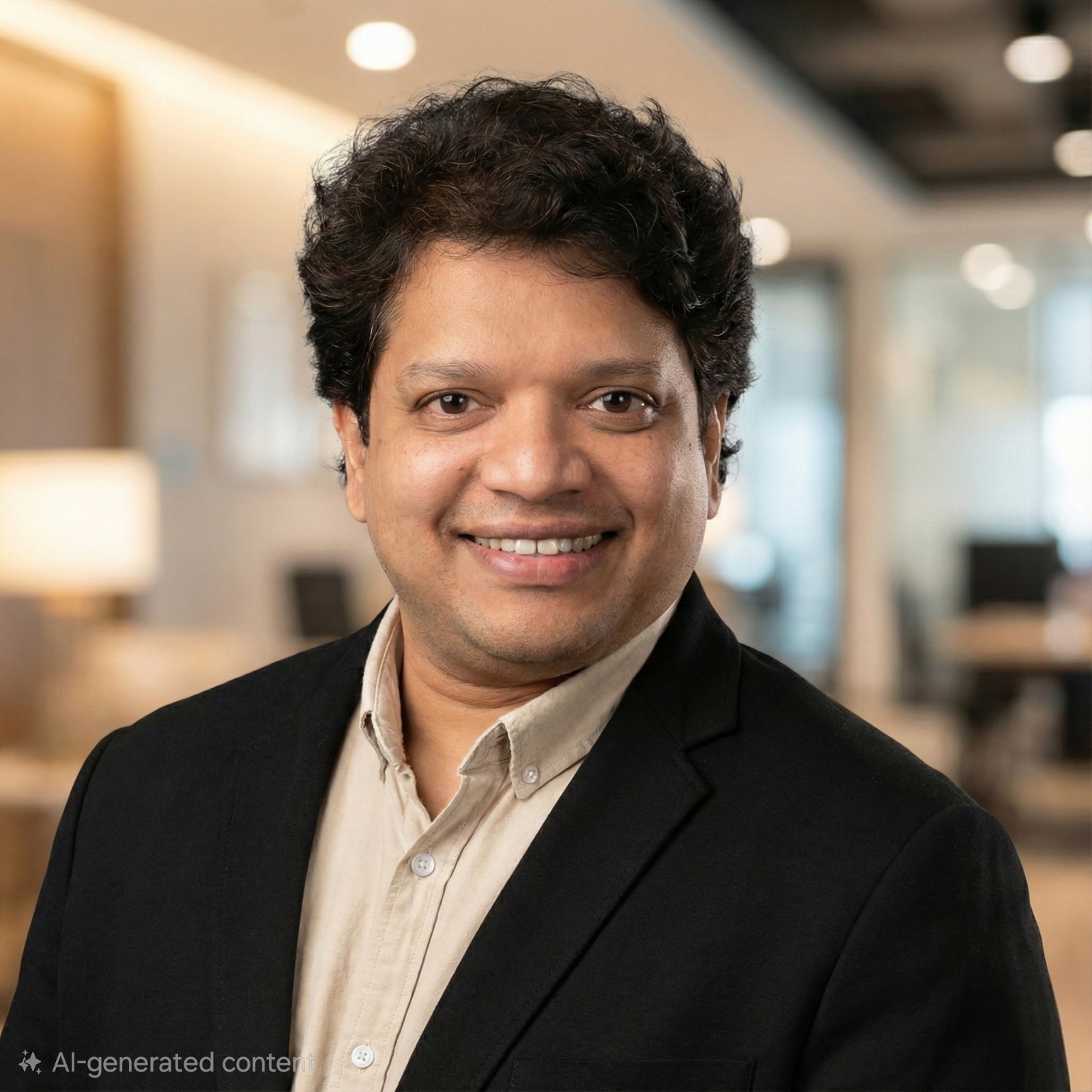
FELLOW MEMBER
Journalist-style Fellow statement for Gautham Paspala
Gautham Paspala is an enterprise platform engineer whose work sits at a high-stakes intersection: applied AI, financial operations, and compliance-by-design system architecture. Over more than 18 years, his career has concentrated on building production platforms where innovation must survive audit, regulation, and operational reality—especially in disputes, claims, chargebacks, and payment workflows where correctness and data-handling discipline are non-negotiable.
At ServiceNow, as a Staff Software Engineer, Paspala has been a principal architect behind multiple agentic AI initiatives in Financial Services Operations, focused on making AI usable inside regulated banking environments without compromising trust. His approach rejects “generic LLM answers” as a product strategy. Instead, he designs AI systems as governed software: combining generative models with deterministic controls, domain rules, evaluation metrics, and observable decision boundaries. This is how AI becomes a reliable operational asset rather than a risk surface.
A core contribution is his Claim and Dispute Summarization framework built with Now Assist, enabling financial institutions to dynamically specify the precise data inputs required for summarization—an important shift from static templates to configurable, policy-aligned summarization. He then operationalized quality as engineering practice: prompt design paired with automated evaluation on real dispute records (100+ per use case), measuring completeness, faithfulness, and correctness. In parallel, he architected a Friendly Fraud AI Agent that evaluates dispute legitimacy by correlating historical transaction data with evidence rules—bringing agentic reasoning into a domain where decisions must be explainable, consistent, and defensible.
His work also extends into security architecture where the standard is not “secure enough,” but zero trust under PCI constraints. Paspala spearheaded a tokenization-first payments design that prevents raw cardholder data from ever entering the platform. By integrating Skyflow’s privacy vault to tokenize PAN data before ingestion, embedding secure isolated containers into ServiceNow UIs via Seismic components, and building tokenized exchanges with Visa/Mastercard APIs, he created an operational model that preserves agent visibility while meeting strict data minimization and compliance requirements. The result is a platform pattern—compliance-by-architecture—that reduces systemic risk while improving usability for front-line operations.
In card operations, he served as the primary architect for Visa-based dispute and chargeback orchestration, translating immutable network rules into configurable enterprise workflows. He implemented decision-table-driven orchestration, real-time evaluation across fraud/authorization/processing error paths, Playbook-based dispute intake questionnaires, and analytics dashboards that give operational leaders governance visibility. This design discipline matters: it allows institutions to stay aligned with network governance while maintaining internal agility, reducing the fragility that often comes with rigid, hard-coded process flows.
Earlier in his career, Paspala built large-scale financial automation inside SAP ecosystems, where compliance requirements span GAAP/IFRS reporting, auditability, and lifecycle integrity. He architected a commissions amortization and accrual engine supporting dual-ledger reporting and automating expense recognition for 8,000+ sales representatives—then extended automation through ServiceNow-to-SAP integrations for GL creation, postings, and close processes. These systems reduced manual effort by more than half while improving accuracy and audit readiness—evidence of a sustained pattern: replacing operational risk with engineered controls.
Across organizations, his work repeatedly returns to platform thinking: reusable integration layers, error-correction dashboards, validation controls, and maintainable system boundaries. He has also led and mentored distributed engineering teams (up to 12 engineers), translating regulated requirements into scalable software that can be operated, audited, and evolved.