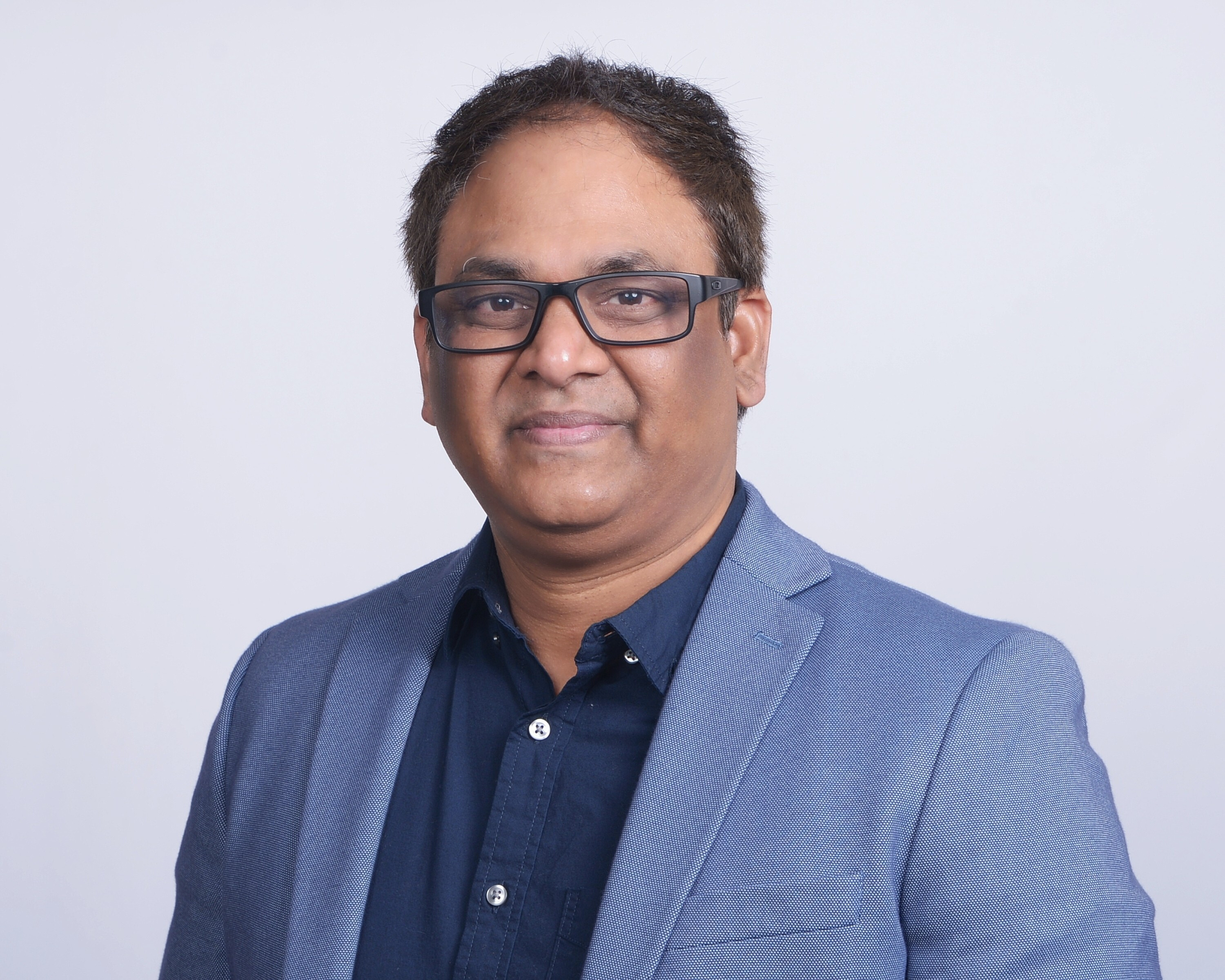
Hari Krishna Pokala
Application Development Senior Advisor Cigna Group
FELLOW MEMBER
With more than twenty-two years of professional experience in computer science and enterprise software engineering, Hari Krishna Pokala has built a career around one of the most consequential challenges facing large organizations: how to transform legacy, monolithic, and mainframe-dependent systems into scalable, cloud-native, data-driven platforms fit for modern operational demands. His work has consistently focused on cloud technologies, AI and machine learning, real-time data platforms, and legacy systems modernization across healthcare, insurance, and retail environments. What distinguishes his profile is the combination of architectural depth and practical execution through which he has repeatedly converted aging enterprise systems into resilient, high-performance platforms capable of supporting real-time analytics, advanced integrations, and intelligent user assistance.
At Cigna, one of the most significant areas of Pokala’s work has been the modernization of the Choice Funds platform, a legacy application used by customer service teams to manage HRA, FSA, and HSA claims inquiries and adjustments. Serving as Solution Architect, DevOps Developer, and Lead Developer, he led the transformation of an aging JBoss- and DB2-based application into a modern cloud-native environment while preserving interoperability with legacy claims systems. His innovation in this project lay in introducing a browser-native enterprise portal delivered through a static architecture using AWS S3 and CloudFront, effectively shifting the organization toward a serverless application delivery model. This was a meaningful architectural departure from more conventional enterprise deployment models and represented a forward-looking redesign of how operational software could be delivered at scale.
His contributions to the Choice Funds initiative extended far beyond platform migration. Pokala designed the modernization architecture, developed secure API wrappers for legacy system access, and implemented PostgreSQL data models with version-controlled schema governance. He also introduced high-performance Rust-based APIs for latency-sensitive operations, reflecting a willingness to use the right technical tools to achieve both responsiveness and reliability. Particularly notable was his integration of natural language processing and Retrieval Augmented Generation capabilities, which enabled intelligent assistance for operational users handling claims inquiry workflows. Through these contributions, the platform achieved better responsiveness, reduced infrastructure complexity, and introduced a new layer of AI-assisted operational support, showing how modernization can serve both technical and user-centered goals.
Another major contribution came through the Claim Observability Platform at Cigna, where Pokala served as Solution Architect for an initiative aimed at creating end-to-end visibility into the healthcare claims lifecycle. The objective was to eliminate fragmented monitoring practices and deliver actionable operational intelligence to both teams and leadership. He designed an event-driven architecture that connected Kafka event streams with Databricks processing environments and Delta Lake storage, enabling high-volume claims data to be transformed into near-real-time analytics. This project illustrates a defining strength in his career: the ability to design systems that are not merely technically modern, but operationally meaningful, turning raw data streams into tools for better decision-making and faster intervention.
Within the Claim Observability initiative, Pokala also designed optimized PostgreSQL data models to support complex filtering and high-performance analytical queries, while using PySpark-based streaming pipelines for continuous ingestion and transformation. A particularly forward-looking contribution was the engineering of a Retrieval Augmented Generation pipeline that allowed operational teams to query claim data using natural language. This effectively translated complex technical observability into accessible, AI-assisted interaction for business users, reducing the manual effort required for monitoring and verification. In doing so, he demonstrated not only technical sophistication, but also the practical application of AI to improve enterprise operations.
At CGI, Pokala led another high-value transformation through the modernization of the Claims Book of Records platform, which managed financial workflows for consumer-directed healthcare plans including CDHP, HSA, HRA, and FSA accounts. As Solution Architect and DevOps Developer, he guided the migration of a mission-critical mainframe platform built on COBOL, DB2, and batch-oriented processes into a scalable cloud-based architecture. This was a classic but highly demanding modernization problem: how to preserve business continuity for critical financial systems while replacing the technical foundations on which they depended. Pokala addressed that challenge through a phased migration strategy built on AWS Lambda, Amazon EKS, API Gateway, PostgreSQL, and Apache Kafka, thereby shifting the platform from batch dependence to real-time, event-driven operation.
The significance of this work lies not only in the technology choices, but in the method of execution. By designing a migration architecture that enabled accurate transformation of legacy data while maintaining uninterrupted business operations, Pokala helped ensure that modernization occurred without sacrificing reliability. The resulting platform improved resilience, reduced operational latency, lowered infrastructure cost, and continued to support critical financial workflows for thousands of users. This reflects a recurring theme throughout his career: modernization as disciplined systems engineering, where technical innovation is balanced with continuity, stability, and operational accountability.
Taken as a whole, Hari Krishna Pokala’s career reflects sustained distinction in enterprise cloud architecture, real-time data platforms, AI-assisted operational systems, and the modernization of legacy environments. His work has repeatedly combined deep technical expertise with large-scale transformation leadership, enabling complex organizations to move from monolithic and batch-oriented systems toward event-driven, intelligent, and scalable computing models. He stands out as a professional whose contributions have materially improved how enterprise systems are designed, modernized, and used in practice.