kalyan inturi
Principal Member of Technical Staff at Oracle
FELLOW MEMBER
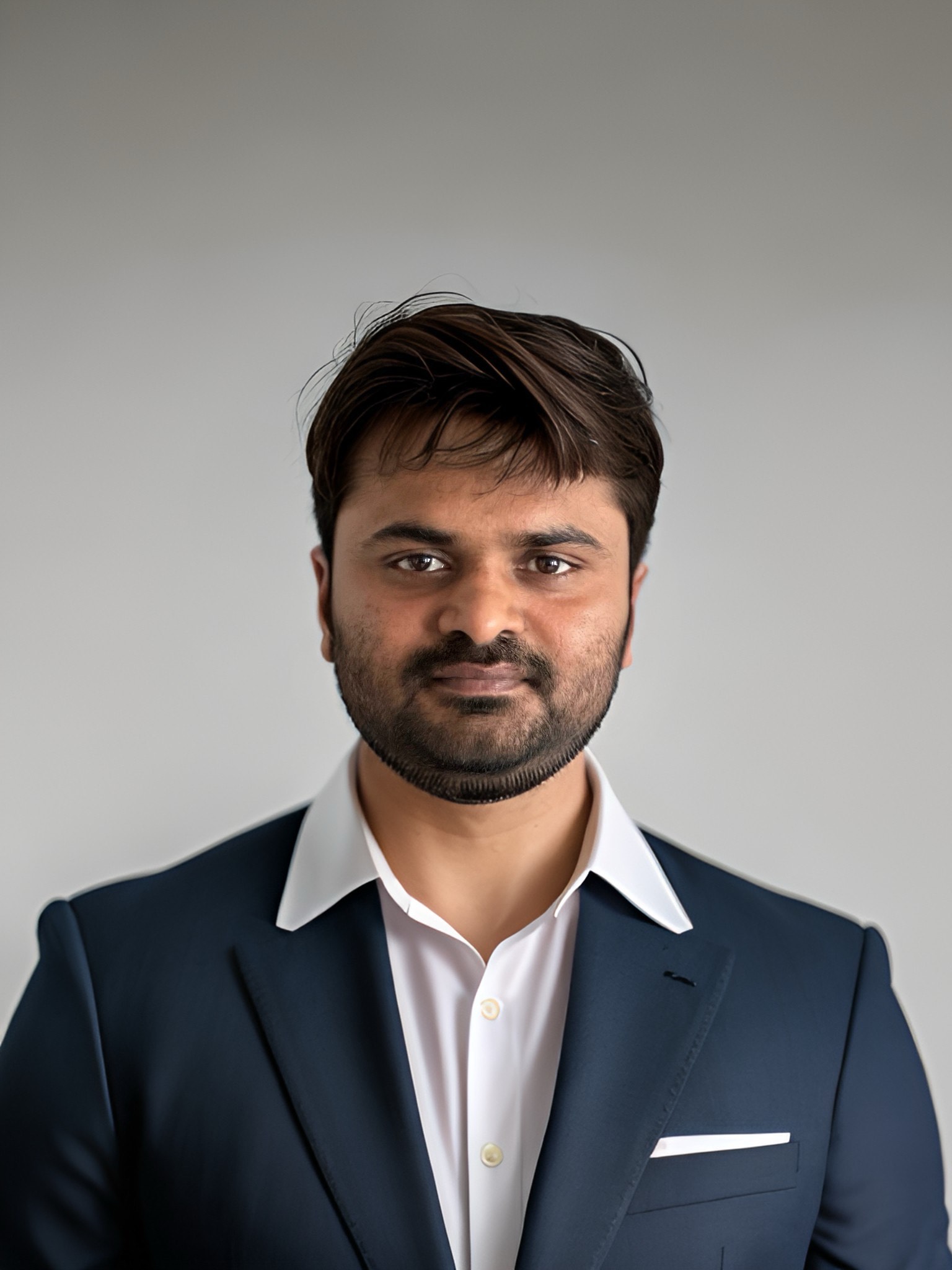
Kalyan Inturi has built his career where reliability is not a feature, but a prerequisite for revenue protection and customer trust. Over nine years in compute infrastructure reliability and enterprise platform engineering, Inturi has operated across cloud computing, SaaS, and global financial services—designing and stabilizing large-scale distributed systems, modern identity platforms, and developer ecosystems that underpin mission-critical operations. His work consistently goes beyond routine engineering execution, reflecting a pattern of stepping into high-risk platforms, establishing durable architectural fixes, and institutionalizing reliability practices through cross-team leadership and mentorship.
At Oracle Cloud Infrastructure (OCI), Inturi serves as a Principal Member of Technical Staff with responsibility for stabilizing critical scheduling infrastructure—systems whose malfunction can ripple through data center operations and create immediate revenue exposure for major customers. When disruptions surfaced, Inturi identified runaway schedulers driving excessive API calls to an external provider and designed a corrective strategy that blended exponential backoff, caching, Adapter-pattern integration, and strong observability with proactive monitoring and alerting. Beyond stabilizing behavior, the solution materially reduced external service dependence—cutting approximately 70% of API requests to the external provider, lowering operating cost and reducing future quota expansion needs. The work raised the reliability bar by preventing entire classes of outages while also mentoring senior engineers so the new practices became team standards rather than one-off fixes.
Inturi’s scope at OCI extends into forward-looking reliability strategy. He is leading the Non-Terminating Repair (NTR) compute reliability initiative—an effort aimed at enabling fault remediation without terminating customer compute instances. Historically, repair workflows in large cloud environments can be termination-heavy and coordination-intensive across multiple teams, resulting in elevated repair timelines and customer disruption risk. Inturi’s NTR strategy re-frames repair as directed remediation that preserves running instances, with the stated objective of improving service-level outcomes that previously saw p90 repair times reach as high as 18 days. His work focuses on evangelizing the model, removing adoption barriers, and shaping processes that make non-terminating repairs feasible across fault categories. The initiative is projected to reduce p90 repair times to roughly 2–5 days—improving customer experience, reducing revenue risk, and lowering operational overhead—positioning Inturi as a driver of long-term compute reliability direction, not merely incident response.
Before OCI, Inturi delivered high-stakes infrastructure transformation in SaaS environments where “no downtime” is an operational constraint, not an aspiration. At Clari, he led the migration of a decade-old monolithic Ruby gateway built on Sinatra—serving roughly 50 million requests—into a modern Kong API gateway architecture. Recognizing that direct cutover carries unacceptable risk, he designed a parity verification service that sampled live traffic, replayed a subset to the new gateway, and compared forwarded requests and returned responses for functional equivalence across status codes, headers, bodies, and other observable behaviors. This parity-driven migration pattern provided a rigorous safety mechanism for production traffic movement and later proved reusable in broader modernization efforts such as monolith decomposition. After parity validation, traffic was migrated without service interruption, delivering a complex transformation four months ahead of schedule and enabling significantly improved scalability and cost efficiency. The project also supported seamless integration of acquired products, with Inturi’s contributions recognized through promotion and elevated leadership visibility.
At Clari, Inturi also led a multi-phase unification of identity, authentication, and authorization across the core product suite and acquisitions—an effort designed to reduce customer friction and enable cross-product adoption with a cohesive authentication experience. He architected the identity schema and directed engineering teams across regions to build a centralized authentication layer using Okta and OIDC protocols. A notable innovation in this program was leveraging OIDC token inline hooks to satisfy strict enterprise impersonation requirements—capabilities initially considered infeasible—demonstrating a blend of standards-based design and creative problem-solving under enterprise security constraints. The resulting platform established an extensible identity foundation and positioned the company for future acquisitions by making identity integration a repeatable capability rather than a bespoke project.
Inturi’s platform engineering credibility is further reinforced by work in global financial infrastructure, where security, compliance, and interoperability define success. At SWIFT, he played a core role in designing and scaling the organization’s first developer platform—moving SWIFT from closed systems toward a modern API ecosystem that global banks and corporates could consume securely. The platform introduced API gateways, SDKs, microgateways, and OAuth2/JWT-based authentication, lowering integration friction while protecting backend systems with layered security controls. Inturi contributed by building secure API proxies, deploying Apigee at scale, automating gateway operations, and co-creating SDK and microgateway capabilities. This work supported mission-critical services such as the KYC Registry and GPI Tracker, used by more than 11,000 financial institutions, and helped modernize how global financial participants integrate with SWIFT services.
Earlier in his career at Freddie Mac, Inturi contributed to modernization in a highly regulated environment by helping build a microservices platform for loan management workflows using Java and OpenShift. By transitioning legacy workflows into containerized microservices, the program improved operational flexibility and development speed—providing foundational experience in regulated enterprise modernization that later scaled into cloud and SaaS platform leadership.
Across these roles, Inturi’s professional signature is consistent: architecting reliability and platform capabilities that make large systems easier to operate, safer to change, and more resilient under scale. Whether the problem is runaway schedulers, long-tail repair timelines, zero-downtime gateway migrations, or unified identity across product ecosystems, he approaches platform engineering as a discipline of measurable risk reduction—executed through architecture, automation, and organizational adoption.