Karthik Nakkeeran
Senior Data Scientist at Abbott Laboratories, Lingo INC
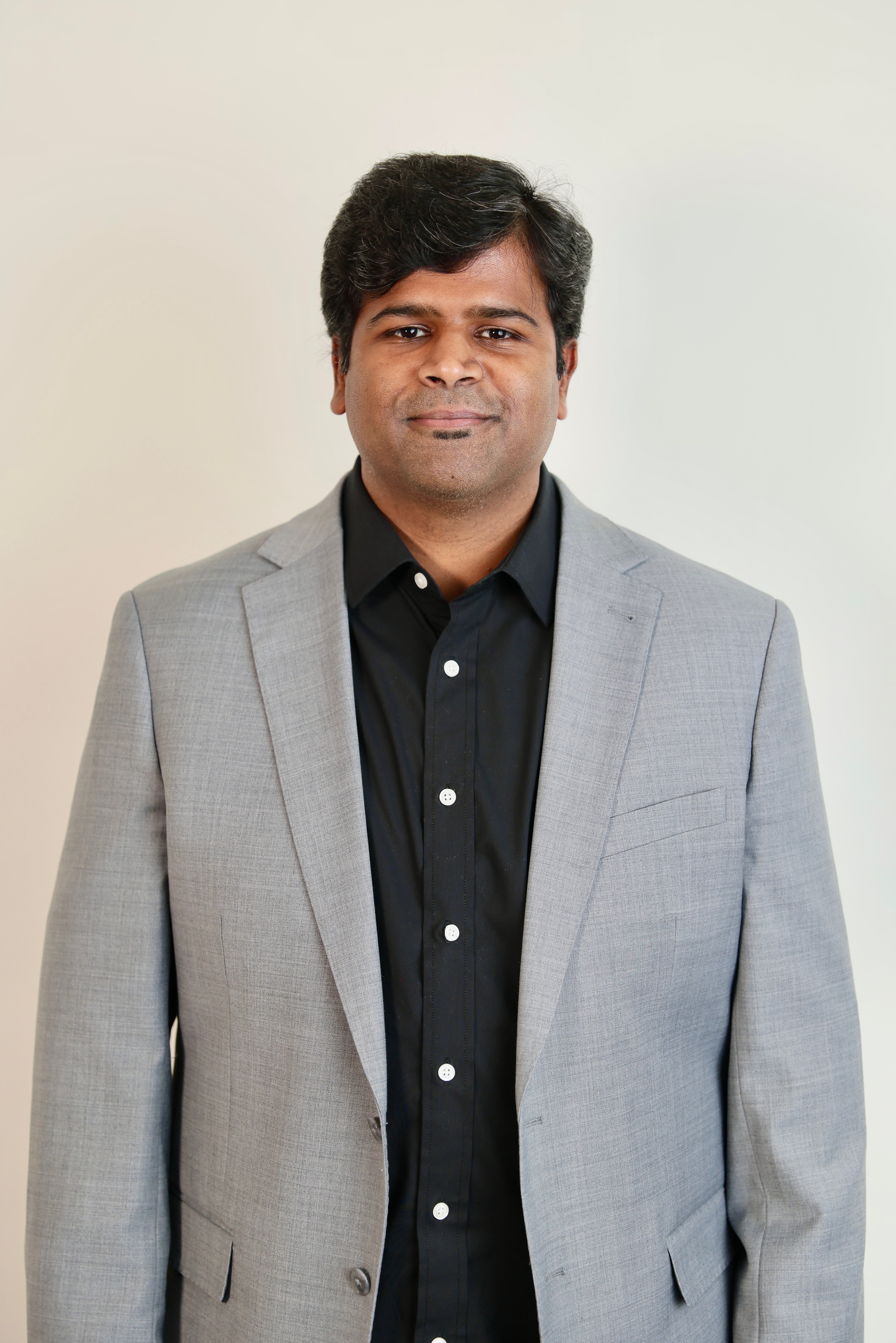
FELLOW MEMBER
Karthik Nakkeeran’s career sits at the practical edge of machine learning—where research-grade models must survive real-world constraints such as clinical standards, noisy sensor streams, operational scale, and enterprise accountability. With more than sixteen years of progressive experience in Machine Learning and Artificial Intelligence, Nakkeeran has built a record that spans healthcare analytics, computer vision, and data engineering, shaped by senior roles at Abbott Laboratories, SAS Institute Inc., and Accenture. Across these environments, his work consistently extends beyond routine delivery: he has produced patented innovations, published internationally, and earned repeated recognition for performance and technical impact.
At Abbott Laboratories’ Lingo Bio-Wearable division, where he currently serves as a Senior Data Scientist, Nakkeeran focuses on a problem that is both technically demanding and clinically consequential: predicting glucose spikes from continuous glucose monitoring (CGM) data. He designed and implemented a deep learning sequence model in PyTorch to detect and forecast glucose events, introducing a patent-pending AI architecture aimed at real-time health event prediction with corrective feedback mechanisms. To bring the work into production-grade readiness, he integrated Azure Machine Learning and Databricks to support scalable training and operational workflows, while collaborating with clinicians and regulatory stakeholders to align model development with healthcare expectations. The result is positioned as a meaningful step toward more personalized and reliable wearable-driven wellness management.
Before Abbott, Nakkeeran’s work at SAS Institute showcased a complementary dimension of his skillset: converting complex AI ideas into durable, broadly useful enterprise capabilities. In 2022–2023, he led the design and patenting of an approach that combines deep learning, Optical Character Recognition (OCR), and OpenCV to extract structured content from document images—an innovation that turns unstructured visual inputs into machine-readable data suitable for downstream analytics and visualization. The work demonstrates an applied research posture focused on practical automation: building systems that reduce manual processing while increasing consistency, traceability, and analytic leverage.
During his earlier SAS tenure (2020–2022), Nakkeeran developed automated analytic pipelines for large-scale time-series clustering and customer segmentation using SAS Viya and Python. The distinguishing element was not simply modeling, but lifecycle automation—introducing a framework that improved modeling accuracy and operational efficiency by systematizing the end-to-end analytics workflow. That work culminated in a publication presented at the SAS Global Forum, reflecting a pattern that runs through his career: translating technical innovation into documented, shareable methods that others can implement and extend.
From 2015–2020, he contributed to SAS’s Demand-Driven Planning and Optimization (DDPO) system, deploying algorithmic forecasting and inventory optimization in a unified analytics framework designed to improve demand planning accuracy and supply chain performance. This period highlights a recurring strength: applying data science and optimization to enterprise decision systems where success is measured in operational outcomes, not academic novelty.
Nakkeeran’s leadership foundation began early. At Accenture (supporting Nokia.com operations), he served as an onsite and offshore coordinator, leading a 30-member engineering team across India and Finland and implementing scripted automation for build and deployment processes. That experience—large teams, distributed coordination, automation, reliability—formed the operational discipline that later appears in his ML work: scalable pipelines, rigorous deployment thinking, and systems designed to function reliably under pressure.
Alongside industry delivery, Nakkeeran has maintained an active research orientation. He has authored and presented work in time-series analysis and cluster optimization and notes ongoing doctoral study in Artificial Intelligence, strengthening his depth in the theory-to-practice translation that is often required to move AI from experiments to real impact. He also cites mentoring and advocacy for responsible AI and data-driven decision-making—an increasingly important dimension in fields where model outputs influence human outcomes.
Taken together, his profile reflects a sustained commitment to advancing applied computer science: patented systems, published frameworks, healthcare-grade modeling, and the operational leadership required to deliver AI that is both innovative and dependable.