Mallikarjuna Muchu
Cloud DevSecOps Engineer at iSpace Inc
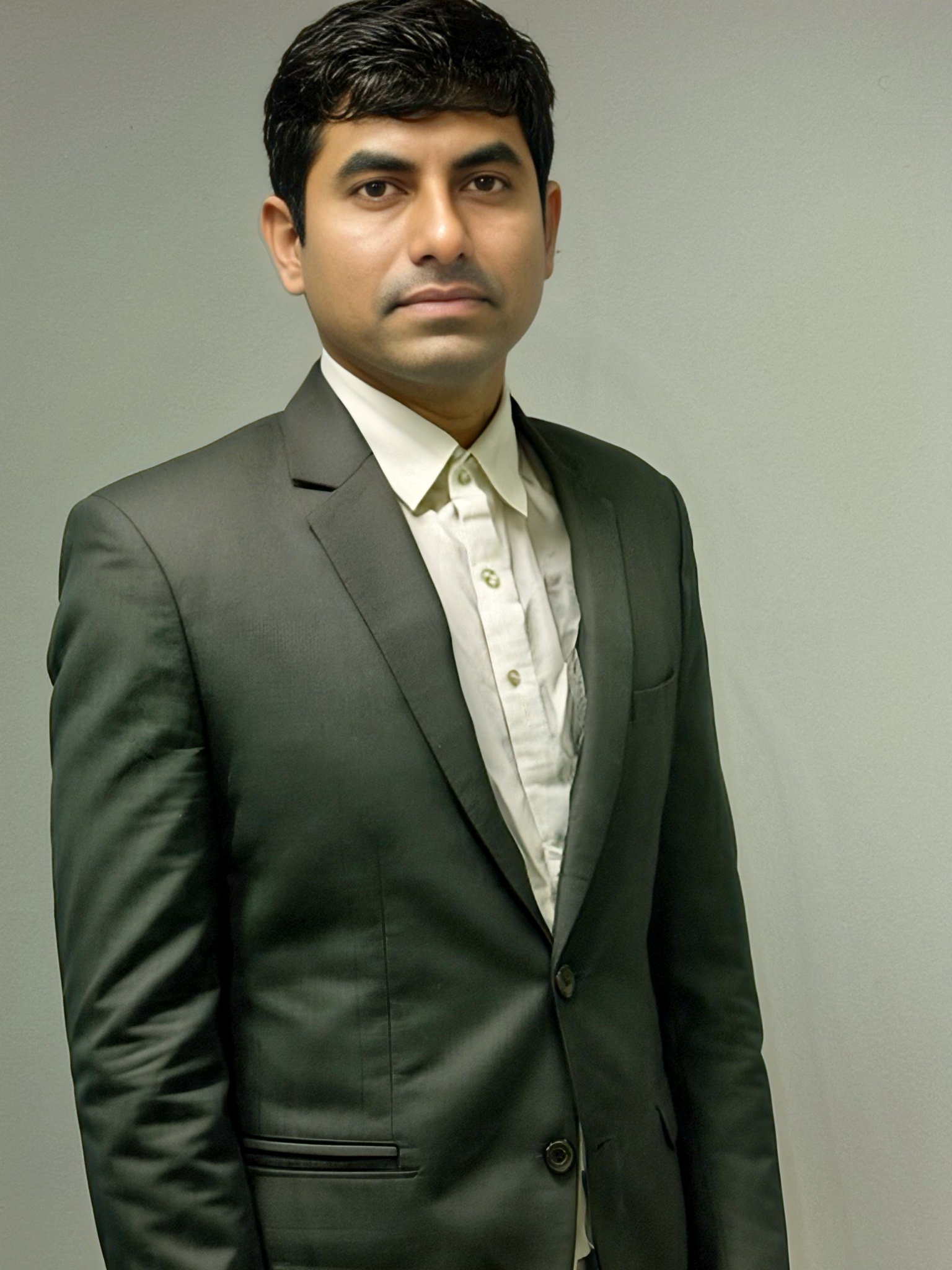
FELLOW MEMBER
Over more than two decades, Mallikarjuna Muchu has built a career defined by one consistent theme: making large organizations ship software faster, safer, and with auditable control. His progression from enterprise application development into cloud architecture, DevSecOps leadership, automation, and quality engineering reflects a practitioner who specializes in high-stakes modernization—work that must satisfy uptime, compliance, security, and scale requirements simultaneously. Across assignments spanning federal agencies, healthcare payers, global technology enterprises, financial institutions, and market research platforms, Muchu’s impact is measured in concrete operational metrics: cycle-time compression, defect reduction, vulnerability prevention, and cost takeout through automation.
In his current federal-facing role as a Senior Cloud DevSecOps Engineer at the U.S. Department of Labor, Muchu has focused on eliminating friction in delivery while strengthening security gates. He architected a zero-dependency delivery engine built around GitLab CI, integrated with Amazon EKS, and standardized Kubernetes deployments through Helm and ArgoCD. By embedding security and quality controls—SonarQube, Trivy, and Qualys scanning—directly into the CI/CD lifecycle, he removed the need for manual change-approval steps and drove an ~80% reduction in deployment cycle time across 200+ applications. To ensure that velocity did not erode reliability, he integrated JMeter-based load testing, validating pipeline behavior under concurrent load and establishing repeatable performance confidence for release operations.
At CareFirst BlueCross BlueShield, Muchu’s work emphasizes infrastructure standardization, drift elimination, and security-by-design in an enterprise Azure environment. He developed reusable Terraform modules and ARM templates that automate consistent deployment of core components—VMs, AKS clusters, Virtual Networks, Key Vault, and Azure Container Registry—reducing configuration drift by 90%+. In parallel, he led middleware modernization that transitioned workloads from IBM WebSphere to Apache Tomcat on Linux, achieving a reported 90% reduction in licensing costs while implementing layered security controls. He operationalized supply-chain and application security by integrating Contrast Security (IAST) and Tidelift (SCA) as CI/CD gates—controls that repeatedly surfaced and blocked critical issues before release. He also migrated legacy Jenkins/Bitbucket pipelines to GitLab CI, establishing a modular deployment framework supporting 100+ microservices.
Muchu’s tenure at NielsenIQ showcases his ability to combine engineering rigor with governance mechanics, turning historically slow, high-risk operational workflows into predictable, automated systems. He implemented Jenkins declarative pipelines across Java, Python, and .NET ecosystems; provisioned AWS infrastructure via Terraform (EC2, S3, VPC, ECS, ECR, EKS); and built monitoring foundations using CloudWatch, Prometheus, and Grafana, reducing MTTR by ~40%. His most distinctive contributions in this period were governance-driven automation systems. He architected an enterprise database deployment automation platform using Flyway, integrated with JIRA as a change-control layer and Git as a versioned migration source of truth—reducing database deployment cycles from 4–6 hours to ~30 minutes and producing material annual cost savings through labor and risk reduction. In a similar vein, he designed JIRA-driven change request automation that collapsed routing and approval processing from ~40 hours to ~30 minutes, and established a standardized branching and compliance model (branch protections, environment-specific policies) delivering full audit traceability and eliminating unauthorized production changes.
Earlier in his career, Muchu expanded his delivery discipline through RPA and quality engineering leadership at Nielsen call center applications. He led automation feasibility analyses and developed bots using Blue Prism, UiPath, and Automation Anywhere, reducing manual processing by 80%+. He built test automation frameworks (Selenium with Python, UFT) and managed QA governance through tools like JIRA, HP Quality Center, and SPIRA, achieving ~95% test coverage and reducing production defects by ~60%. He also contributed to CATI (Computer-Assisted Telephone Interviewing) systems and survey orchestration workflows, supporting national-scale market research used to inform major media and advertising decisions—experience that strengthened his instincts for data integrity, operational accuracy, and systems reliability.
Muchu’s foundation includes enterprise software development roles at Bank of America and Wolters Kluwer, where he delivered .NET-based applications aligned with corporate standards and compliance expectations. Across all roles, a clear professional signature emerges: he operationalizes “secure, compliant delivery” not as policy statements, but as enforced engineering controls—repeatable pipelines, auditable workflows, and automation that eliminates human bottlenecks.
His work is reinforced by a broad set of certifications across cloud, DevOps, and automation, including AWS Cloud Practitioner, Azure Administrator (AZ-104), Azure DevOps (AZ-400), Terraform Associate, PSM1, and multiple RPA certifications. He also prioritizes knowledge transfer—authoring runbooks, developing documentation, mentoring engineers, and leading agile rituals—so that improvements persist beyond a single initiative and become institutional capability.