NAGA VENKATESWAR PALAPARTHY
Director of Software Engineering at Moodys
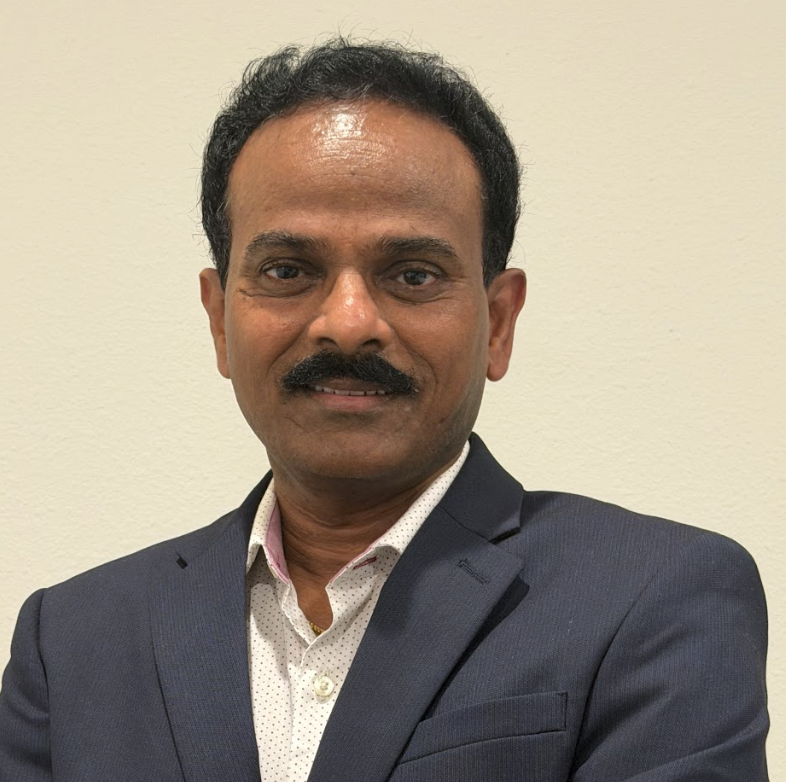
FELLOW MEMBER
In a technology career spanning more than two decades, Naga Venkateswar Palaparthy has built a consistent reputation for taking difficult, high-stakes platforms—risk analytics, enterprise integration, incident response, and regulated healthcare systems—and making them scalable, governable, and operationally reliable. His work sits at the practical frontier where modern cloud engineering meets AI/ML enablement: not AI as a demo, but AI integrated into production platforms with clear controls, cost discipline, and resilience patterns suited for enterprise adoption.
Most recently, he has operated in the climate-risk domain at Moody’s, where the industry’s expectations are unusually exacting: climate analytics must be defensible, auditable, and performant, while still evolving quickly as models and regulatory pressures change. Publicly available material describes Moody’s “Climate on Demand” as an enterprise climate-risk analytics capability, positioned to help organizations evaluate climate hazards and scenario-based risk through structured, model-backed outputs. Against that backdrop, Naga’s leadership—owning architecture, reliability, and delivery execution—reflects a profile shaped by accountability: getting sophisticated analytics into the hands of decision-makers without sacrificing platform governance or cost containment.
Before that, his trajectory through catastrophe-risk and analytics engineering at RMS (Risk Management Solutions) shows a parallel pattern: replacing brittle dependencies and integrating complex third-party peril data into modular, extensible systems. RMS’s SiteIQ, for example, is publicly described as a location intelligence capability for risk analytics—built to connect property/location context with hazard and exposure insights, which is foundational to insurance and resilience planning. Naga’s described ownership of extensible integration frameworks and cloud-native processing aligns directly with the real-world requirements implied by products like SiteIQ: high-volume data ingestion, consistent entity modeling, and stable APIs that allow analytics teams to evolve models without destabilizing downstream consumers.
Earlier in his career, he operated at the intersection of consumer-scale platforms and regulated enterprise systems. At American Express, he worked on integrating financial services experiences with external social platforms—an effort that requires careful boundary design around identity, authorization, and controlled data exchange. Public reporting from the period describes American Express’s Serve platform as a major digital payments initiative, with coverage also noting a “Serve with Facebook” experience as part of how the product reached users through social channels. The common thread in this stage of his career is not merely “integration,” but integration under constraints: security, reliability, and auditability, even when the external surface area expands.
That same discipline shows up in his work on incident management and medical-device-adjacent software, where the definition of “done” is stability and safety. In these environments, engineering quality is not optional—secure multi-tier logic, encryption, replication, and testing rigor are the difference between a working system and an operational risk. Across domains, Naga’s profile reads like that of a platform leader who repeatedly takes on the unglamorous but decisive work—hardening architecture, reducing systemic risk, and enabling teams to ship faster without breaking trust.