Phani Suresh Paladugu
Executive Director - Product Management at Synopsys
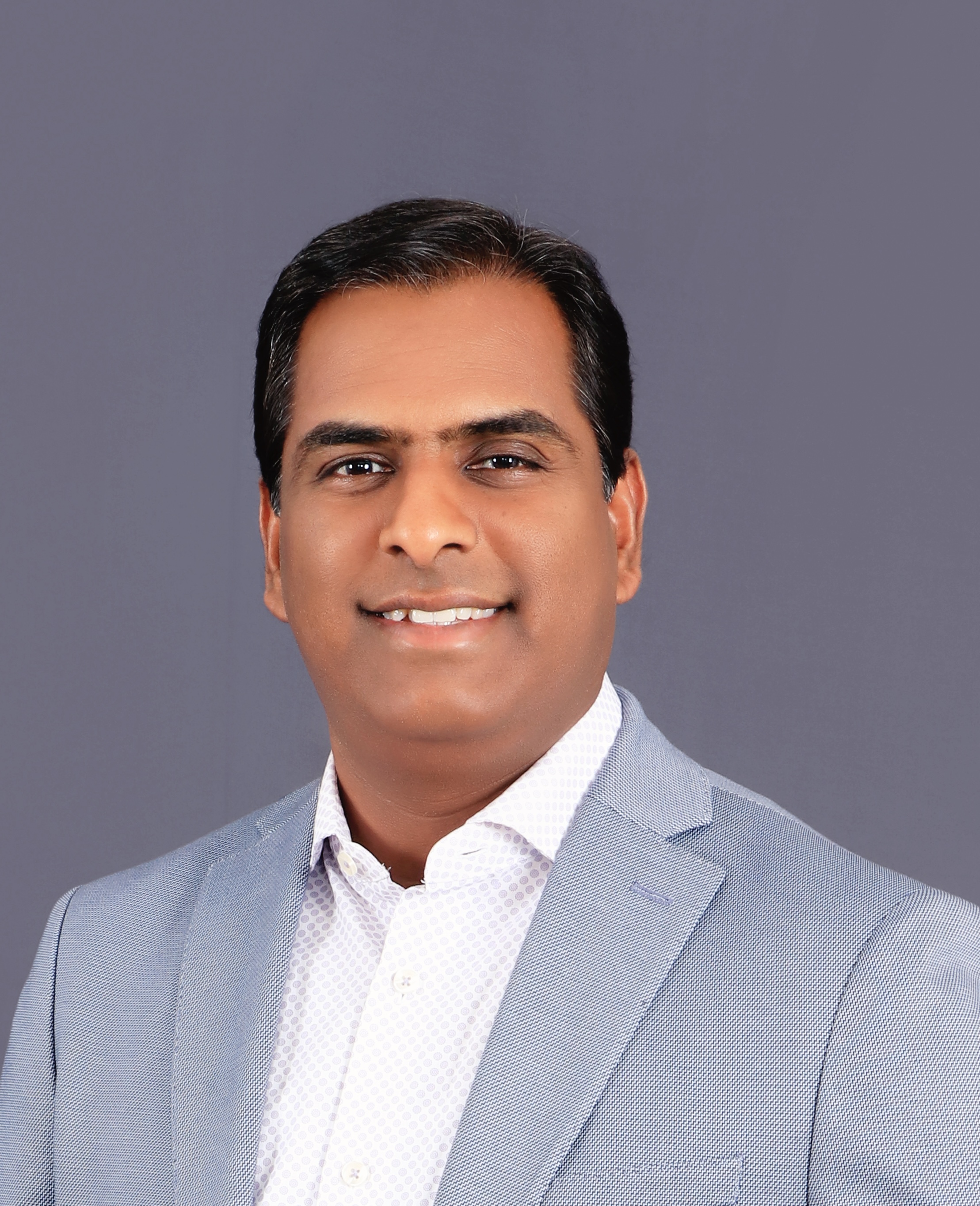
FELLOW MEMBER
Phani Suresh Paladugu is a semiconductor technology leader with 21+ years of experience spanning high-speed interface IP, advanced memory subsystems, and complex SoC architecture for High Performance Computing (HPC), AI accelerators, and data center platforms. Across Synopsys, Rambus, Cadence Design Systems, and Smartplay, Paladugu’s work has consistently lived at the “performance frontier” of modern computing—where bandwidth, latency, power integrity, thermal behavior, and system interoperability must all be engineered simultaneously, and where architectural choices propagate directly into platform competitiveness.
In his current role as Executive Director of Product Management at Synopsys (2025), Paladugu is focused on next-generation chiplet-era memory expansion, defining custom HBM4 chiplet requirements for leading DRAM vendors. His work integrates multiple hard domains into a single deliverable: HBM4 controller requirements, UCIe configuration, interface logic, management modules, and the integration boundary between DRAM vendor TSV PHYs and a UCIe-based subsystem. A defining thread in this program is system-level realism—explicitly addressing signal integrity, power integrity, and thermal hot-spot minimization through placement optimization and vendor collaboration. The objective is a complete, interoperable chiplet solution that accelerates time-to-market by reducing integration friction for customers building AI/HPC platforms.
Also at Synopsys, Paladugu has been driving Arm compute-subsystem ecosystem enablement (2025) as part of end-to-end platform solutions aligned to Arm’s interconnect and memory ecosystem requirements. By defining DDR5, PCIe Gen6, and UCIe subsystem requirements that align with Arm CMN interface expectations (including CHI and related chip-to-chip interfaces), he is shaping configurable “off-the-shelf” subsystem options that reduce the cost and time of platform assembly. This work sits at the intersection of IP definition, EDA enablement, hardware integration, and customer adoption—where product strategy must be grounded in integration realities.
Previously at Rambus, Paladugu operated closer to the architectural core of memory and connectivity IP. As Senior Director (2024), he led definition of an HBM4 controller for generative AI and HPC workloads—establishing performance targets, latency optimization strategies, and best-in-class Telemetry and RAS (Reliability, Availability, Serviceability) features designed to minimize total cost of ownership at scale. His approach emphasized practical tradeoffs: selecting DFI ratios to balance gate count and latency, ensuring compatibility across standard PHYs and TSV PHY environments, and explicitly analyzing timing closure and thermal constraints. A notable differentiator was the inclusion of state-aware telemetry across DFI and host interfaces—instrumentation intended to make performance and behavior observable and actionable in real deployments, not merely in simulation.
In 2022–2023, Paladugu led major revamps of PCIe Gen6 and CXL 3 subsystem solutions for AI accelerators, CPUs, NICs, switches, and storage. His innovation focused on phased implementation to prioritize receiver latency, then transmitter latency, achieving step-function end-to-end latency improvements. This kind of subsystem work is structurally important: in AI/HPC platforms, link latency and power are often as determinative as raw throughput, and CXL coherency domains amplify the consequences of design tradeoffs.
Earlier, as Director at Rambus (2019–2020), Paladugu defined a 112G-XSR PHY for pluggable modules and co-packaged optics, targeting stringent PAM4 signaling demands. He drove system-level analysis and implemented a proprietary FEC approach that optimized coefficients based on channel profiles—an example of designing not just for compliance, but for measurable latency and BER outcomes under realistic channel conditions.
Beyond product and architecture leadership, Paladugu has also contributed scholarly publications on hierarchical memory systems, data center AI infrastructure evolution, and SerDes optimization for AI workloads, while serving as a peer reviewer for IEEE societies and multiple international conferences. His professional recognitions and memberships reflect sustained leadership and domain authority in AI-optimized interface and memory technologies—an area increasingly central to the performance limits of modern compute.