Rasmi Ranjan Nayak
Senior Software Engineer at ASML
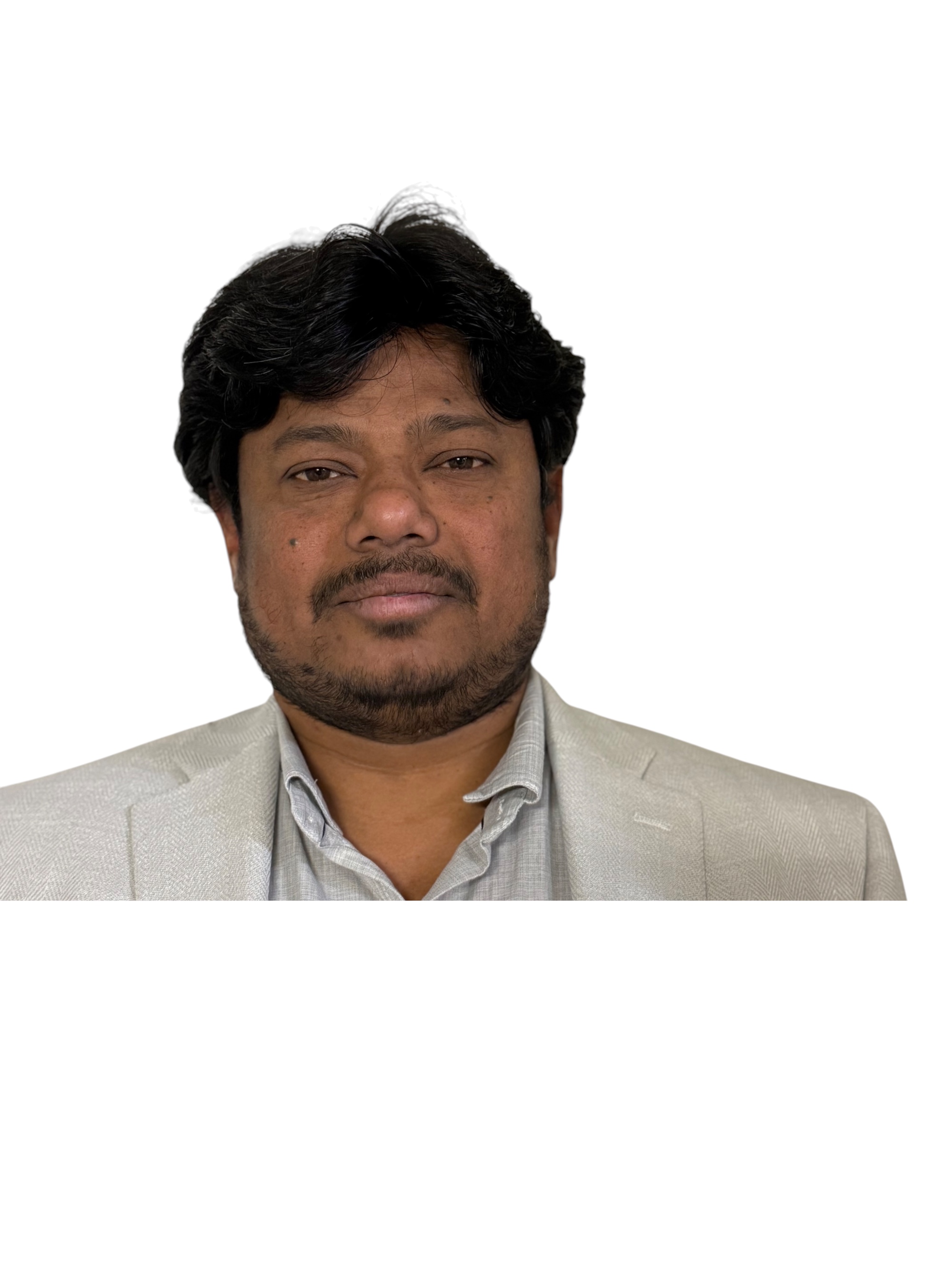
FELLOW MEMBER
Rasmi Ranjan Nayak is an embedded systems and industrial automation engineer whose work has consistently lived in the “hard problems” layer of technology—where real-time constraints, safety expectations, and tight hardware–software coordination determine whether systems perform reliably in production. Across 18 years in embedded engineering, Rasmi has delivered software spanning semiconductor manufacturing equipment, industrial automation controllers, fleet telematics, automotive modules, radio communications, and enterprise infrastructure—domains where correctness, determinism, and traceability matter as much as raw functionality.
Technically, Rasmi’s profile is defined by strong low-level engineering fundamentals: C/C++ and Python, development across Windows, Linux, VxWorks, Nucleus Plus, and OS20, and comfort operating close to buses, sensors, and field protocols. His experience includes automotive and industrial communication stacks such as CAN/J1939, CANOpen, EtherNet/IP, and radio protocol environments (P25 variants, EDACS), supported by rigorous tooling across debuggers, build systems, CI pipelines, and test frameworks.
At ASML, Rasmi’s contributions align with the expectations of high-throughput lithography systems, where motion control, stage/handler precision, and peripheral mechanisms operate at extreme speeds. ASML describes the TWINSCAN NXT:870B as reaching 400 wafers per hour through faster stages and extended mechatronics—an environment where embedded correctness and timing fidelity are mission-critical. Rasmi’s work on reticle-handling/peripheral software and supporting automation sits inside this performance envelope, reinforced by invention-level outcomes such as WO2025061615A2, which addresses motion control and slip risk around patterning devices (reticles) under high acceleration conditions.
Beyond semiconductor equipment, Rasmi’s record shows repeatable delivery across industrial platforms: safety and crossload environments on Rockwell ControlLogix 5580, railway maintenance systems at Harsco Rail, telematics/ELD stacks at Motive, secure server lifecycle automation at Dell (iDRAC), radio simulation environments at L3Harris, and embedded automotive controls at Volvo/Continental. In each setting, the recurring pattern is clear: Rasmi engineers for reliability, diagnosability, and maintainability—while collaborating across mechanical, electrical, firmware, QA, and systems teams, and consistently mentoring and transferring knowledge through reviews, documentation, and training.