Ravi Sankar Natukula
Senior Business Systems Engineer Lyft Inc
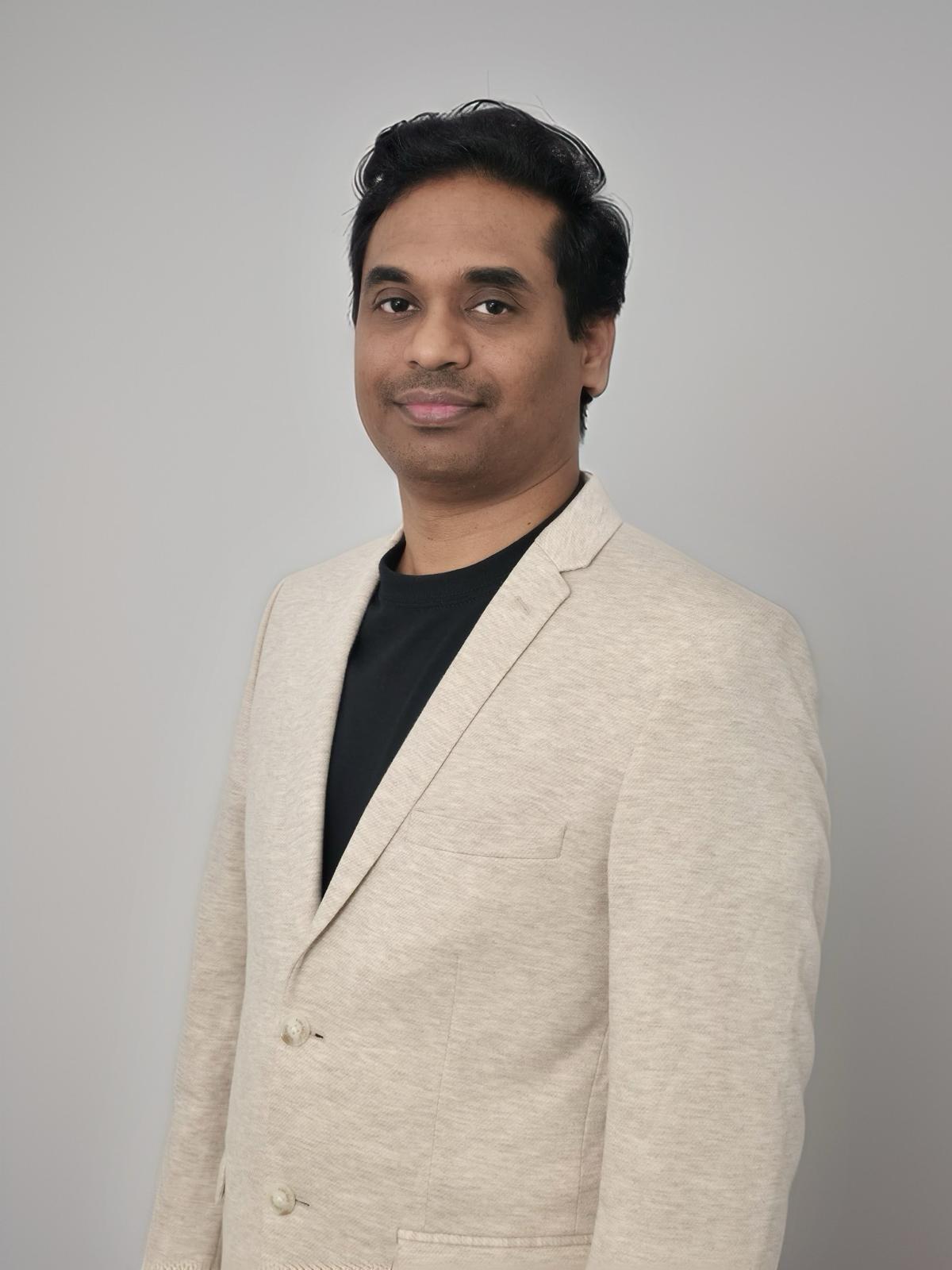
FELLOW MEMBER
Ravi Sankar Natukula’s career reflects more than 19 years of sustained leadership in enterprise systems architecture, large-scale planning platforms, and post-merger technology integration. Across global organizations including Lyft, Sunrun, Google, General Electric, and Oracle, he has established a professional record centered on designing and scaling systems that allow complex enterprises to function coherently across regions, currencies, regulatory environments, and business lines. His work stands out not simply because of the technical sophistication involved, but because it consistently addresses the structural challenges that determine whether large organizations can integrate, grow, and operate effectively at scale.
At the core of Ravi Sankar Natukula’s expertise is a deep specialization in enterprise architecture for multi-entity environments. His systems work has repeatedly focused on unifying fragmented operations, modernizing planning ecosystems, and enabling interoperability after acquisitions and business transformations. This is a demanding and strategically important branch of applied computer science, requiring architectural judgment that spans software systems, business process design, global compliance, data integration, and long-range operational planning. His career demonstrates an ability to move beyond isolated technical implementation and instead shape the systems backbone through which major enterprises manage growth and complexity.
One of the clearest examples of this leadership is his work at Lyft as Senior Business Systems Engineer, where he led enterprise integration initiatives following major acquisitions including FREENOW and TBR Global Chauffeuring. In that role, his objective was to architect a unified global platform that would allow acquired businesses to interoperate within Lyft’s broader ecosystem while still preserving local market, regulatory, and operational requirements. This was not a narrow integration effort. It required building a scalable framework for post-merger onboarding across continents, enabling a single enterprise platform to support operations across thousands of cities and more than a hundred countries.
His contributions at Lyft had direct strategic significance. He designed architectures that enabled cross-Atlantic customer and driver interoperability, multi-currency transaction support, consolidated financial reporting, and compliance alignment across global entities. The resulting unified enterprise model was capable of supporting ride-hailing, luxury transport, and payments within a shared operational framework. In practical terms, this helped expand Lyft’s operational footprint and materially strengthened its long-term market opportunity. His role also extended beyond technical delivery into advisory leadership, as he supported decision-making around post-merger readiness, risk mitigation, and the alignment of system architecture with profitability and scalability goals.
At Sunrun, as Staff Infrastructure and Enterprise Engineer, Ravi Sankar Natukula led the architectural strategy and implementation of enterprise planning and supply chain platforms supporting nationwide operations across 38 locations. This work transformed fragmented, spreadsheet-driven planning processes into an integrated cloud-native environment capable of supporting real-time decision-making and multi-billion-dollar procurement operations. By leading migration from on-premise systems to Oracle Cloud SCM and architecting scalable solutions across demand planning, supply planning, inventory, purchasing, and warehouse management, he enabled a more disciplined and analytically grounded operating model.
The impact of this work at Sunrun was substantial. The platforms he designed improved forecast accuracy, strengthened nationwide inventory planning, reduced inventory carrying costs, and produced tens of millions of dollars in cost savings. Equally important, he supported long-term organizational adoption by leading training initiatives for over 250 stakeholders. This demonstrates a recurring characteristic of his work: he does not merely build systems, but ensures those systems are operationally viable, institutionally adopted, and capable of producing durable enterprise outcomes.
Earlier in his career at Google, Ravi Sankar Natukula worked as a Business System Integration Analyst on a large-scale enterprise planning system intended to optimize procurement operations valued at approximately $6 billion annually. This initiative required integrating advanced planning upgrades with third-party platforms to create a unified planning environment suitable for Google’s highly complex global supply chain. Working across more than 15 cross-functional teams, he designed process flows, prototypes, and integration points that improved procurement cycle times, enhanced vendor collaboration, and established meaningful SLAs and KPIs. The project shows his ability to work at the intersection of systems integration, supply chain architecture, and enterprise process optimization in one of the world’s most technically demanding organizations.
His work at General Electric as a Solution Architect further reinforced his expertise in enterprise-scale planning transformation. There, he spearheaded an end-to-end demand and supply planning modernization across Energy, Power, and Water business units. The initiative replaced manual planning workflows with automated systems and KPI-driven dashboards, enabling more data-driven decision support. Through system configuration, testing, deployment, and cross-functional design workshops, he helped deliver improved forecast accuracy, reduced stock-outs, lower inventory levels, and enhanced supplier quality. This work illustrates his strength in translating broad operational requirements into scalable system architectures with measurable impact.
At Oracle, Ravi Sankar Natukula contributed as a Senior Software Engineer to the evolution of major ERP planning products, including ASCP and Demantra. His role focused on advancing core planning algorithms, improving system performance, and delivering new product capabilities within widely adopted enterprise software platforms. He delivered more than 20 new product features and re-engineered forecasting and planning functions to improve stability, quality, and performance. These contributions are important not only because of their technical merit, but because they supported global customers relying on Oracle planning systems for mission-critical business operations.
Taken together, Ravi Sankar Natukula’s career reflects a highly credible and distinguished pattern of achievement in enterprise systems architecture. His record spans post-merger integration, cloud transformation, global procurement optimization, planning modernization, and enterprise product innovation. In each context, he has operated on systems that are operationally central, geographically broad, and financially significant. His work demonstrates the practical application of computer science to business-critical environments where system architecture has direct implications for efficiency, compliance, growth, and profitability.
What emerges from this record is the profile of a technologist whose contributions extend well beyond ordinary engineering execution. Ravi Sankar Natukula has consistently shaped enterprise platforms that enable organizations to integrate acquisitions, modernize operations, optimize planning, and manage complexity at scale. His technical depth, cross-organizational leadership, and measurable business outcomes strongly support recognition at the Fellowship level.