Romal Bharatkumar Patel
Software Developer - Full Stack at SoundThinking Inc
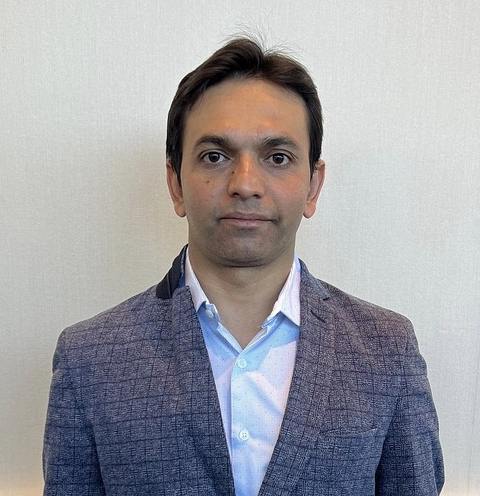
FELLOW MEMBER
Romal Bharatkumar Patel has built a career defined by a consistent ability to transform operational systems that organizations had long struggled to modernize on their own. Over more than two decades in professional software development, his work has focused on introducing structure, efficiency, and technological leverage into environments where reliability and accountability are essential. As a Software Developer at SoundThinking Inc., the company behind ShotSpotter and a recognized provider of public safety intelligence technology, Patel’s current work extends a broader career that has touched public safety, judicial systems, enterprise operations, telecommunications infrastructure, and banking systems. His profile reflects not only technical versatility, but also a repeated pattern of making complex systems more actionable, auditable, and scalable.
At the center of Patel’s professional identity is work situated at the intersection of full-stack software development, government systems modernization, and public safety technology. The systems he has built have not addressed abstract technical exercises; rather, they have solved real-world operational problems affecting courts, law enforcement agencies, telecom providers, and enterprise organizations. This is a significant distinction. In these environments, software architecture directly influences due process, evidence integrity, case workflow transparency, billing accuracy, and administrative compliance. His work has repeatedly contributed to making these systems more dependable and more effective under conditions where the stakes for failure are high.
One of Patel’s most consequential contributions is the Evidence and Case Management System at SoundThinking, deployed with the New York City Police Department. This platform manages the intake, processing, and evidentiary tracking of acoustic gunshot detection data, linking SoundThinking’s detection capabilities with criminal justice workflows. In practical terms, the system helps convert raw acoustic evidence into structured documentation that can be used in investigations and legal processes. Its significance lies in its role as a bridge between public safety intelligence technology and the formal evidentiary requirements of one of the world’s largest law enforcement organizations. By helping operationalize this connection, Patel’s work contributes directly to how public safety data is processed, preserved, and acted upon.
His portfolio also includes important work in judicial modernization. The Zolpa Online Prisoner Arraignment system digitized the arraignment process for incarcerated individuals, making remote judicial proceedings possible and reducing the logistical burden on courts and correctional facilities. In a domain where physical transport, scheduling, and administrative coordination can delay proceedings, this type of digitization has substantial practical value. It introduces efficiency while also supporting more timely handling of due process events. Patel’s role in such a system demonstrates an understanding of software not merely as an administrative tool, but as a mechanism for improving the functioning of justice-related institutions.
Patel has also contributed to a broader family of case-management and workflow systems that emphasize visibility, accountability, and structured processing. The Internal Case Management platform for profiling complaints centralized complaint intake and processing into auditable workflows. The Omniform System standardized form-based data capture across organizational processes, while the Internal Case Management and Tracking system supported full lifecycle tracking of cases, allowing organizations to monitor, escalate, and resolve issues with visibility into status and history. These contributions are notable because they show a sustained concern with process discipline and organizational traceability, both of which are essential in public and enterprise systems that must withstand scrutiny.
In the enterprise sector, Patel’s work includes a major user-experience transformation for Avis Budget Group through the Wizard GUI initiative. Developed during his Tata Consultancy Services engagement, this platform supported one of the world’s largest vehicle rental operations. The earlier Wizard GUI Phase One, built at Clairvoyant Tech Soft, provided the architectural foundation that was later expanded within Avis Budget Group, representing a sustained contribution to operational interface modernization in a large-scale rental management environment. This work demonstrates that his expertise is not confined to public-sector systems; he has also contributed to enterprise platforms where usability, workflow efficiency, and architectural continuity are central to large operational networks.
His earlier career in telecommunications and financial systems further illustrates the breadth of his impact. The SipDroid Application introduced VoIP capabilities to BSNL and IRCTC, two major Indian public-sector organizations. The Renovau Billing System automated BSNL’s billing lifecycle, reducing cycle times and removing manual dependencies. The CRESTEL Convergent Billing system provided an integrated platform for managing multiple service types within a single billing architecture. At Cosmos Co-operative Bank, the Payroll Processing System automated payroll lifecycle management, introducing accuracy and compliance controls into a process that had previously relied on manual workflows. Together, these projects show that Patel has repeatedly applied software engineering to domains where automation yields both operational efficiency and governance improvement.
What makes Patel’s record especially compelling is its cross-domain consistency. Across eleven systems spanning public safety, judicial proceedings, complaint management, rental operations, telecom billing, and banking payroll, his work has centered on building software that replaces fragmentation with structure and manual dependency with reliable automation. The outcomes are described in operational terms—cases handled more accurately, arraignments processed more efficiently, billing errors reduced, payroll cycles automated to compliant standards—but the larger pattern is architectural. He has repeatedly helped institutions move from static, labor-intensive workflows to more systematic and auditable digital systems.
Patel’s profile is also strengthened by his standing as a Senior Member of IEEE, which signals external professional recognition beyond employer contexts. This matters because it suggests that his work is not only operationally valuable, but also recognized within the broader professional engineering community. The combination of long-term software delivery, public-sector and enterprise modernization, and professional recognition gives his candidacy a strong fellowship-level foundation.
Looking ahead, the source text also indicates that the next phase of his work is likely to involve AI-driven automation within public safety and government case-management systems, particularly in evidence classification, case routing, and outcome prediction. That forward direction is consistent with the broader arc of his career: using software engineering to make complex institutional workflows more intelligent, more efficient, and more responsive to operational reality.
For IICSPA Fellowship consideration, Romal Bharatkumar Patel presents a strong profile defined by cross-sector technical contribution, long-term modernization impact, operationally consequential systems design, and a sustained record of building software that improves accountability, efficiency, and institutional capability. His career reflects the distinction, maturity, and practical value expected of a fellowship-level candidate.