Sahil Agarwal
Software Engineering Manager at Dropbox
FELLOW MEMBER
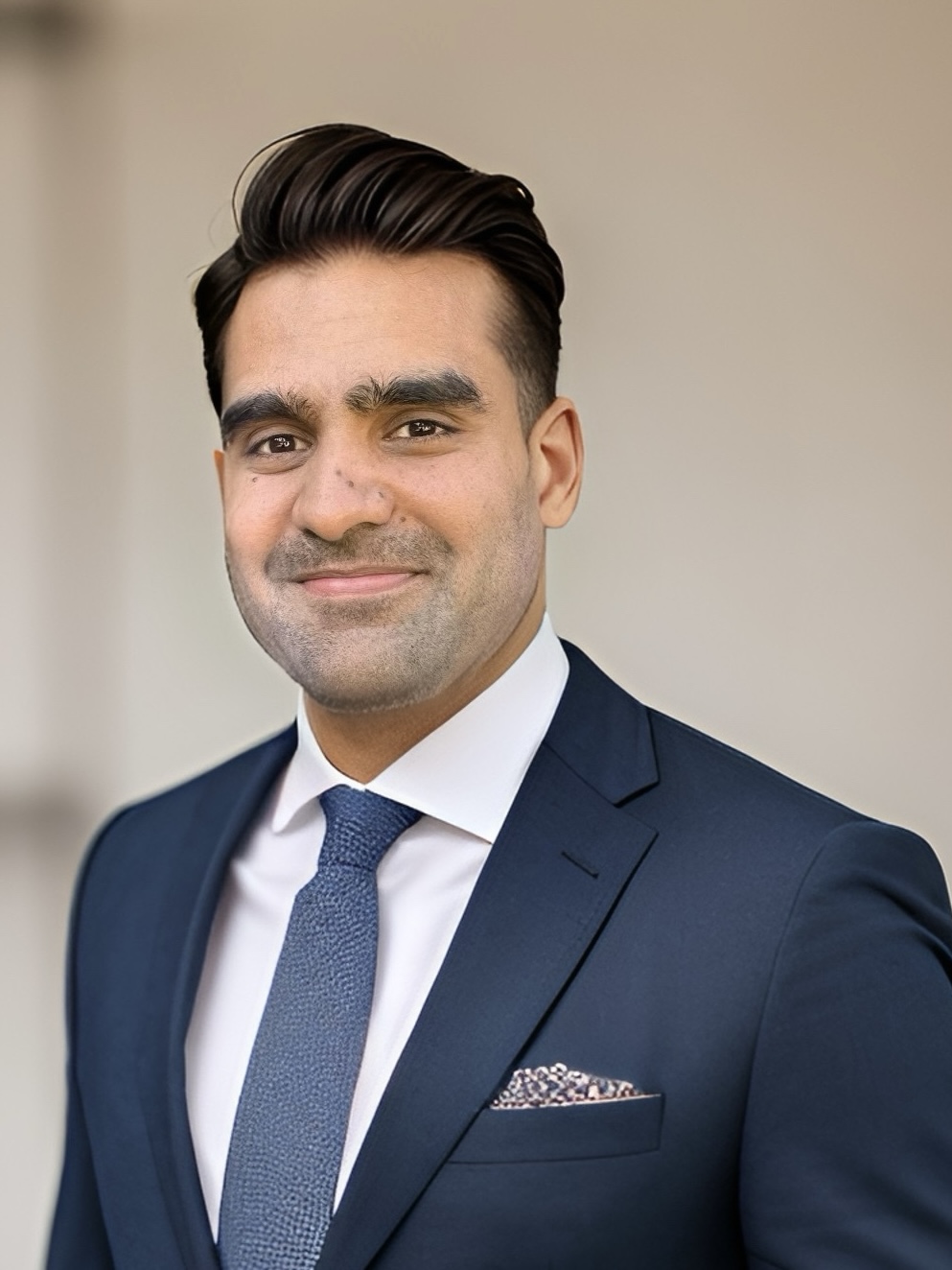
Sahil Agarwal is an engineering leader whose eleven-year career has focused on the infrastructure that makes modern computing platforms usable at scale—AI-enabled discovery, unified identity, and distributed systems built for reliability under extreme load. Across roles at Dropbox, ServiceNow, and Qualcomm, Agarwal has consistently taken on the kinds of problems that define enterprise-grade computing: unifying heterogeneous data sources, migrating massive datasets without downtime, building identity systems that can safely accommodate AI agents, and delivering low-latency machine learning capabilities inside platforms used by thousands of enterprises. His work sits at the intersection of applied AI and platform architecture, with a consistent emphasis on responsible adoption, security-by-design, and measurable business impact.
At Dropbox, Agarwal led engineering for the company’s AI-powered universal search capabilities—Dropbox Dash and Stacks—where the core challenge was retrieval at scale across disparate enterprise applications. He designed an LLM-powered retrieval pipeline, architected secure connector frameworks, and built knowledge-layer APIs that support millions of active collections. The innovation was not simply adding AI; it was creating a platform that could index and retrieve across hundreds of millions of assets using semantic and hybrid indexing, while enabling third-party integration through a standardized connector SDK that reduced onboarding effort by 65%. Agarwal established AI safety guardrails and extended the system into multimodal search, positioning the platform to expand beyond text-based discovery. The result was a scalable information-discovery layer that improved enterprise productivity while also delivering measurable business outcomes, including ARR gains and cost efficiencies.
Agarwal’s work on Dropbox Sharing—known internally as Project Suez—illustrates a different kind of engineering challenge: modernizing a critical platform that supports billions of interactions weekly without breaking trust or availability. He architected and led a multi-year transformation that safely migrated 11 billion active links with zero downtime and near-perfect data integrity. Central to this effort was an AI-assisted classification and conflict-resolution framework that applied machine learning to automate decisions that would otherwise be handled manually—an approach suited to one of the largest heterogeneous data migrations in cloud storage. Agarwal created a unified link model, established scalable RPC patterns, and coordinated execution across numerous partner teams. The program reduced platform incidents, strengthened enterprise security posture, and resulted in a patent filing for the AI-based migration framework—an indicator that the approach contributed original technical value beyond a one-time execution.
As generative AI systems became first-class actors in enterprise workflows, Agarwal’s focus expanded to identity and governance. He led engineering for Dropbox’s next-generation Identity as a Service (IAS) platform—consolidating identity across human users, devices, and AI agents. His objective was to design a unified identity graph and an authorization framework capable of supporting LLM-driven systems without compromising security. The innovation lay in identity-aware governance for AI agents—a capability increasingly necessary in modern SaaS ecosystems yet rarely implemented at consumer-scale breadth. By implementing zero-trust authentication, context-aware token flows, and continuous risk evaluation, Agarwal advanced the security foundation supporting multiple product families and set technical conditions for future AI participation in enterprise workflows.
Before Dropbox, Agarwal held senior engineering leadership roles at ServiceNow, where he oversaw large-scale platform releases supporting thousands of enterprise instances. His remit extended beyond shipping releases to productizing internal innovation—commercializing performance-monitoring tooling into a revenue-generating offering described as “Performance as a Product.” This strategy translated operational insight into customer value, raising platform visibility while contributing to revenue. He also advanced embedded AI capabilities through Now Intelligence by integrating anomaly detection and forecasting models into the core platform—improving reliability and accelerating adoption by making platform behavior measurable and actionable.
Agarwal also played a foundational role in ServiceNow’s early machine learning journey by leading development of its first supervised ML infrastructure. Through Agent Intelligence and Flow Designer recommendations, he built production-grade ML serving systems capable of delivering millions of low-latency predictions daily. This work introduced supervised ML into a platform historically centered on workflow orchestration—enabling AI-driven categorization and automation at scale. He grew engineering capacity across continents, drove latency optimizations required for production serving, and partnered with compliance teams to achieve FedRAMP readiness—unlocking substantial public-sector adoption and demonstrating that enterprise AI requires governance as much as modeling.
Earlier in his career at Qualcomm, Agarwal worked closer to the metal—on system and platform software enablement for the Snapdragon 810, a flagship 64-bit mobile SoC. His work focused on performance, thermals, and responsiveness under hardware constraints: firmware for thermal and power management, kernel scheduling optimizations, and GPU throughput improvements under intensive workloads. These contributions improved boot times, stability, and OEM bring-up cycles—impacting device behavior for tens of millions of users and demonstrating that his platform instincts extend from cloud-scale distributed systems down to constrained, heterogeneous hardware environments.
Across these roles, Agarwal’s professional signature is consistent: he builds platforms that enable other systems to function safely and efficiently. Whether the goal is AI-driven search across enterprise ecosystems, a migration that cannot fail, identity that can govern AI agents, or ML serving at production scale, his work reflects both architectural depth and operational discipline—delivering reliability, security, and measurable business value in some of the most demanding environments in modern computing.