Sameer Lakade
Tools and Automation Engineer at Apple Inc
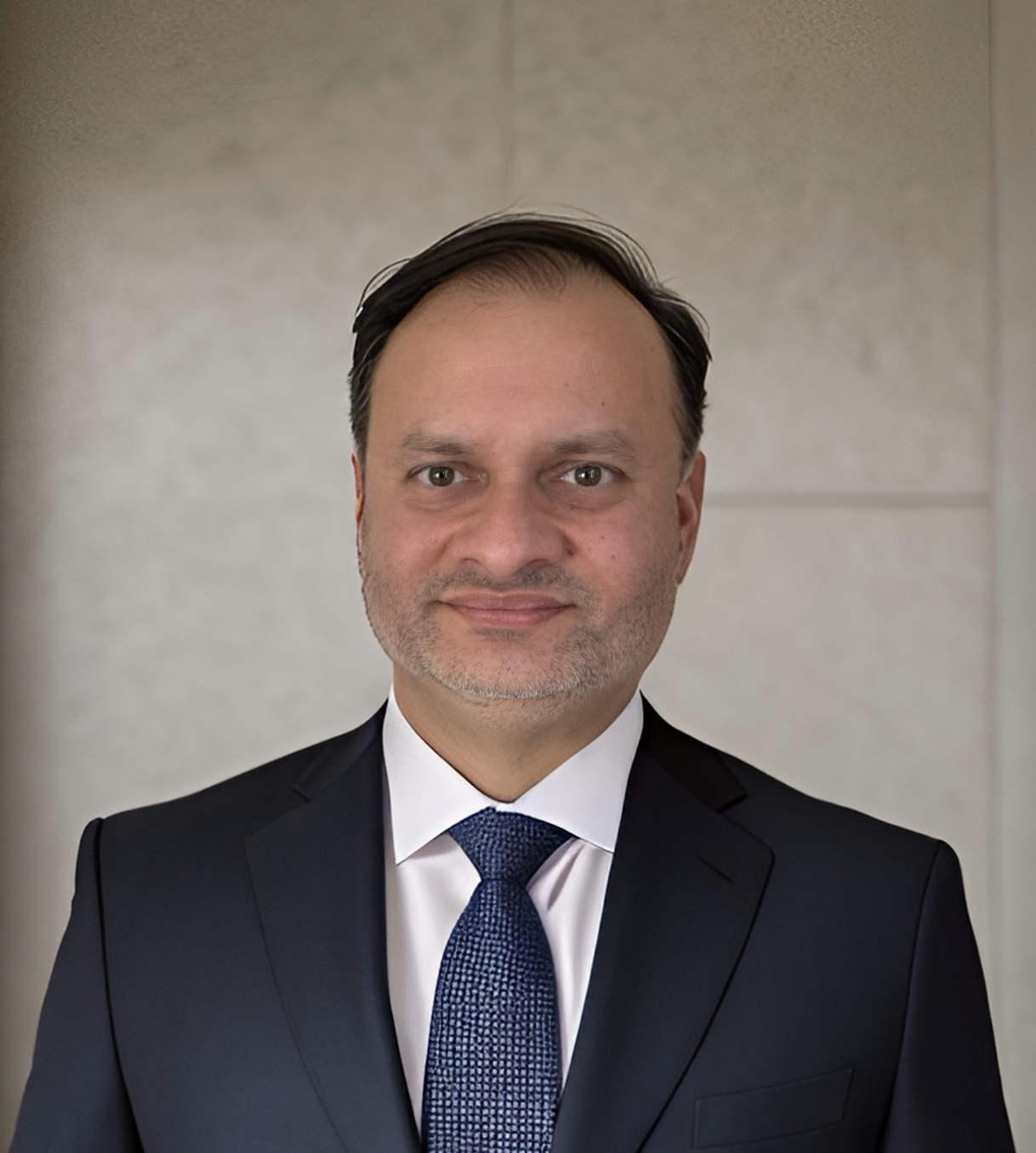
FELLOW MEMBER
Sameer Lakade’s career sits in the machinery room of modern software: the build systems, deployment pipelines, and reliability guardrails that determine whether large platforms ship safely, scale predictably, and recover quickly when something breaks. Over more than twelve years in software development, systems infrastructure engineering, DevOps, and automation, he has specialized in taking delivery processes that are fragmented, manual, and risky—and rebuilding them as repeatable, security-aware systems that teams can trust under pressure.
At Apple, Lakade’s work has focused on industrializing CI/CD for complex, heterogeneous environments. He engineered scalable pipelines capable of automating build, test, packaging, publishing, and deployment for dozens of binaries and multiple container images across data-center footprints and major cloud platforms. In parallel, he architected platform-validation infrastructure to support load-balancing and web application firewall (WAF) testing workflows—work that becomes increasingly mission-critical as traffic volumes and release velocity rise. In this kind of setting, the difference between “automation that works” and “automation that holds at scale” is not superficial tooling; it is disciplined system design: modular pipeline construction, consistent promotion controls, predictable artifact integrity, and environment parity across cloud and on-prem boundaries.
Earlier, at Ayla Networks, Lakade helped modernize an IoT cloud platform for the next generation of devices by moving toward containerized, microservices-driven operations and enabling deployment portability across global cloud providers. His contributions included Dockerizing multiple services, establishing Kubernetes-based automation, and supporting multi-cloud deployments that extended beyond the default hyperscaler playbook. He also built testing automation for REST APIs and user interfaces and addressed performance bottlenecks in device onboarding and OTA update workflows—areas where small inefficiencies become large-scale reliability and customer-experience problems once device counts accelerate.
In Visa environments, Lakade’s work emphasized enterprise-grade test infrastructure and “security-integrated engineering”—the practical combination of automation with compliance and defensible controls. He enhanced a unified automation framework used across QA organizations and contributed modules that supported high-sensitivity workflows, including secure handling patterns where compliance expectations are non-negotiable. In addition, he led efforts to standardize automation infrastructure—execution portals, Jenkins farms, Selenium grids, and common orchestration models—so quality signals become consistent and actionable rather than dependent on isolated team practices.
Lakade’s technical trajectory also includes research-oriented engineering: a heterogeneous robotics tasking and communication framework designed for multi-robot coordination using distributed communications, mapping, and perception-driven identification. Regardless of domain, the pattern in his work remains consistent: build systems that are repeatable, observable, and resilient—then make them easier for teams to operate and extend.
Across these roles, Lakade has operated in the space where software delivery meets operational risk: reducing manual toil, hardening pipelines, integrating security scanning, improving test fidelity, and enabling organizations to ship faster without compromising correctness. The throughline is not a single technology stack; it is engineering leverage—creating infrastructure that multiplies the productivity and reliability of everyone building on top of it.