Sandeep kumar reddy Basireddy
Cloud and Devops Engineer at Select Minds LLC
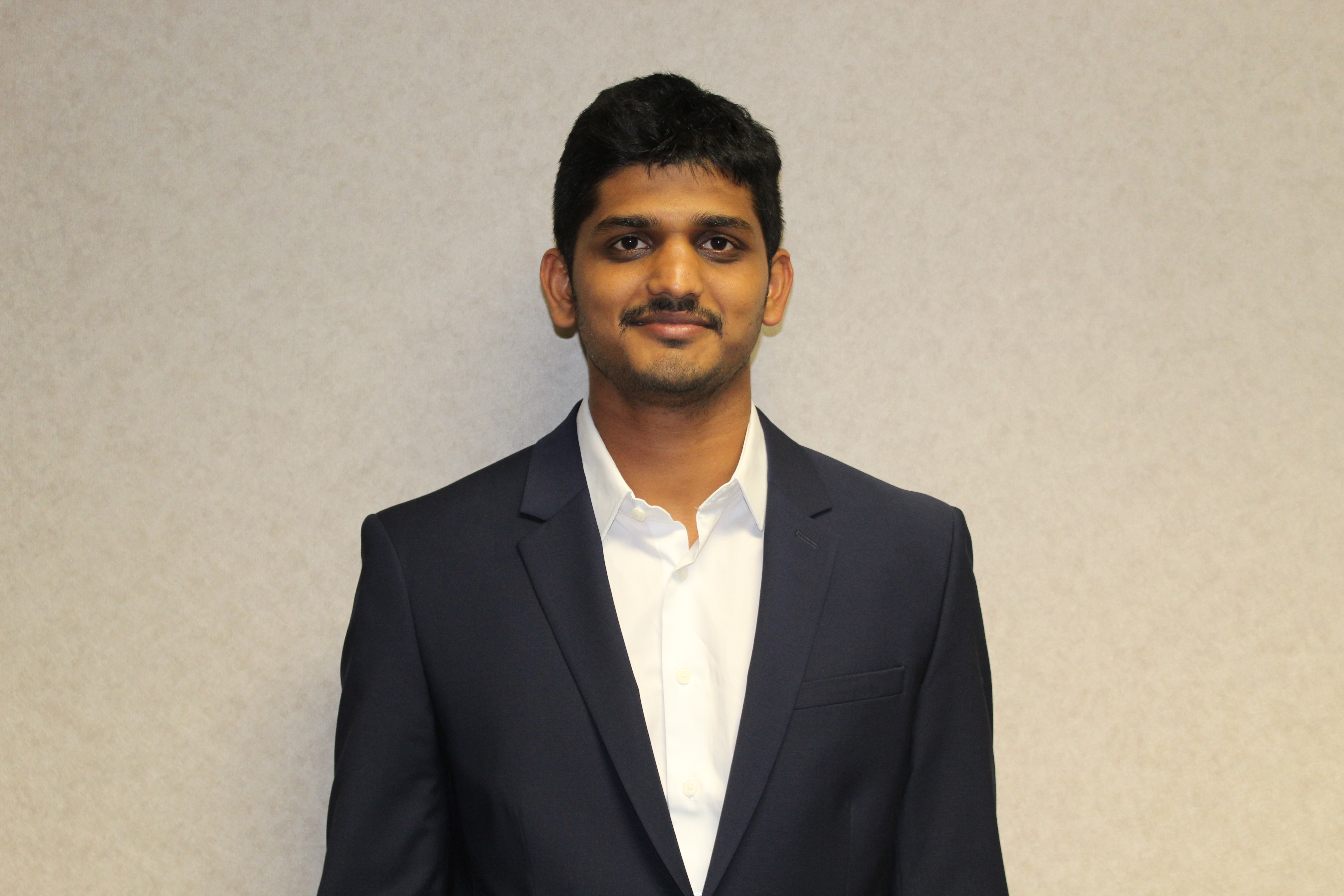
FELLOW MEMBER
Sandeep Kumar Reddy Basireddy has built his career in the part of computing that organizations rely on most and notice least—until something breaks. Over nine years, his work has centered on network and cloud infrastructure with a specialized focus on cloud security engineering and enterprise-scale modernization. Across Azure, AWS, Google Cloud, and large enterprise network environments, Basireddy has consistently delivered beyond “business-as-usual” operations by introducing automation at scale, strengthening governance, and engineering high-availability and recovery-ready infrastructure.
In multi-cloud environments, security posture is often undermined not by a lack of tools, but by inconsistency—different telemetry sources, uneven guardrails, fragmented response processes, and manual operations that do not scale. Basireddy has repeatedly tackled that reality through automation and standardization. As a Senior Cloud/DevOps Engineer supporting Azure, AWS, and GCP, he led efforts to automate Microsoft Sentinel integrations and implement analytics-driven security monitoring with automated response workflows. The objective was direct: strengthen threat detection and reduce incident response time across heterogeneous cloud ecosystems. His approach combined automated pipelines, reusable infrastructure-as-code modules, and integrations between threat analytics and cloud-native telemetry—resulting in a scalable monitoring framework that standardizes detection and improves speed and consistency of response.
This operational discipline extends to infrastructure modernization, where Basireddy’s focus has been building consistent, secure, repeatable multi-cloud provisioning using Terraform, Ansible, and modern DevOps practices. Rather than treating each cloud as an isolated environment, he introduced modular and reusable Terraform architectures paired with automated configuration workflows, reducing deployment time and operational complexity while aligning environments to enterprise standards for security, resilience, and cost control. The architectural emphasis—repeatability, standardized modules, integration into build/release workflows—reflects a platform mindset: infrastructure that can be deployed and governed like software.
Basireddy’s reliability orientation is also visible in disaster recovery engineering, where outcomes depend on deterministic rebuild capability rather than ad hoc runbooks. He was responsible for reproducing full AWS network infrastructure—VPCs, route tables, ACLs, subnets, and security groups—during disaster recovery simulations using Terraform automation. By codifying network infrastructure reproduction, he strengthened recovery readiness, validated dependencies across regions, and reduced manual overhead during high-pressure recovery scenarios. This is a form of engineering maturity that typically distinguishes resilient enterprises: recoverability treated as a designed capability, not an emergency improvisation.
Connectivity modernization is another recurring theme. Basireddy designed and deployed Megaport Virtual Edge (MVE) solutions to provide secure, optimized, private connectivity between cloud environments and enterprise networks. This work introduced a software-defined networking fabric that improves multi-cloud interconnect performance while avoiding many of the latency and routing constraints associated with traditional WAN architectures. His contributions included routing design, security policy implementation, and multi-platform integration—supporting reliable throughput and secure communications, and enabling broader enterprise modernization initiatives that depend on predictable, private network paths.
Governance at scale is often where multi-cloud strategies fail, particularly when account sprawl and configuration drift create security exposure. Basireddy addressed this through AWS Control Tower implementations, establishing landing zones that enforce guardrails, standardize account provisioning, and centralize governance for multi-account environments. His work included identity configuration, logging, monitoring, and compliance controls—strengthening operational maturity and reducing drift by embedding governance into the account lifecycle rather than retrofitting it later.
Basireddy’s career also includes deep experience in enterprise network modernization, including large-scale data center and WAN initiatives. During his time as a Network and Security Engineer supporting modernization at UBS, he contributed to migrations from legacy Cisco platforms to next-generation Juniper-based architectures, helping implement advanced fabrics, virtualization, and high-availability routing. His responsibilities included network layout design support, deployment of Juniper MX/EX/QFX platforms, firmware upgrades, and pre/post validation—work that improves stability and enables scalable network growth.
Earlier, he implemented IPv4-to-IPv6 dual-stack migration strategies for a major telecommunications provider in India—an effort that requires protocol-level precision and strong operational risk management. By enabling seamless coexistence of IPv4 and IPv6, verifying routing and communication paths, and resolving transition issues, Basireddy demonstrated the fundamentals that underpin modern networking: careful migration engineering that preserves continuity while enabling future expansion.
Across these programs, Basireddy’s technical identity is consistent: building secure, automated, and recoverable infrastructure that scales across clouds and networks. His work reflects the modern reality of enterprise computing—multi-cloud environments, software-defined connectivity, governance at scale, and threat analytics driven by automation—delivered with a reliability-first mindset.