Sanjiv Kumar Bhagat
Manager, Network Operations Global Exports at Amazon LLC
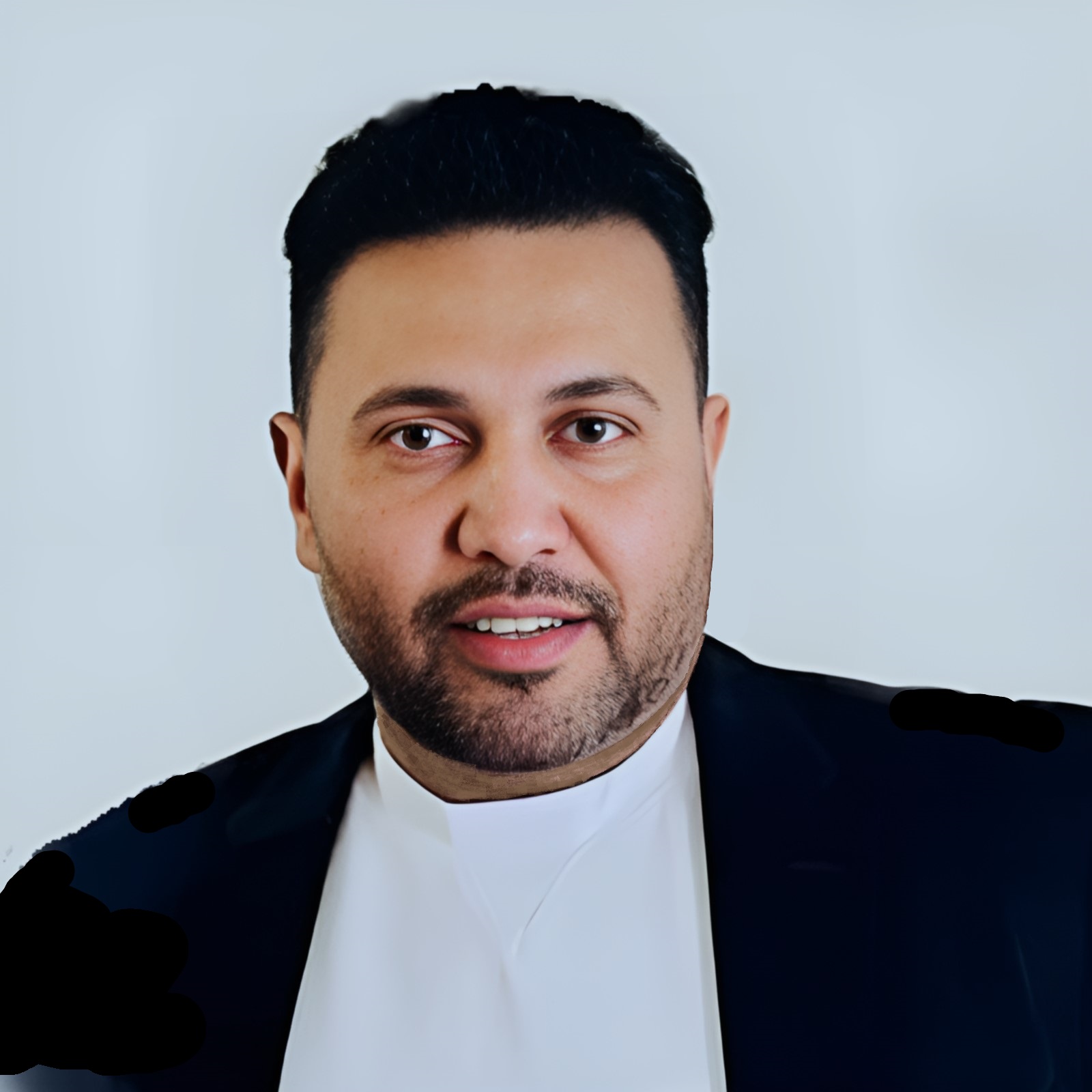
FELLOW MEMBER
Sanjiv Kumar Bhagat has built a career defined by large-scale enterprise architecture, ERP transformation, and global business process automation across both public-sector institutions and multinational enterprises. With more than 21 years of professional experience, his work has focused on redesigning complex organizational systems so they become more scalable, more secure, and more responsive to the operational demands of modern institutions. Across statewide ERP modernization, multinational human capital management deployments, cloud migration, and global logistics optimization, he has consistently worked at the level where architecture, governance, compliance, and enterprise transformation converge.
At Amazon, where he serves as Manager in the Global Exports Logistics and Strategy Team, Bhagat’s current work centers on optimizing cross-border logistics operations spanning six carriers and more than 500,000 shipments per week. His responsibilities include designing scalable supply chain strategies, overseeing technical configurations and service migrations, improving regulatory compliance, and implementing automation-driven performance enhancements. The significance of this work lies in its integration of analytics, automation, and carrier-system alignment into a unified international shipping framework. Under his leadership, KPI-based dashboards have been introduced to monitor carrier performance, optimization models have reduced operational bottlenecks, and governance mechanisms have been established to align internal and external stakeholders. This contribution reflects not only logistics expertise, but a broader ability to shape digital operational architecture at global scale.
Before Amazon, Bhagat played a central role in one of the most ambitious public-sector ERP initiatives in the United States: the OneWashington ERP Modernization for the Washington State Department of Enterprise Services. As PMO Manager, he helped align DES with a statewide Workday ERP modernization affecting more than 100 agencies and over 100,000 employees. His work encompassed governance design, Chart of Accounts redesign, business process harmonization, role-based security implementation, and readiness planning for statewide deployment. This initiative replaced fragmented legacy systems with a unified cloud-based ERP platform standardizing finance, HR, procurement, and payroll. Bhagat’s leadership positioned DES as a pilot agency, enabling it to validate configurations and influence statewide design decisions. His contributions in security architecture and compliance frameworks strengthened audit readiness and data protection, while scalable onboarding and change management strategies helped ensure continuity for smaller agencies dependent on DES services.
His long tenure with the Washington State Board for Community and Technical Colleges (SBCTC) further illustrates his depth in statewide transformation programs. As Program Manager for the ctcLink ERP transformation, he led the implementation of a unified Oracle PeopleSoft platform across 34 colleges, serving more than 278,000 students and 20,000 faculty and staff. This program centralized previously disparate legacy systems, migrated ERP infrastructure to AWS, and implemented integrated HCM and finance solutions across the state through phased deployment. What distinguished this initiative was its ability to consolidate higher education administrative systems into a cloud-enabled enterprise architecture that improved transparency, operational efficiency, and long-term resilience. During the COVID-19 pandemic, Bhagat used adaptive Agile delivery models and structured ADKAR-based change management to keep the transformation moving without disrupting institutional operations. He also contributed by designing a custom Faculty Workload solution and optimizing compliance-driven updates, further strengthening the sustainability of the architecture.
Bhagat’s enterprise transformation experience also includes major private-sector HCM modernization projects. At United Airlines, as Project Manager and Functional Consultant, he led the PeopleSoft HCM 9.2 upgrade for more than 80,000 employees, including PeopleTools upgrades and the rollout of Employee and Manager Self-Service capabilities. This work modernized HR workflows, introduced mobility-enabled solutions, retrofitted custom applications, and strengthened application security. By using the PeopleSoft Fluid interface, pivot grids, advanced approval mechanisms, and delegation controls, he helped make enterprise HR processes more accessible, scalable, and secure for a global workforce.
Similarly, in Viacom’s global PeopleSoft implementation across 33 countries, Bhagat served as Project Lead, guiding Fit-Gap analysis, Core HR and Time & Labor configuration, security framework design, and compliance alignment for more than 50,000 employees. This initiative required balancing enterprise-wide process standardization with region-specific legal and regulatory requirements. By designing a consolidated data model that supported multilingual interfaces and localized configurations, he helped establish a centralized HRIS architecture that improved global reporting and workforce analytics while preserving compliance flexibility. His involvement from design through post-go-live stabilization reflects a high level of trust in both his technical and managerial capabilities.
Across all of these engagements, Bhagat’s work shows a consistent pattern: he is repeatedly placed in roles where organizations must move from fragmented, legacy-dependent systems into unified, scalable, and governed enterprise environments. His contributions are not limited to technical configuration alone. They include governance design, cloud migration, security architecture, compliance enablement, change leadership, and coordination across large and diverse stakeholder groups. That breadth is particularly important in enterprise architecture, where transformation success depends on aligning systems, processes, people, and regulatory requirements at the same time.
His profile is especially strong because it spans both public-sector modernization and private-sector global enterprise deployments, demonstrating that his expertise is portable across different operational models, governance frameworks, and scale environments. Whether serving state agencies, higher education systems, airlines, media companies, or international logistics operations, he has consistently contributed to architectures that support millions of users, employees, students, or transactions in some form.
For IICSPA Fellowship consideration, Sanjiv Kumar Bhagat presents a compelling profile marked by enterprise-scale technical leadership, measurable modernization impact, strong governance and compliance alignment, and sustained contribution to the evolution of ERP and business process automation systems. His career reflects the professional distinction, innovation, and long-term enterprise influence expected of a fellowship-level candidate.