Senthil Nathan Thangaraj
Senior Member Technical Staff at AMD
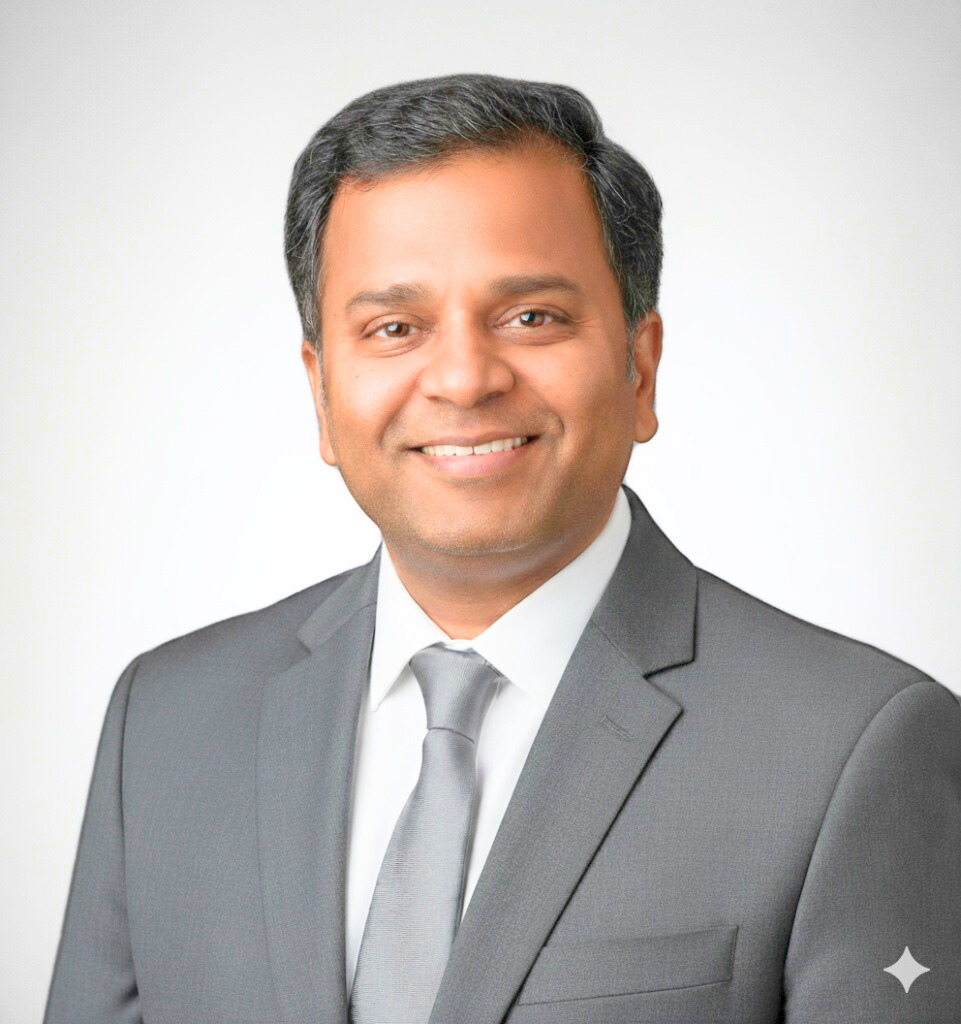
FELLOW MEMBER
Senthil Nathan Thangaraj has built a 25-year career in embedded systems and platform software where performance, determinism, and reliability are engineered into the foundation -not added after the fact. Specializing in embedded software for AI-oriented SoC platforms, autonomous-vehicle compute systems, data-center switching infrastructure, and carrier-grade telecom, Thangaraj’s work consistently extends beyond routine feature delivery. His contributions sit at platform level: enabling silicon bring-up, stabilizing system software stacks, improving latency and power-management behavior, and upstreaming production-grade changes into widely used firmware and Linux ecosystems.
In his current role at AMD-Xilinx as a Senior Member of Technical Staff, Thangaraj leads power-management architecture and cross-layer enablement for major SoC families including Versal, Versal-Net, Versal Gen2, and Zynq UltraScale+. He led the Versal Gen 2 AI SoC power management open source stack, significantly accelerating the bring-up process, enhancing platform stability by reducing system crashes, and leading many platform-specific bugs/features in the Linux kernel, Trusted Firmware-A, and U-Boot. The scope is inherently multi-layered: firmware, kernel, and bootloader must function as a coherent system under stringent power, performance, and stability constraints. His objective has been to accelerate bring-up cycles, improve system stability, and standardize power-management design practices across the stack. Among his most visible innovations is the containerized build cutting the build time from roughly many hours to about in minutes while reducing build failures and standardizing workflows across distributed teams. He also contributed to AMD’s architectural shift, aligning power-management interfaces with ARM industry standards to improve maintainability and portability for future SoC generations - an architectural decision that reduces long-term integration friction across product lines.
Before AMD, Thangaraj contributed to autonomous vehicle platform software at Cruise, focusing on deterministic, ultra-low-latency behavior - requirements that sit at the core of real-time decision loops. In this environment, he introduced custom kernel and user-space components to improve sensor responsiveness and hardware interaction reliability. He developed a custom SPI engine driver that enabled faster ADC sampling with roughly 30% lower latency, built a user-space watchdog service monitoring more than 10 services to improve uptime, and implemented kernel-level infrastructure that reduced frame latency by up to 75% underload. Additional work in bootloader and PHY drivers improved stability across multiple hardware revisions - evidence of a systems engineer operating across the full boot-to-runtime lifecycle.
At Cisco Systems, Thangaraj served as Technical Lead for the Nexus OS kernel team, supporting next-generation data-center switch platforms and improving kernel performance under heavy workloads. Here, the innovation focus was on memory efficiency, DMA architecture, and latency-sensitive packet handling—areas that directly affect throughput, scalability, and stability in data-center environments. He delivered system-wide memory enhancements that reduced memory usage by 20–25%, redesigned DMA allocation which has doubled (100%) MAC learning capacity. He also enabled transitions from 32-bit to 64-bit driver ecosystems, resolved numerous kernel panics, and improved crash-dump mechanisms to support automated diagnostics across the Nexus platform family - work that improves operational trust at scale.
Earlier, at Alcatel-Lucent, Thangaraj designed and developed the L2 Connectivity Fault Management (CFM) protocol stack for IP-DSLAM line cards, strengthening carrier-grade OAM capabilities across VLAN-heavy networks. Using state-machine-driven mechanisms and hardware-synchronized monitoring, he built Loss Measurement (LM), synthetic LM, and CCM processing with >99.9% fault detection coverage, improved timestamp precision by ~30% via hardware-counter integration, and increased scalability through a 4× expansion of multicast support and a 3× increase in IPv6 anti-spoofing entries. These contributions reflect depth in protocol engineering and operational assurance, where correctness and observability are core requirements.
Thangaraj’s early-career work across Cisco Diagnostics, Nortel, and Midas established his foundation in board bring-up, diagnostics software, and driver engineering - work often performed under tight hardware timelines and limited observability. He contributed bare-metal drivers, proprietary bootloaders, and uClinux ports that improved deployment success rates and reduced bring-up time by around 40%. At Cisco India, his diagnostics transition work supported 99.95% uptime improvements, reinforcing a long-running theme in his career: making complex systems measurable, diagnosable, and stable.
His technical record is reinforced by formal recognition and intellectual contributions. He is credited on a European patent (EP 3068074 A1) related to enabling monitoring modes for assessing communication link quality between nodes - work positioned at the intersection of quality-of-service evaluation, and network optimization. He has also received multiple internal Cisco awards (You-Amaze and You-Inspire series) recognizing performance and innovation, along with various external recognition awards. Additionally, he has authored scholarly articles in peer-reviewed journals, reflecting ongoing engagement with the broader knowledge ecosystem in engineering and information systems.
Across 25 years, Thangaraj’s work demonstrates Fellow-level characteristics in embedded and systems engineering: platform innovation that accelerates silicon and product readiness, measurable performance and reliability improvements under real constraints, cross-layer technical leadership spanning firmware to Linux kernel, and contributions that improve not just one product but the broader ecosystem through upstreaming and standards alignment.