Shrikant Chikhalkar
Senior Staff Software Engineer at Abbott Neuro Modulation R&D
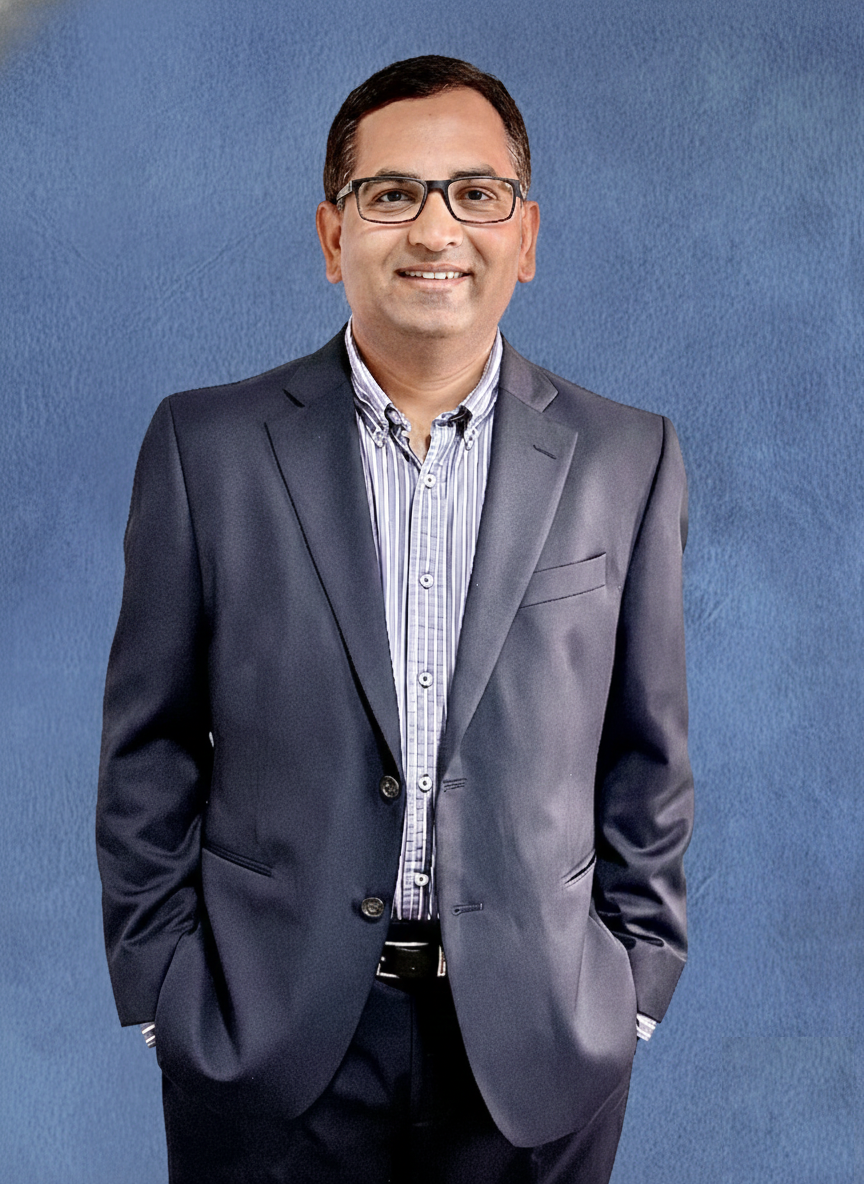
FELLOW MEMBER
Shrikant Chikhalkar is a systems and algorithm engineering leader whose career spans regulated medical-device software, medical imaging reconstruction, enterprise modernization, distributed computing, and high-performance computing (HPC). Across Abbott Neuromodulation, GE Healthcare, IGATE, Computational Research Lab, Persistent Systems, Accenture, and Manchitra, his work has consistently operated in domains where correctness, performance, and compliance are non-negotiable. From neuromodulation therapy platforms to PET/MR reconstruction pipelines, and from legacy modernization tooling to billion-scale graph mining, Chikhalkar has delivered high-impact software that combines rigorous engineering practices with measurable improvements in speed, reliability, and operational throughput.
Chikhalkar’s technical depth spans C++, C#, Python, CUDA/OpenCL GPU acceleration, MPI/OpenMP distributed systems, HPC clusters, and modern cross-platform application frameworks. He also works with AI/ML technologies, including LLM-based tooling used to improve developer productivity and accelerate documentation and testing workflows. This breadth is unified by a consistent theme: translating complex computation into production-grade systems that remain maintainable and safe under real-world constraints—particularly in regulated healthcare environments.
At Abbott Neuromodulation, Chikhalkar has focused on platform engineering for digital health and therapy ecosystems. He architected backend-driven consent platforms for the NeuroSphere Digital Health App, enabling capture of Terms of Use, Privacy Policy acceptance, and granular data-use consents with on-device enforcement—an approach aligned to global privacy and compliance expectations. He also designed dynamic server-controlled configuration mechanisms that allow single-build global deployment of the Liberta RC Deep Brain Stimulation (DBS) and Eterna Spinal Cord Stimulation (SCS) therapy platforms across 27 countries, reducing fragmentation while maintaining strict control over regional configuration, policy, and compliance differences. In support of clinical operations, he built secure uploader/downloader services with encryption for device diagnostics supporting NeuroSphere Virtual Clinic, strengthening reliability and security for telemetry and troubleshooting workflows.
His work at Abbott also demonstrates modern software delivery maturity: he architected microservices and modular Angular-based presentation layers reusable across iOS/Android shells, and introduced automated testing and CI/CD practices suited to regulated environments. He developed an AI code assistant and automated testing framework that reduced development cycle time by roughly 30%, and built an internal generative-AI assistant using retrieval-augmented generation (RAG) across multiple LLM providers to cut documentation effort by approximately 50%. He further developed a GenAI-based call-graph agent capable of reasoning over complex legacy codebases, improving developer productivity by roughly 44% when implementing algorithms, resolving defects, or analyzing system workflows—an example of applying AI responsibly to engineering productivity rather than core patient decisions.
At GE Healthcare, Chikhalkar led PET/MR reconstruction efforts for SIGNA systems, delivering List Mode, Ultra-Fast, Live Reconstruction, and Motion Correction capabilities. His work achieved dramatic performance gains—reported as up to 200× on NVIDIA and AMD GPUs—through disciplined memory management, kernel fusion, and streaming pipeline design. He designed and implemented advanced reconstruction and correction algorithms, including iterative OSEM, atlas-based attenuation correction (using ZTE and QMRAC), scatter estimation, truncation completion, and fault-tolerant methods engineered for clinical reliability. His architecture introduced GPU memory pooling, dynamic work-stealing, and multi-GPU pipelining to improve throughput without sacrificing determinism. Notably, he owned the conversion of MR-based attenuation correction from research into regulated clinical software deployed worldwide—work that directly affects quantitative accuracy (e.g., regional SUV bias) in clinical PET/MR workflows. He also led MotionFree Brain architecture, combining ultra-fast list-mode reconstruction with data-driven motion estimation, and delivered it through a full IEC 62304 Class C SDLC, culminating in FDA 510(k) clearance—demonstrating end-to-end leadership across algorithm development, software lifecycle rigor, verification, and regulatory readiness.
Earlier, at IGATE, Chikhalkar led enterprise modernization through the design of a PL/I-to-C++ modernization tool using LEX/YACC and a parallel segmented execution pipeline, improving throughput by approximately 3× while preserving business logic integrity. He managed modernization programs across requirements, configuration management, and refactoring, and trained teams in modern C++ practices, concurrency patterns, and performance tuning—building organizational capability alongside technical delivery.
At Computational Research Lab, he operated in HPC and large-scale analytics environments. He developed MPI/OpenMP algorithms optimized for one of Asia’s fastest supercomputers, mining telecom call-detail records to identify fraud patterns in billion-node graphs—work requiring careful scaling strategy, memory discipline, and robust parallelism. He also built HPC seismic simulation pipelines using MPI, Fortran, and C++, implementing distributed I/O, checkpointing, and load balancing to double throughput and reduce runtime by roughly 40%. In addition, he implemented a MapReduce-based recommender system for the Netflix dataset, evaluating scalability across local clusters and cloud environments—reflecting continued engagement with scalable computing paradigms.
Across Persistent Systems, Accenture, and Manchitra, Chikhalkar delivered enterprise systems engineering across GIS rendering, spatial databases (Oracle and Postgres), and hardware-accelerated visualization—including 3D terrain modeling and performance-driven rendering engines. He also developed enterprise messaging solutions integrating Good Mobile Messaging with Microsoft Exchange via cross-platform connectors built in C++ and COM—reducing integration time by approximately 50%. Throughout, he automated static analysis and compliance tooling and integrated it into build pipelines, reinforcing engineering quality as a measurable, repeatable discipline.
Chikhalkar’s professional influence includes contributions to patent filings, conference presentations (including ISMRM), architecture leadership across global teams, and deep mentorship and training that raise team capability while maintaining compliance with IEC 62304, FDA 510(k), ISO 13485, GDPR, and HIPAA expectations. He also served as a judge for bioengineering senior design projects at the UTDesign Expo at the University of Texas at Dallas (Fall 2025), reinforcing his commitment to developing the next generation of engineers.
Across his work, the throughline is responsible innovation in high-consequence systems: therapy workflows, safety interlocks, diagnostics, secure telemetry, configuration control, and real-time decision-support algorithms—delivered with regulatory rigor and measurable clinical and operational impact.