Sriram Ramakrishnan
Sr Software Engineer at Amazon
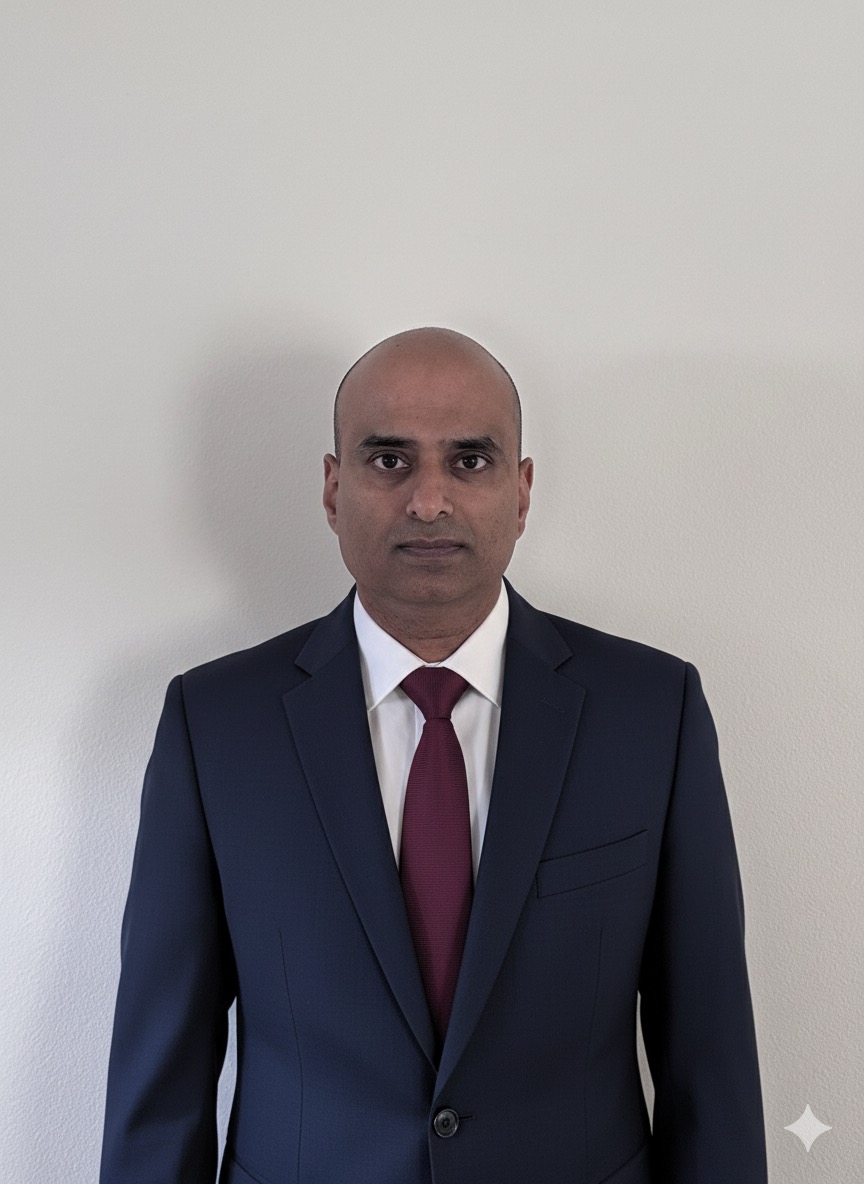
FELLOW MEMBER
Sriram Ramakrishnan is a senior engineering leader with more than 25 years of experience designing and delivering complex enterprise systems across cloud platforms, distributed architectures, healthcare information systems, financial applications, and embedded solutions. His career has been anchored in a consistent discipline: translating high-ambiguity business requirements into scalable, production-grade technical systems that measurably improve reliability, security, and user outcomes.
At Amazon, as a Senior Software Development Engineer, Ramakrishnan’s work has focused on cloud infrastructure and secure connectivity—most notably in the AWS EC2 PrivateLink and AWS WorkSpaces domains. In environments where customer adoption depends on reducing friction and operational overhead, he has delivered systems that convert institutional knowledge into automation. A flagship example is a Slack-based guidance application that uses Retrieval-Augmented Generation (RAG) patterns to accelerate PrivateLink onboarding support. This approach aligns with established AWS reference architectures for building Slack assistants and enterprise search experiences using services such as Amazon Kendra and generative AI tooling.
His contributions also include building control-plane capabilities for modern hybrid connectivity use cases. As Oracle Database@AWS reached general availability in July 2025, AWS highlighted new networking capabilities—including Amazon VPC Lattice integrations—to streamline connectivity between Oracle Database@AWS networks, AWS VPCs, and on-premises networks. Within this context, Ramakrishnan’s work on control-plane API enablement for Oracle Database@AWS network connectivity reflects engineering at the intersection of product release readiness, secure network primitives, and platform-scale operational correctness.
Ramakrishnan has also driven infrastructure feature expansion for private connectivity. AWS announced “access to VPC resources over AWS PrivateLink” in December 2024, extending PrivateLink-style access patterns beyond traditional load-balanced endpoints to include broader classes of VPC resources and sharing scenarios. His work leading CloudFormation enablement for PrivateLink-based VPC resource sharing aligns directly with this evolution—making advanced connectivity capabilities consumable through infrastructure-as-code and scalable across regions and organizations.
Outside pure networking, he has delivered systems that blend device-side engineering with cloud services. He architected an inter-process communication (IPC) framework enabling collaboration between multiple voice agents (such as Alexa and Google Assistant) on shared devices—a capability reflected in Amazon’s public MAX Toolkit resources and IPC framework documentation released on GitHub. For consumer devices like Echo Buds, he designed secure hands-free messaging flows using encrypted channels and AWS Lambda-backed services, and he improved real-time voice experiences by optimizing SDK latency—work that connects low-level performance engineering to direct customer adoption.
Earlier in his career, Ramakrishnan built a strong foundation in safety- and compliance-sensitive domains. At DCA eHealth Solutions, he contributed to healthcare information systems supporting hospitals and health departments, implementing secure communication portals, desktop applications, and distributed SOAP-based services with TLS client authentication. In consulting roles at Readify, he delivered education and healthcare platforms using Azure services and modern web/mobile frameworks. He also built multilingual financial applications for Citibank environments and developed embedded and infrastructure software in earlier roles—experience that sharpened his end-to-end perspective on reliability, security, and production support.
Across organizations and technology generations, Ramakrishnan has consistently paired delivery with leadership: mentoring engineers, raising design quality through reviews, and scaling engineering judgment through interviews and knowledge transfer. The unifying theme is professional engineering rigor applied to systems where privacy, security, accessibility, and operational correctness are not optional features—but the product.