Sumit Kaul
Staff Software Engineer at Payjoy
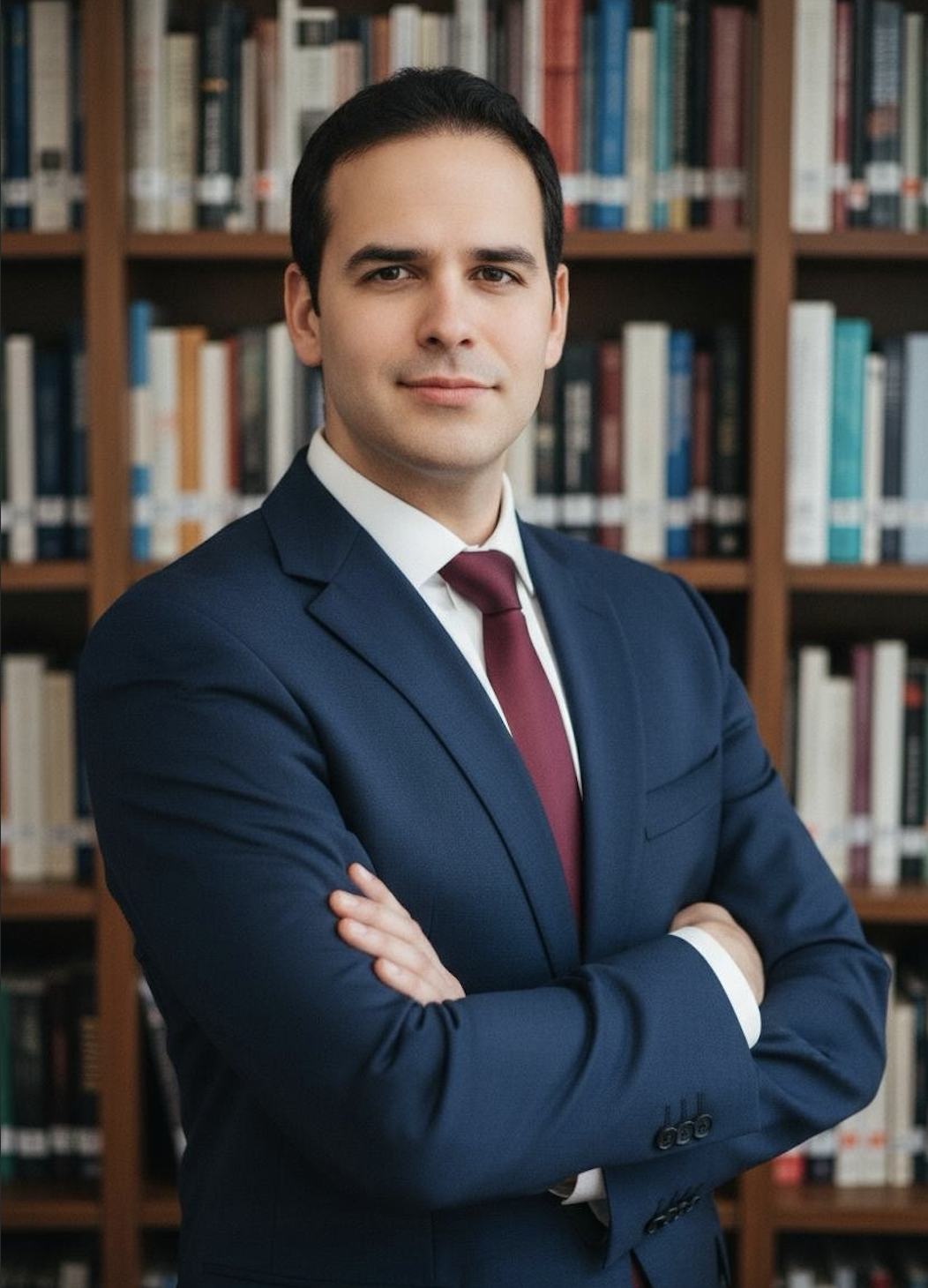
FELLOW MEMBER
Sumit Kaul has built a career over more than 15 years around one of the most consequential layers of modern software delivery: cloud infrastructure, release automation, and site reliability engineering for systems that must remain secure, observable, and dependable under high traffic and regulatory scrutiny. Across fintech, retail, logistics, federal programs, and banking environments, his work has consistently focused on converting fragmented tooling and inconsistent delivery practices into standardized engineering platforms where reliability, security, and auditability are built in by design rather than added later. That orientation aligns closely with widely accepted cloud-engineering principles around operational excellence, observability, automation, and controlled delivery. AWS’s Well-Architected Framework, for example, frames operational excellence around building and operating workloads effectively over time, while its observability guidance emphasizes making system state understandable enough for data-driven action.
A defining characteristic of Sumit Kaul’s work is that he treats platform capabilities as defaults rather than optional developer-by-developer choices. This is particularly visible in his observability work at PayJoy, where he is described as making distributed tracing and full-stack telemetry available without requiring application code changes. That design philosophy maps closely to OpenTelemetry’s public model for zero-code or automatic instrumentation, which is intended to capture telemetry such as traces, metrics, and logs without manual source-code modification. It also aligns with Datadog APM’s model of correlating traces, dashboards, and telemetry for performance analysis and troubleshooting.
His work at PayJoy is significant because observability programs often fail when they rely on each team to instrument and maintain telemetry independently. By embedding OpenTelemetry into baseline containers, enabling ORM-level instrumentation, and standardizing SLO alerting and telemetry defaults, he shifted observability from an opt-in engineering project to an ambient platform property. That kind of change is more than a tooling improvement. It affects incident response speed, release confidence, production triage, and the long-term operational maturity of the organization. In practical terms, it reflects a deep understanding that reliability is not just about uptime, but about how quickly and accurately teams can detect, isolate, and remediate failure in production systems. OpenTelemetry and Datadog’s own public materials reinforce that this approach—integrating traces, logs, and metrics into a unified troubleshooting model—is central to modern observability practice.
His architecture-as-code and CI/CD modernization work also stands out because it addresses a structural problem common in large organizations: enterprise standards often exist on paper, but not as enforceable delivery mechanisms. At Grocery Outlet and later at Crowley, his record shows a pattern of translating architecture and governance requirements into executable modules, reusable templates, signed pipelines, and policy-enforced release flows. That pattern aligns with the broader cloud and DevOps movement toward codifying operational safeguards instead of relying on review-time interpretation. AWS guidance explicitly highlights observability, event-driven automation, and repeatable operating models as operational-excellence best practices, which provides strong external context for the kind of work he was leading.
A similar pattern appears in his multi-cloud GitOps and event-driven CI/CD work at Anaplan. Public OpenGitOps materials define GitOps as a standardized, declarative, version-controlled approach to operating infrastructure and workloads, while CNCF has framed GitOps as an increasingly mainstream and scalable method for managing cloud and Kubernetes environments. Against that backdrop, Sumit Kaul’s work is notable because he appears to have moved beyond simple script orchestration into typed event emission, policy gates, immutable artifacts, and continuous verification. That is an important architectural step. It turns CI/CD from a sequence of build commands into a governed data system that can be audited, reasoned about, and optimized over time.
His AWS reference architecture and automated AMI factory work at Coupang reinforces his strength in release safety and deterministic infrastructure. Public AWS operational-excellence guidance explicitly recommends event-driven automation, proactive monitoring, and automated pipelines as ways to increase reliability and reduce human error. In that context, integrating hardening, vulnerability-triggered image rebuilds, signed artifacts, and explicit versioned launch templates is more than routine automation. It is a disciplined strategy for reducing configuration drift, making scale-out events auditable, and ensuring that security posture keeps pace with infrastructure velocity.
His Capital One, federal-program, and Citi work shows the same underlying philosophy applied in different regulated settings: progressive delivery, health checks, traffic shifting, immutable artifacts, repeatable rollback, and evidence capture are all mechanisms for making change safe in environments where service failure, deployment inconsistency, or compliance gaps can have outsized consequences. Across these examples, what stands out is not any one toolchain, but the consistency of his approach. He repeatedly converts delivery systems into governed platforms where secure defaults, release safety, and operational visibility are embedded structurally.
Beyond his employer-facing work, his profile also points to broader professional engagement through publications, talks, videos, open-source contributions, and AWS certifications. While the specifics are not independently provided here, that pattern is consistent with someone who has not only implemented platform-engineering practice, but also helped disseminate it.
Taken together, Sumit Kaul’s career reflects sustained and high-value contribution to practical cloud engineering. He has worked in areas that are central to the discipline’s modern evolution: observability by default, architecture as code, GitOps-oriented delivery governance, progressive release safety, immutable infrastructure, and reliability-centered operating models. His record presents the profile of a technologist whose work has materially advanced how organizations deliver secure and dependable software at scale.