Suri Babu Talla
SMTS at AMD
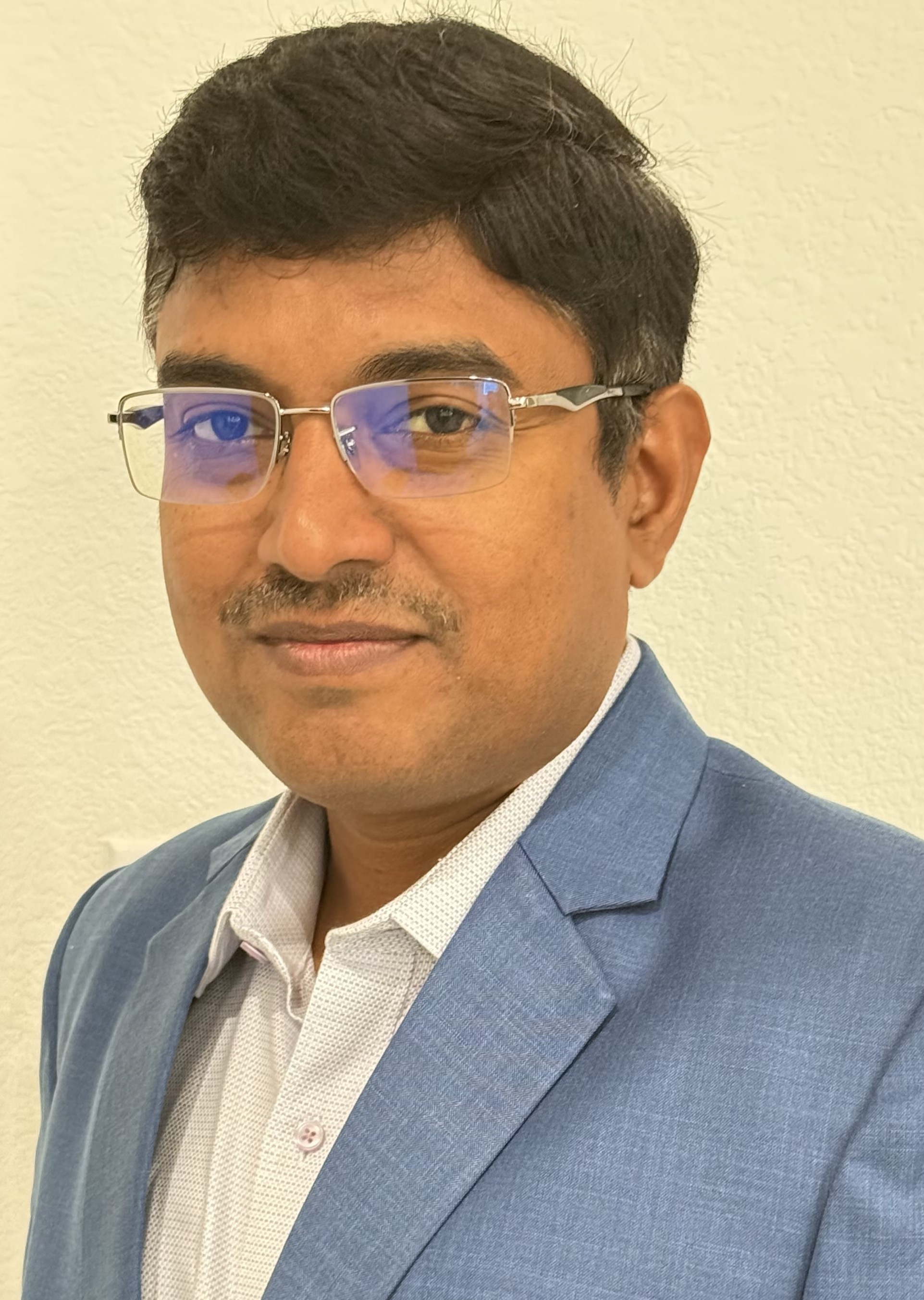
FELLOW MEMBER
Suri Babu Talla is a semiconductor verification specialist whose 15-year career has centered on one outcome that matters most in silicon: first-pass correctness under real-world complexity. Working across AMD, NXP, Qualcomm ecosystems, and multiple SoC and IP programs, Talla has built a reputation for verification rigor—turning architectural intent into measurable coverage, deterministic validation, and emulation-backed confidence before tape-out. His work spans VLSI design verification and system-level emulation, where the margin for error is narrow and the cost of late discovery is measured in schedule slips, re-spins, and product risk.
Talla’s technical foundation is anchored in modern verification methodology and execution discipline: UVM/OVM, SystemVerilog, Specman, assertion-based verification, gate-level simulation, and low-power flows using UPF. Just as importantly, he operates comfortably at scale—using Palladium and Veloce emulation platforms to drive shift-left validation, shorten debug cycles, and expose coherency and system-interaction defects that are difficult to reproduce in pure simulation. Over time, his scope has expanded from component-level low-power blocks to full subsystem validation in complex, heterogeneous memory and interconnect environments.
At AMD, where he has served as MTS and SMTS System Design Engineer, Talla’s work progressed from verification of Low Power Advanced Devices—such as DFLL, XVMIN, LDOs, and AVFS—to system-level validation of hybrid memory architectures integrating PMM, LPDDR5, and DDR5. By driving shift-left initiatives, he increased pre-silicon verification coverage by more than 25%, helping teams surface architectural and coherency issues earlier, when fixes are cheaper and safer. The verification discipline applied to LPAD work contributed to measurable power reductions across AMD’s Ryzen and EPYC product families—illustrating how verification is not merely defect prevention, but an enabling function for product-level energy efficiency and competitiveness.
At NXP, as a Senior Principal SoC Functional Verification Engineer, Talla worked on S32G automotive SoCs—systems that demand deterministic behavior and functional safety awareness. Here, he validated boot flows across multiple interconnected subsystems, coordinated verification across NoC interconnect behavior, PCIe integration, and secure boot pathways, and emphasized systematic coverage planning aligned with the realities of automotive-grade reliability expectations. These projects reinforced a recurring theme in his work: verification is a cross-functional coordination problem as much as a technical one, requiring clean interfaces, shared assumptions, and disciplined closure criteria.
Earlier roles across Calsoft Labs, Silicon Image, Synapse Design, Wipro, Soctronics, and Qualcore Logic broadened his protocol and subsystem breadth—spanning PCIe, Ethernet 802.3, LPDDR4/5, DDR5, HDMI/MHL/DisplayPort, WiHD, NVMe, and on-chip fabrics such as AXI/AHB/APB. Whether closing to aggressive coverage targets for mobile platforms, validating bridge devices and multimedia SoCs, or building cohesive SoC environments with scoreboarding and golden reference models, his work repeatedly demonstrates the same engineering posture: measurable closure, reproducible debug, and architecture-aware validation.
Talla’s professional recognition—including multiple AMD awards such as Spotlight and ORION—reflects contributions that go beyond test writing: building coverage strategies, improving verification efficiency, and delivering under high tape-out pressure. His automation efforts, including Perl-based tooling that reduced manual effort by roughly 30% and saved significant engineering hours per verification cycle, reinforce a practical philosophy: verification thoroughness and speed are not trade-offs when engineering systems are designed for repeatability.
Across computing, automotive, and mobile silicon, Talla’s work has consistently strengthened pre-silicon confidence through disciplined methodology, emulation-driven realism, and continuous improvement—helping ensure complex systems behave correctly the first time they power on.