Swetha Lakkaraju
Project lead at Techmahindra America’s Inc
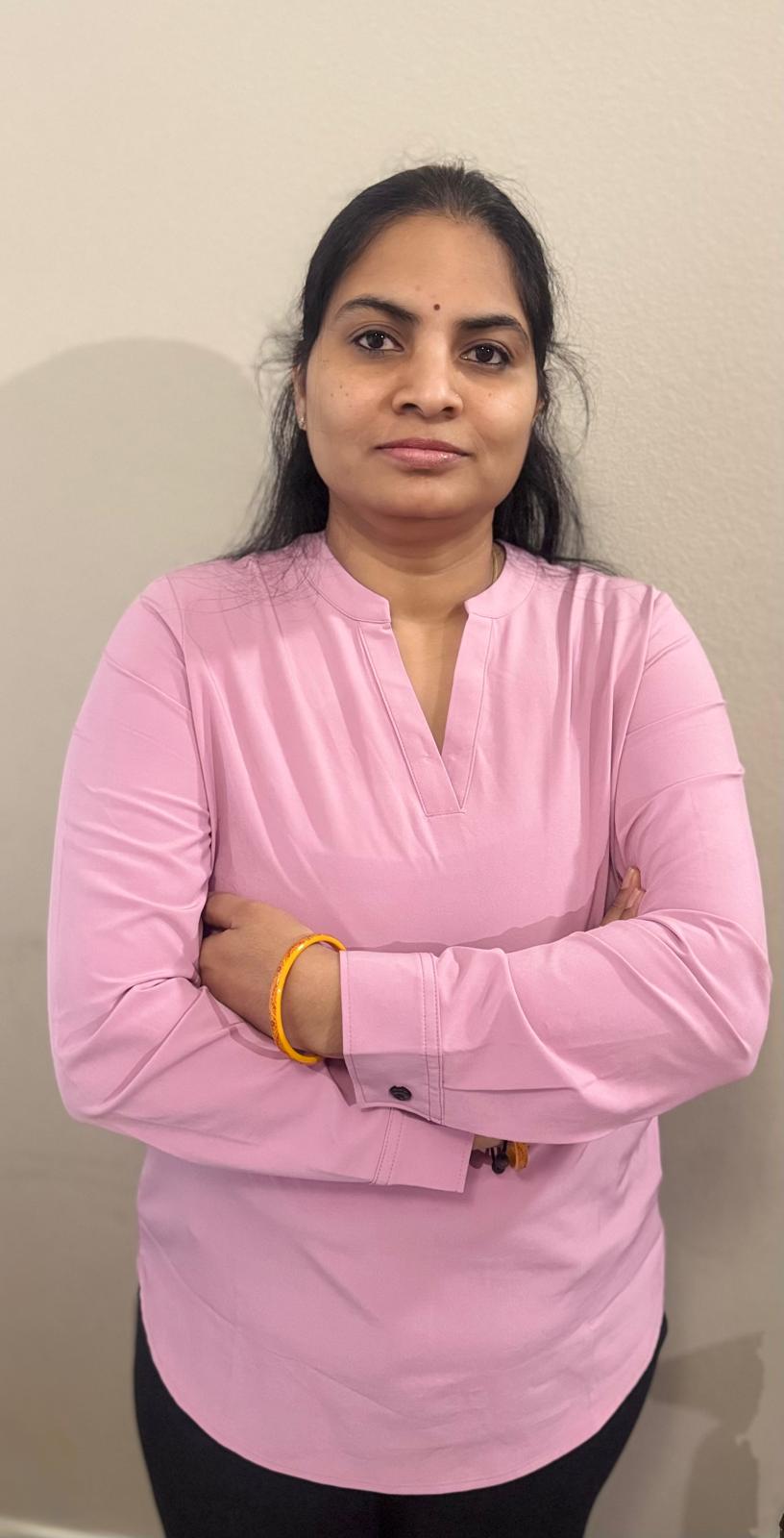
FELLOW MEMBER
Swetha Lakkaraju has built an 18-year career in one of the most demanding corners of financial-services technology: modernizing and integrating mainframe-based core banking platforms without interrupting the systems that run daily commerce. Specializing in Systematics and VisionPlus ecosystems, Lakkaraju’s work has centered on strengthening core banking capabilities, improving platform stability, and enabling large-scale conversions across global financial institutions. In environments where the cost of error is immediate—financial loss, regulatory exposure, and customer impact—her contributions have consistently gone beyond routine maintenance, focusing instead on complex conversions, integration frameworks, and modernization programs that must preserve operational continuity while evolving architectures.
A defining element of Lakkaraju’s recent work is her leadership in Citibank’s Commercial Banking conversion initiative. In this program, she is responsible for designing and developing new Systematics interfaces to support migration from legacy CCB systems into cloud-aligned architectures. The objective is not simply data movement; it is ensuring that account, transaction, and customer-relationship data continues to process efficiently and correctly during and after modernization. The work is technically challenging because it requires bridging mainframe-centric processing models—built around deterministic batch cycles and tightly controlled online transactions—with modern, service-oriented and cloud-based systems while maintaining uninterrupted operations. Lakkaraju’s contributions include defining scalable integration patterns, advancing test automation to reduce manual effort and accelerate validation, and providing production implementation leadership during high-stakes cutovers—where disciplined execution and risk control determine whether conversion succeeds.
Her conversion expertise is also evident in the Bank of the West to Bank of Montreal migration, where she led solution design for the RM suite across Debit, Credit, and Mortgage products. The program required deep analysis of Systematics processing rules and the creation of cost-efficient migration solutions aligned with BMO’s architectural standards. The innovation here was building one-time transformation logic capable of preserving data integrity while consolidating two operational environments that do not share identical rules, structures, or operational assumptions. Lakkaraju added value by developing specialized batch programs for extraction and transformation, automating region setup processes to streamline testing cycles, and serving as a subject-matter expert during integration and deployment—an accountability role that combines platform knowledge with end-to-end delivery ownership.
Across a long tenure supporting Citibank platforms, Lakkaraju has also delivered enhancements to Systematics SI modules that extend beyond typical maintenance. Her objective has been to strengthen platform resilience, enable new business functions, and optimize both batch and online workflows. In legacy banking platforms, innovation often appears as “quiet engineering”: building master-feed generation modules and integration mechanisms that improve data flow, reduce manual touchpoints, and prevent downstream reconciliation and processing issues. Lakkaraju has repeatedly led impact analysis, designed end-to-end solutions, and managed offshore delivery teams—work that requires technical depth and operational leadership. Her contributions are positioned as drivers of multi-quarter stability, including periods of operation with zero major incidents—an outcome that is highly valued in core banking technology where stability is often the most visible measure of success.
Earlier in her career, Lakkaraju supported GE Money Japan’s credit-card processing systems with a focus on performance optimization and disaster recovery. The objective was uninterrupted service for volume-intensive batch operations—systems that can fail under growth if job structures and scheduling controls are not engineered for scalability. The innovation involved tuning batch workflows and redesigning job structures to maintain SLA compliance as transaction volumes increased. Lakkaraju contributed program fixes in COBOL and Easytrieve, conducted performance tuning, and coordinated Control-M configurations to strengthen reliability in both normal operations and recovery scenarios—experience that reflects a strong operational mindset in addition to development ability.
She has also contributed to compliance-driven modernization, including work for RBTT updating TRAMS/TBC modules to meet evolving regulatory mandates. Here, the engineering challenge was embedding new compliance rules into legacy modules while preserving auditability—an essential requirement in regulated financial systems. Lakkaraju developed extensive test cases, executed validation cycles, and supported successful compliance outcomes, demonstrating the ability to translate regulatory requirements into precise and testable system behavior.
Across these initiatives, Lakkaraju’s professional signature is consistent: she modernizes legacy banking platforms while protecting continuity, correctness, and auditability; she improves reliability by reducing manual operations and strengthening integration mechanisms; and she leads delivery across distributed teams in environments where technical discipline is inseparable from risk management. Her career reflects a sustained commitment to advancing the stability and modernization readiness of complex banking systems—work that is foundational to how global financial institutions evolve without disrupting customers.