Thananjayan Kasi
Solutions Architect at HCL America Inc
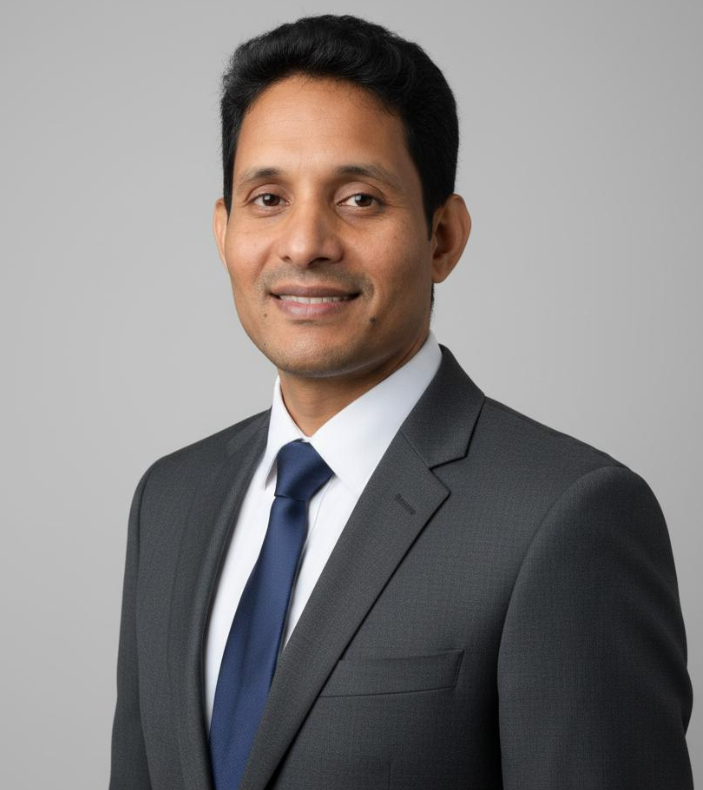
FELLOW MEMBER
Over the course of a nineteen-year international career spanning the United States, Singapore, and India, Thananjayan Kasi has established himself as a solutions architect whose work sits at the convergence of cloud modernization, data architecture, artificial intelligence, and enterprise transformation. His professional journey reflects a sustained commitment to helping complex organizations move beyond legacy constraints and toward scalable, intelligent, and future-ready technology ecosystems. What distinguishes his record is not merely the breadth of his technical knowledge, but the consistency with which he has translated architectural vision into measurable business and operational outcomes across financial services and other enterprise environments.
At HCL America Inc., Kasi has played a central role in leading enterprise-scale transformation programs focused on cloud architecture, data modernization, and AI-assisted application refactoring. One of the defining efforts of his recent work involved modernizing legacy Java 1.7 and JSP applications into Spring Boot microservices with React and Angular front ends deployed on AWS. This was more than a software upgrade. It was a structural redesign that improved scalability, performance, and user experience while establishing a repeatable modernization pattern for future migrations. By incorporating AI-powered refactoring tools, he helped reduce manual engineering effort by 40 percent, demonstrating a practical and disciplined approach to using intelligent automation to accelerate delivery without sacrificing architectural quality.
His work also extended deeply into modern data platforms and cloud-native analytics. Kasi integrated Snowflake lakehouse architecture for real-time analytics and metadata-driven governance, creating an environment that materially improved release velocity and cost efficiency. Under his leadership, serverless architecture patterns contributed to release cycles that were up to 60 percent faster, while embedded security controls using IAM, KMS, Secrets Manager, and VPC isolation ensured that modernization efforts remained aligned with the rigorous compliance expectations of financial services. This combination of performance improvement, governance discipline, and regulatory sensitivity reflects the hallmark of a mature enterprise architect operating at strategic scale.
Earlier, at HCL Singapore Pte Ltd, serving as Senior Technical Architect, Kasi was responsible for end-to-end delivery of enterprise data warehouse and business-as-usual projects, ensuring that critical data marts were delivered within service-level expectations. His remit included not only technical execution but also P&L oversight, revenue realization, profitability, customer satisfaction, and broader business outcomes. This experience broadened his role from architect to business-facing technology leader, reinforcing a professional model in which computing is not treated as an isolated technical function, but as a core lever of enterprise value creation.
Among the most notable accomplishments in his career was leading the first successful enterprise Hadoop platform implementation at Key Bank using Cloudera technology. This initiative was a milestone not only for the institution itself but also for the broader regional context in which large-scale big data ecosystems were still emerging. Kasi designed and implemented a reusable, metadata-driven control-flow framework with audit tables, standardized ingestion patterns, and automated data-quality checkpoints. He further engineered the auto-generation of Control-M batch jobs through standardized templates, eliminating manual job creation, reducing operational error, and accelerating pipeline onboarding. The significance of this work lies in its repeatability: he created a blueprint for analytics modernization that could be reused and adapted rather than a single-purpose solution.
His earlier roles as ETL Architect and Technical Lead further demonstrate the continuity of his career trajectory. In those positions, he was responsible for designing enterprise data warehouse solutions, translating business needs into technical specifications, supporting sales efforts through solution architecture, increasing bid-to-win ratios, guiding junior developers, coordinating onshore and offshore teams, and ensuring successful delivery of complex data programs. These roles show that his career was built not only on advanced tools and platforms, but on the ability to align teams, communicate across business and engineering stakeholders, and construct solutions that addressed both strategic and operational realities.
Beyond implementation, Kasi’s professional standing is reinforced by substantial external recognition. He has received major awards for technology excellence in cloud modernization and AI model optimization, earned recognized certifications across cloud, AI, NLP, and data platforms, and published three peer-reviewed scholarly articles in internationally indexed journals on explainable data lineage AI agents, model governance for intelligent risk scoring systems, and AI-driven modernization of legacy ETL workflows. He has also served as a reviewer for multiple IEEE-sponsored and national conferences, contributing to the assessment of research quality and professional standards in emerging technologies. These accomplishments position him not merely as an industry practitioner, but as a contributor to the broader intellectual and professional discourse of computer science.
His influence has also extended into keynote speaking and leadership development. By presenting at international practitioner forums such as AI & Data Computing 2025 and Microsoft Purview and Defender Days 2026, he has shared applied insights on enterprise analytics transformation, data governance, and serverless ETL architecture. Internally, his responsibilities have included mentoring junior developers, conducting code reviews, guiding teams toward architectural best practices, and leading multicultural onsite and offshore teams with a focus on capability building and long-term organizational growth. This reflects a leadership philosophy grounded in stewardship rather than mere administration.
Taken as a whole, Thananjayan Kasi’s career presents the portrait of a technologist who has combined deep architectural expertise with strategic leadership, scholarly engagement, and measurable enterprise impact. His work has consistently focused on building secure, governed, cloud-native, and data-intensive systems that improve release speed, reduce manual effort, and strengthen institutional readiness for the next generation of AI-enabled computing. He stands out as a professional whose contributions have shaped not only systems, but the standards and practices by which organizations modernize them.