VENKATA SAMBASIVARAO KOPPARAPU
Data Conversion lead at Conduent
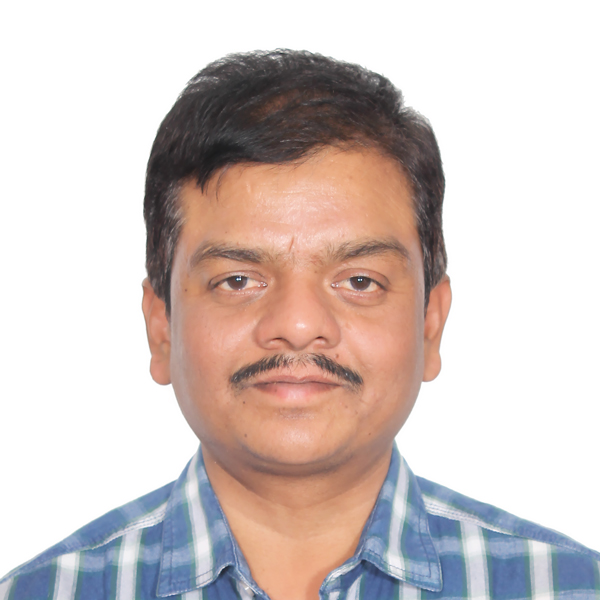
FELLOW MEMBER
Venkata Sambasivarao Kopparapu has built a long and technically distinguished career in data architecture, with more than twenty-five years of experience across healthcare, life sciences, Medicaid, Medicare, retail, manufacturing, and state government environments. Over the course of that career, his work has consistently focused on turning raw, fragmented, and often difficult data landscapes into structured enterprise intelligence systems that organizations can actually use to make better decisions. His profile reflects both architectural depth and executional range, spanning roles as Snowflake Cloud Architect, Data Engineer, Data Modeler, Data Architect, and Technical Lead across North America.
At the technical core of his work is a strong command of both dimensional OLAP and third-normal-form OLTP data modeling, supported by tools such as Erwin and E/R Studio and grounded in recognized modeling principles associated with Bill Inmon, Ralph Kimball, and the Retail ARTS Data Model. His cloud and platform expertise spans Amazon Web Services, Microsoft Azure, Azure Data Lake, Azure Synapse, Azure Data Factory, Azure Databricks, and Snowflake multi-tenant architecture. This is complemented by broad ETL and database experience across Informatica PowerCenter, IBM InfoSphere DataStage, SSIS, Talend, Alteryx, Oracle, Teradata, Snowflake, DB2, SQL Server, MongoDB, and Cosmos DB. His certifications—including SnowPro Core, SAFe Agile, dbt Fundamentals, MongoDB Data Modeling, Azure Data Fundamentals, TOGAF, and IBM Data Science Foundations—reinforce the depth and currency of that expertise.
In his current work at Conduent, Kopparapu leads the data conversion aspect of the Wisconsin Bureau of Child Support Modernization Program, a large public-sector transformation effort involving migration from legacy mainframe systems to modernized platforms. The complexity of this work lies not only in the technical migration itself, but also in the stakeholder landscape, which includes state and county agencies, court systems, care facilities, and federal systems. His contribution in such an environment reflects a high level of architectural maturity, where data modernization must be handled with precision, continuity, and governance discipline.
His work at Blue Shield of California further demonstrates the practical importance of his data architecture leadership. There, on the Member Health Record and Digital Health Record initiatives, he helped build clinical canonical models and claims information marts that enabled members to access more organized health records covering visits, medications, allergies, and immunizations. This required not only structured modeling, but also deep profiling across diverse data formats including JSON, HL7, CSV, and relational sources, supported by reference analysis from systems such as DXCG, NLM RXNORM, First Data Bank, and MDDB. In effect, his work helped bring clarity and accessibility to healthcare data that is often highly fragmented and difficult to operationalize.
Kopparapu’s portfolio also includes major enterprise and state analytics transformations. At Southern California Edison, he worked on Data Vault architecture in Snowflake, designing Raw Vault, Business Vault, and Information Vault models. At Vaya Health, through Conduent, he helped establish Azure Data Lake Gen 2 pipelines, Azure Data Factory workflows, and Synapse analytics databases supporting behavioral health analytics for North Carolina Medicaid populations. At Meijer, through Capgemini, he contributed to an enterprise data warehouse redesign using the IBM ARTS framework, with implications for supply chain optimization, pricing integration, pharmacy data migration, and digital business integration. At Nebraska DHHS, through Wipro, he supported MAGI and NON-MAGI data migration, including CURAM entity analysis, REST API integration, and ETL development for dynamic evidence and attribute tables. Across each of these engagements, the pattern is the same: he has repeatedly helped organizations modernize the data foundations on which critical operational and analytical decisions depend.
What strengthens his profile further is the consistency of his professional recognition and knowledge-sharing contributions. The source material notes that he has published articles on data architecture standards and best practices, contributing to the practitioner knowledge base in the field. He has also received multiple recognitions from employers, including Long Service Awards, Best Employee of the Month, Feather in My Cap commendations, and Best Employee of the Year recognition, indicating that his impact has been both sustained and visible across organizations and geographies. His work has not been limited to technical delivery alone; it has also included mentoring, coaching teams through complex integrations, and producing durable data-quality and source-to-target mapping standards that outlast any one project.
Taken together, Venkata Sambasivarao Kopparapu’s career reflects the profile of a senior data architecture professional whose work has repeatedly advanced how organizations govern, migrate, model, and use complex data. His contributions span regulated healthcare environments, public-sector modernization, retail analytics, and enterprise cloud transformation, all grounded in a clear commitment to responsible, standards-driven, and scalable architecture. For fellowship-level consideration, he presents as a technologist whose work has combined long-term professional discipline with substantial cross-industry impact.