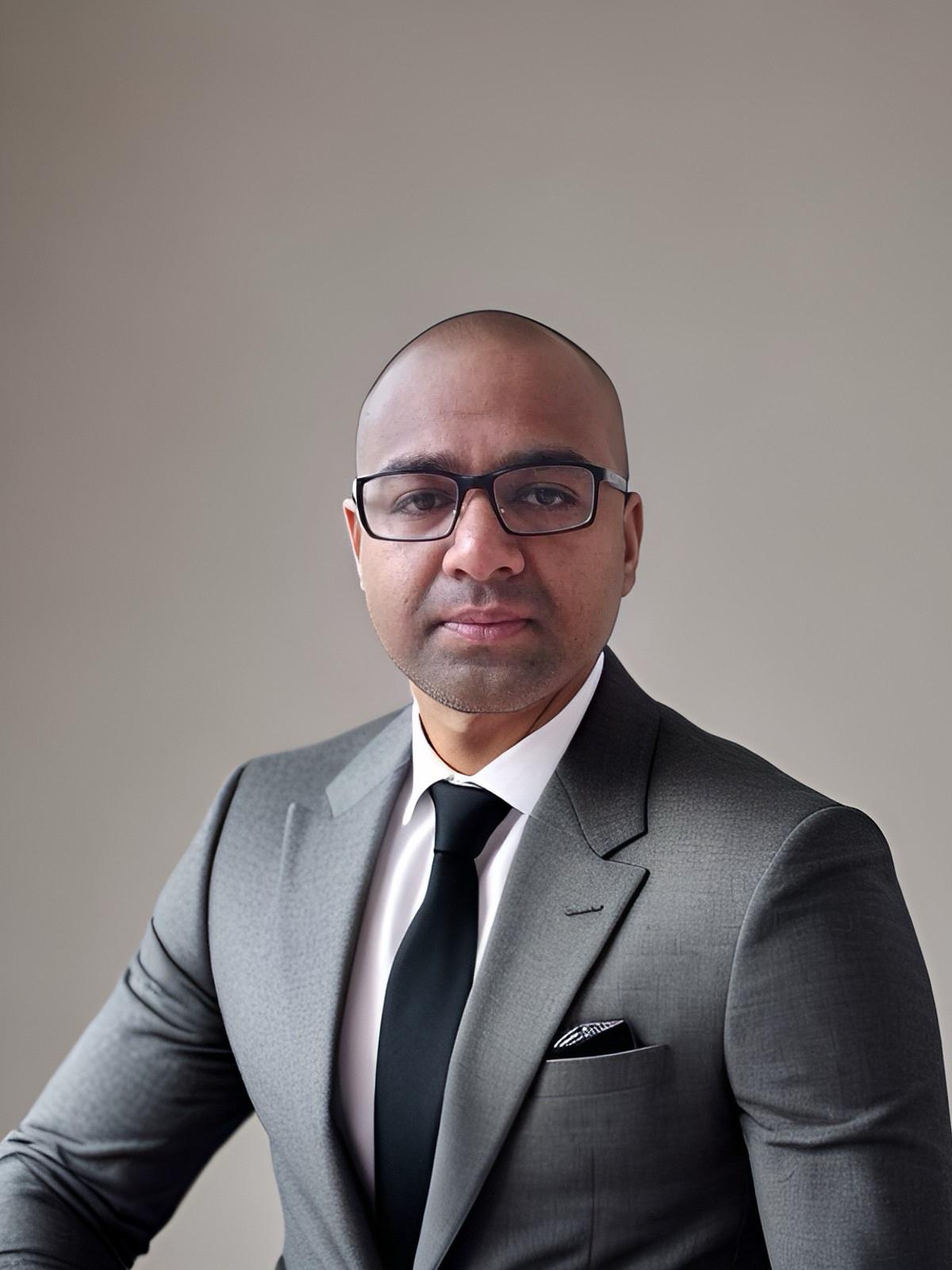
Vinay Babu Gurram
Director, Software Development at Radial Inc
FELLOW MEMBER
Vinay Babu Gurram is an enterprise systems modernization leader whose two-decade career maps a clear progression from hands-on Java engineering to Director of Software Engineering at Radial Inc.—a role centered on transforming the backbone platforms that power retail, e-commerce, and supply chain execution. His work has consistently focused on high-throughput, mission-critical order management and fulfillment systems where architectural decisions directly shape revenue continuity, customer experience, and operational reliability.
At Radial, Gurram leads the in-house Order Management System (OMS) engineering organization and L2 support teams while driving modernization programs that replace legacy constraints with scalable, cloud-ready architectures. A defining feature of his current work is the transformation of a monolithic IBM Sterling OMS into a microservices-based, event-driven platform. This initiative spans core commerce flows—order orchestration, inventory management, store fulfillment, and merchandise management—built with Spring Boot and Java, event streaming and messaging through Kafka, IBM MQ, and RabbitMQ, and modern data persistence patterns including MongoDB.
His modernization work extends beyond OMS into Radial’s Merchandising Management System (MMS), where he led efforts to eliminate dependency on legacy JDA by implementing critical MMS services that enable automation and real-time visibility. His teams delivered purchase-order and shipment notification capabilities (PO–ASN creation services), real-time inventory tracking across channels and warehouses (Inventory PIX services), and inventory status/transaction services tightly integrated with OMS orchestration and fulfillment modules. The architectural outcome is a modular microservices layer designed for scalability, adaptability, and continuous evolution under enterprise load.
Gurram’s leadership also shows strong operational and cloud transformation capability. He has directed the rehosting of 54 OMS and MMS services from on-prem environments to AWS with minimal disruption—work that includes overseeing backend database migration from Oracle to PostgreSQL while preserving data integrity and performance. He pairs delivery velocity with production discipline, collaborating with SRE teams on performance tuning and observability using tools such as AppDynamics and the Elastic stack (Kibana/Logstash), and institutionalizing CI/CD pipelines to support repeatable enterprise deployments.
The business relevance of these systems is explicit: Radial’s modernized order management platform supports 40+ clients, with clients generating $11.8B in sales through Radial Order Management. Platform innovation earned external recognition including the 2023 North America MongoDB Innovation Award, and Radial’s OMS/fulfillment services achieved top industry ranking recognition by Digital Commerce 360—signals that the modernization is not academic, but commercially consequential.
Earlier in his career, Gurram built a strong foundation in enterprise integration and platform delivery. At Best Buy, he architected delivery-capacity planning solutions integrated with IBM Store Order Management, improved order processing speed by 20% through SQL optimization and tuning, and led external inventory integrations to deliver real-time stock visibility across hundreds of stores and distribution centers. At HCL Technologies, he established an IBM Sterling Center of Excellence, developed frameworks and best practices, and reviewed enterprise RFEs/SOWs—consolidating repeatable delivery standards. At Accenture, he contributed to modernization initiatives transforming legacy mainframe ecosystems into WebSphere Portal solutions and delivered applications using Spring and Hibernate.
Across roles, Gurram’s impact is amplified by a consistent commitment to mentorship and capability-building. He develops new engineers’ microservices and event-driven skills, strengthens L2 teams’ architectural fluency, and institutionalizes knowledge-sharing through workshops and training programs—ensuring modernization is not a one-time project, but a durable organizational competence.