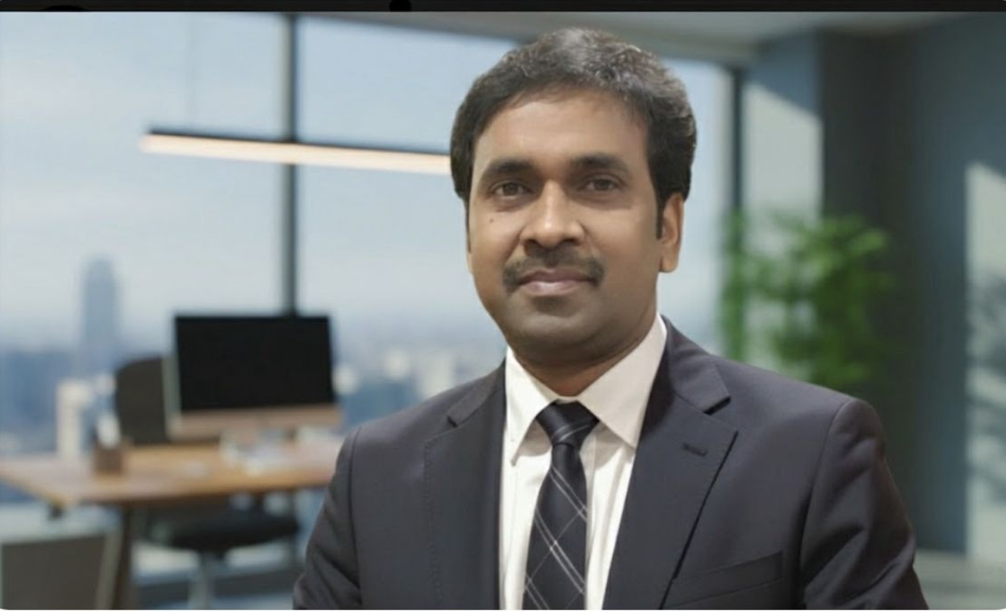
Yogesh Pugazhendhi Duraisamy Rajamani
Senior Data Engineer at Ford Motor Company
FELLOW MEMBER
Yogesh Pugazhendhi Duraisamy Rajamani is a senior data engineering leader whose 18-year career has been defined by one consistent mandate: convert sprawling legacy data estates into governed, real-time intelligence platforms that executives and operators can trust. Across automotive and healthcare enterprises, he has built the technical and operational backbone that turns raw operational data—transactional, sensor, and streaming signals—into curated, policy-compliant datasets that support analytics, anomaly detection, and machine learning at production scale.
At Ford Motor Company, Duraisamy Rajamani operates at the center of enterprise analytics modernization, where cloud-native architecture is not an aspiration but a reliability requirement. Within Ford’s Global Data Insight and Analytics (GDIA) organization, he contributed to the Machine Integrated Learning and Optimization (MILO) platform, establishing standardized data engineering pipelines that replaced fragmented legacy patterns with unified, governed access. His work emphasized the fundamentals that separate “data available” from “data usable”: automated metadata capture, lineage visibility, curated dataset design, and repeatable operational controls.
A significant portion of his impact has come from architecting hybrid-cloud ingestion and processing systems that can keep pace with business urgency. Using Confluent Kafka and GCP Pub/Sub for event ingestion, Dataflow (Apache Beam) for stream and batch processing, Airflow for orchestration, and BigQuery and Cloud Storage for durable persistence, he built pipelines that lowered latency for priority datasets to under 10 minutes—enabling near-real-time monitoring, anomaly detection, and predictive analytics. The engineering was paired with platform discipline: containerized deployments through Docker, runtime execution on Cloud Run and GKE, CI/CD through GitHub-based workflows and Cloud Deploy, and environment standardization through Terraform. The result was not just faster ingestion, but a repeatable platform capability that reduced operational complexity and accelerated time-to-insight for analytics and ML teams, including workloads supported by Vertex AI.
Duraisamy Rajamani’s work is equally distinguished by governance and correctness under scale. As a primary data steward for key enterprise datasets, he implemented automated data-quality checks and validation frameworks that reduced defects by 30–40% and delivered full reconciliation fidelity for critical datasets moving into BigQuery. In practice, this meant establishing clear ownership, consistent validation gates, and measurable controls—so downstream users could trust what they queried without building bespoke “data fixes” into every report and model.
Before Ford, his healthcare and enterprise data warehouse work demonstrates the same pattern: large-scale data engineering coupled with compliance-first execution. At Blue Cross Blue Shield, he engineered multi-terabyte pipelines for claims, enrollment, provider, and clinical datasets using Spark, Hadoop, Hive, and PySpark—while enforcing HIPAA-aligned protection through masking and role-based controls. At Ascension Health, he helped consolidate heterogeneous clinical and operational sources into enterprise warehouse structures, improving data quality, reporting performance, and analyst usability through tuned SQL, indexing strategies, partitioning, and dimensional model optimization. Across these programs, he also strengthened organizational capability through knowledge transfer and mentorship, helping teams adopt repeatable engineering practices rather than one-off heroics.
Recognition such as Ford’s Henry Ford Technology Award (2024), alongside credentials including Google Professional Cloud Architect (GCP-PCA), PMP, and ITIL, reinforce a profile built on measurable delivery and operational accountability. Duraisamy Rajamani’s body of work reflects modern data engineering at its highest standard: real-time systems with clear governance, strong validation, scalable cloud operations, and compliance controls suitable for regulated environments—delivered in a way that improves decision-making and strengthens enterprise resilience.